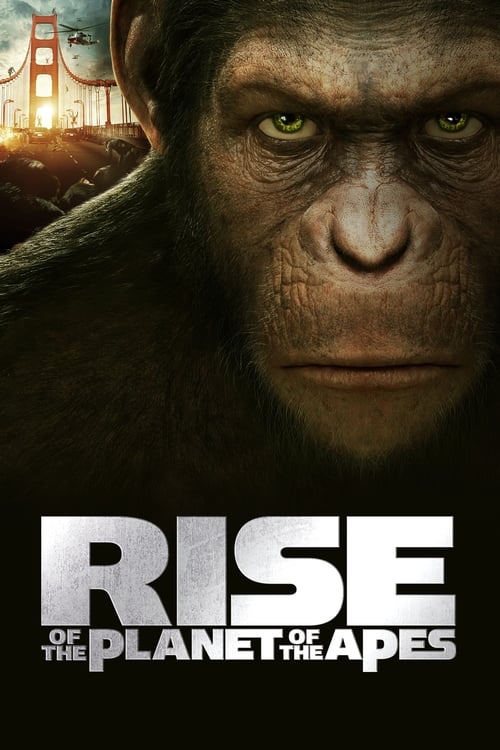
Rise of the Planet of the Apes
A substance designed to help the brain repair itself gives advanced intelligence to a chimpanzee who leads an ape uprising.
Despite a significant budget of $93.0M, Rise of the Planet of the Apes became a solid performer, earning $481.8M worldwide—a 418% return.
Nominated for 1 Oscar. 21 wins & 45 nominations


Plot Structure
Story beats plotted across runtime


Narrative Arc
Emotional journey through the story's key moments
Story Circle
Blueprint 15-beat structure
Characters
Cast & narrative archetypes

Caesar
Will Rodman
Caroline Aranha
Steven Jacobs
John Landon
Dodge Landon
Charles Rodman
Robert Franklin
Main Cast & Characters
Caesar
Played by Andy Serkis
An intelligent chimpanzee raised by humans who becomes the leader of an ape revolution against humanity.
Will Rodman
Played by James Franco
A compassionate scientist who raises Caesar and develops the ALZ-113 drug to cure Alzheimer's disease.
Caroline Aranha
Played by Freida Pinto
A primatologist and Will's girlfriend who cares deeply for Caesar's welfare.
Steven Jacobs
Played by David Oyelowo
The ruthless CEO of Gen-Sys who prioritizes profit over ethics in drug development.
John Landon
Played by Brian Cox
The abusive and cruel caretaker at the primate sanctuary who torments Caesar.
Dodge Landon
Played by Tom Felton
John's sadistic son who works at the sanctuary and directly abuses the apes.
Charles Rodman
Played by John Lithgow
Will's father suffering from Alzheimer's who forms a loving bond with Caesar.
Robert Franklin
Played by Tyler Labine
A Gen-Sys scientist and Will's colleague who becomes infected with the virus.
Structural Analysis
The Status Quo at 1 minutes (1% through the runtime) establishes Will Rodman presents his Alzheimer's cure ALZ-112 to Gen-Sys board in a sterile lab environment. Establishes him as ambitious scientist seeking to cure his father's disease through groundbreaking research.. The analysis reveals that this early placement immediately immerses viewers in the story world.
The inciting incident occurs at 13 minutes when Bright Eyes goes berserk during the board presentation, crashing through glass to protect her hidden baby. She is shot dead, and the entire ALZ-112 program is terminated. Will's career ambitions collapse.. At 12% through the film, this Disruption aligns precisely with traditional story structure. This beat shifts the emotional landscape, launching the protagonist into the central conflict.
The First Threshold at 26 minutes marks the transition into Act II, occurring at 25% of the runtime. This illustrates the protagonist's commitment to Will decides to use the ALZ-112 on his father Charles illegally, administering the experimental drug. Active choice to cross ethical boundaries. Charles's cognition dramatically improves, validating the treatment., moving from reaction to action.
At 53 minutes, the Midpoint arrives at 50% of the runtime—precisely centered, creating perfect narrative symmetry. Structural examination shows that this crucial beat Caesar attacks neighbor Hunsiker to protect confused Charles. False defeat: Caesar is torn from Will and imprisoned at the primate sanctuary. The family unit is destroyed; Caesar enters a world where he's treated as an animal., fundamentally raising what's at risk. The emotional intensity shifts, dividing the narrative into clear before-and-after phases.
The Collapse moment at 79 minutes (75% through) represents the emotional nadir. Here, Caesar speaks his first word: "NO!" to Dodge, rejecting human authority forever. Whiff of death: Caesar kills Dodge and the innocent ape Caesar once was dies. Point of no return; he chooses apes over humans., illustrates the protagonist at their lowest point. This beat's placement in the final quarter sets up the climactic reversal.
The Second Threshold at 84 minutes initiates the final act resolution at 80% of the runtime. Caesar signs "Caesar is home" to Will, synthesizing his intelligence (from Will) with his ape nature (his true family). He rejects human world definitively, choosing to lead his kind to freedom in the redwoods., demonstrating the transformation achieved throughout the journey.
Emotional Journey
Rise of the Planet of the Apes's emotional architecture traces a deliberate progression across 15 carefully calibrated beats.
Narrative Framework
This structural analysis employs systematic plot point analysis that identifies crucial turning points. By mapping Rise of the Planet of the Apes against these established plot points, we can identify how Rupert Wyatt utilizes or subverts traditional narrative conventions. The plot point approach reveals not only adherence to structural principles but also creative choices that distinguish Rise of the Planet of the Apes within the action genre.
Rupert Wyatt's Structural Approach
Among the 3 Rupert Wyatt films analyzed on Arcplot, the average structural score is 6.5, demonstrating varied approaches to story architecture. Rise of the Planet of the Apes exemplifies the director's characteristic narrative technique. For comparative analysis, explore the complete Rupert Wyatt filmography.
Comparative Analysis
Additional action films include The Bad Guys, Puss in Boots and Venom: The Last Dance. For more Rupert Wyatt analyses, see The Gambler, Captive State.
Plot Points by Act
Act I
SetupStatus Quo
Will Rodman presents his Alzheimer's cure ALZ-112 to Gen-Sys board in a sterile lab environment. Establishes him as ambitious scientist seeking to cure his father's disease through groundbreaking research.
Theme
Will's father Charles tells him, "You're trying to change things that can't be changed." Theme: the ethics of playing god and whether humanity should manipulate nature for progress.
Worldbuilding
Establishes Will's world: his career at Gen-Sys, relationship with deteriorating father Charles, chimp testing of ALZ-112, and the corporate pressure for results. Shows the ordinary world of pharmaceutical research.
Disruption
Bright Eyes goes berserk during the board presentation, crashing through glass to protect her hidden baby. She is shot dead, and the entire ALZ-112 program is terminated. Will's career ambitions collapse.
Resistance
Will discovers baby Caesar and debates what to do. He secretly takes Caesar home, raising him while watching his intelligence grow. Will resists returning to the project, focusing on his father instead.
Act II
ConfrontationFirst Threshold
Will decides to use the ALZ-112 on his father Charles illegally, administering the experimental drug. Active choice to cross ethical boundaries. Charles's cognition dramatically improves, validating the treatment.
Mirror World
Will meets Caroline at the primate sanctuary. She represents compassion and ethical treatment of apes, contrasting with Will's utilitarian science. Their romance subplot begins, carrying the theme of respecting intelligence.
Premise
The promise of the premise: watching Caesar grow into a super-intelligent ape. Five years pass showing Caesar's development, his bond with Will, life with Charles, and the exploration of what enhanced intelligence means.
Midpoint
Caesar attacks neighbor Hunsiker to protect confused Charles. False defeat: Caesar is torn from Will and imprisoned at the primate sanctuary. The family unit is destroyed; Caesar enters a world where he's treated as an animal.
Opposition
Caesar endures abuse from Dodge and Rocket at the sanctuary. Will's attempts to free him legally fail. Charles dies from ALZ-112 resistance. Caesar learns humanity's cruelty, begins organizing apes, steals ALZ-113 canister.
Collapse
Caesar speaks his first word: "NO!" to Dodge, rejecting human authority forever. Whiff of death: Caesar kills Dodge and the innocent ape Caesar once was dies. Point of no return; he chooses apes over humans.
Crisis
Caesar processes his transformation. He administers ALZ-113 to all apes at the sanctuary, creating an army. Will realizes the virus is lethal to humans. Dark moment of realizing the consequences of playing god.
Act III
ResolutionSecond Threshold
Caesar signs "Caesar is home" to Will, synthesizing his intelligence (from Will) with his ape nature (his true family). He rejects human world definitively, choosing to lead his kind to freedom in the redwoods.
Synthesis
The ape army liberates Gen-Sys lab apes and zoo apes, battles police on Golden Gate Bridge. Caesar defeats Koba's violence with mercy, leads apes to Muir Woods. Will arrives seeking reconciliation with Caesar.
Transformation
Caesar embraces Will one final time, then climbs into the redwood canopy with his ape family. Mirror of opening's sterile lab: Caesar is now free, wild, and home. The student has surpassed the teacher.