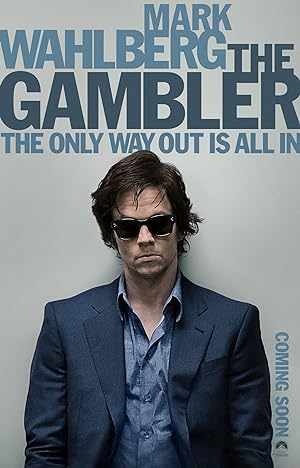
The Gambler
Jim Bennett is a risk taker. Both an English professor and a high-stakes gambler, Bennett bets it all when he borrows from a gangster and offers his own life as collateral. Always one step ahead, Bennett pits his creditor against the operator of a gambling ring and leaves his dysfunctional relationship with his wealthy mother in his wake. He plays both sides, immersing himself in an illicit, underground world while garnering the attention of Frank, a loan shark with a paternal interest in Bennett's future. As his relationship with a student deepens, Bennett must take the ultimate risk for a second chance.
Working with a respectable budget of $25.0M, the film achieved a respectable showing with $39.2M in global revenue (+57% profit margin).
1 win & 3 nominations


Plot Structure
Story beats plotted across runtime


Narrative Arc
Emotional journey through the story's key moments
Story Circle
Blueprint 15-beat structure
Arcplot Score Breakdown
Weighted: Precision (70%) + Arc (15%) + Theme (15%)
The Gambler (2014) showcases meticulously timed story structure, characteristic of Rupert Wyatt's storytelling approach. This structural analysis examines how the film's 15-point plot structure maps to proven narrative frameworks across 1 hour and 51 minutes. With an Arcplot score of 6.3, the film takes an unconventional approach to traditional narrative frameworks.
Characters
Cast & narrative archetypes

Jim Bennett
Amy Phillips
Frank
Neville Baraka
Roberta Bennett
Lamar Allen
Ed
Main Cast & Characters
Jim Bennett
Played by Mark Wahlberg
A literature professor with a severe gambling addiction who owes dangerous people a quarter million dollars.
Amy Phillips
Played by Brie Larson
Jim's promising student and love interest who represents the possibility of a normal life.
Frank
Played by John Goodman
A powerful loan shark who lends Jim money and becomes increasingly dangerous as the debt grows.
Neville Baraka
Played by Alvin Ing
A Korean gangster and casino operator to whom Jim owes a substantial debt.
Roberta Bennett
Played by Jessica Lange
Jim's wealthy mother who has repeatedly bailed him out of financial trouble.
Lamar Allen
Played by Anthony Kelley
A talented basketball player and Jim's student whom Jim tries to use to fix a game.
Ed
Played by George Kennedy
Jim's grandfather, a successful businessman who refuses to enable Jim's self-destructive behavior.
Structural Analysis
The Status Quo at 1 minutes (1% through the runtime) establishes Jim Bennett sits at an underground casino blackjack table, betting recklessly and winning, revealing his addiction and death-wish relationship with gambling.. Notably, this early placement immediately immerses viewers in the story world.
The inciting incident occurs at 13 minutes when Jim loses everything at the casino and owes $240,000 to Korean gangster Lee, who gives him seven days to pay—a debt that will cost him his life if unpaid.. At 12% through the film, this Disruption aligns precisely with traditional story structure. This beat shifts the emotional landscape, launching the protagonist into the central conflict.
The First Threshold at 28 minutes marks the transition into Act II, occurring at 25% of the runtime. This illustrates the protagonist's commitment to Instead of paying off Lee with his mother's money, Jim returns to the casino and gambles it all away—an active choice to embrace destruction rather than take the safe path., moving from reaction to action.
At 56 minutes, the Midpoint arrives at 50% of the runtime—precisely centered, creating perfect narrative symmetry. Of particular interest, this crucial beat Jim's scheme comes together as he convinces Lamar to shave points in the upcoming game, but the stakes become clear—he's now risking Lamar's future and has put Amy in danger by association with his criminal world., fundamentally raising what's at risk. The emotional intensity shifts, dividing the narrative into clear before-and-after phases.
The Collapse moment at 83 minutes (75% through) represents the emotional nadir. Here, Jim visits his dying mother and has a final confrontation about his wasted potential and death wish. He tells Amy to leave him, accepting he may die—the metaphorical death of his last human connections., illustrates the protagonist at their lowest point. This beat's placement in the final quarter sets up the climactic reversal.
The Second Threshold at 89 minutes initiates the final act resolution at 80% of the runtime. Jim realizes his path forward: use Frank's loan to place one massive bet on Lamar's game, pay everyone off, and reach the "fuck you" position Frank described—betting everything on nothing to become free., demonstrating the transformation achieved throughout the journey.
Emotional Journey
The Gambler's emotional architecture traces a deliberate progression across 15 carefully calibrated beats.
Narrative Framework
This structural analysis employs proven narrative structure principles that track dramatic progression. By mapping The Gambler against these established plot points, we can identify how Rupert Wyatt utilizes or subverts traditional narrative conventions. The plot point approach reveals not only adherence to structural principles but also creative choices that distinguish The Gambler within the crime genre.
Rupert Wyatt's Structural Approach
Among the 3 Rupert Wyatt films analyzed on Arcplot, the average structural score is 6.5, demonstrating varied approaches to story architecture. The Gambler takes a more unconventional approach compared to the director's typical style. For comparative analysis, explore the complete Rupert Wyatt filmography.
Comparative Analysis
Additional crime films include The Bad Guys, Rustom and The Whole Ten Yards. For more Rupert Wyatt analyses, see Rise of the Planet of the Apes, Captive State.
Plot Points by Act
Act I
SetupStatus Quo
Jim Bennett sits at an underground casino blackjack table, betting recklessly and winning, revealing his addiction and death-wish relationship with gambling.
Theme
Jim lectures his literature class about genius versus mediocrity, declaring that if you're not a genius you should get a regular job—stating the film's central theme about the courage to be either everything or nothing.
Worldbuilding
We see Jim's dual life: respected literature professor by day, compulsive gambler by night. His wealthy family background, strained relationship with his mother Roberta, and his nihilistic philosophy are established.
Disruption
Jim loses everything at the casino and owes $240,000 to Korean gangster Lee, who gives him seven days to pay—a debt that will cost him his life if unpaid.
Resistance
Jim seeks money from his mother who reluctantly agrees to bail him out one final time. He also borrows from Neville Baraka, a loan shark, digging himself deeper. Frank the money lender delivers his philosophy about having a "fuck you" position.
Act II
ConfrontationFirst Threshold
Instead of paying off Lee with his mother's money, Jim returns to the casino and gambles it all away—an active choice to embrace destruction rather than take the safe path.
Mirror World
Amy Phillips, Jim's brilliant student, reveals she knows about his gambling and shows genuine interest in him. She represents authentic connection and talent—everything Jim claims to value but fears pursuing.
Premise
Jim navigates between three dangerous creditors: Lee, Neville, and Frank. He continues teaching while under death threats, enters a relationship with Amy, and manipulates his student athlete Lamar to fix a basketball game.
Midpoint
Jim's scheme comes together as he convinces Lamar to shave points in the upcoming game, but the stakes become clear—he's now risking Lamar's future and has put Amy in danger by association with his criminal world.
Opposition
All three creditors close in. Lee's men beat Jim. Neville threatens violence. Frank gives Jim one final loan but makes clear this is his last chance. Jim's relationship with Amy deepens even as she sees his self-destructive nature.
Collapse
Jim visits his dying mother and has a final confrontation about his wasted potential and death wish. He tells Amy to leave him, accepting he may die—the metaphorical death of his last human connections.
Crisis
Jim sits alone, contemplating his fate. He reviews his life choices, his failed writing career, his deliberate self-destruction. He prepares for what seems like his final gamble with no expectation of survival.
Act III
ResolutionSecond Threshold
Jim realizes his path forward: use Frank's loan to place one massive bet on Lamar's game, pay everyone off, and reach the "fuck you" position Frank described—betting everything on nothing to become free.
Synthesis
The basketball game unfolds tensely. Lamar performs as needed. Jim wins the bet and systematically pays off all three creditors—Lee, Neville, and Frank—walking away clean with money left over.
Transformation
Jim runs through the streets at dawn, finally free. He finds Amy waiting for him. Unlike the opening image of a man gambling toward death, he now runs toward life and genuine connection—transformed from nihilism to hope.