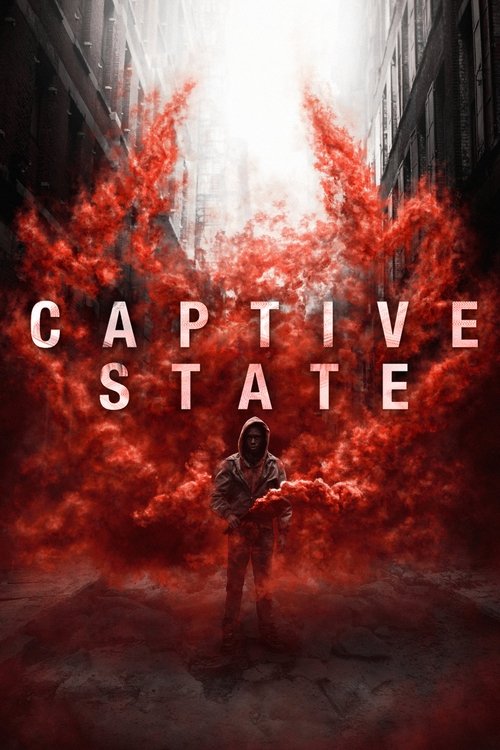
Captive State
Nearly a decade after occupation by an extraterrestrial force, the lives of a Chicago neighborhood on both sides of the conflict are explored. In a working-class Chicago neighborhood occupied by an alien force for nine years, increased surveillance and the restriction of civil rights have given rise to an authoritarian system -- and dissent among the populace.
The film box office disappointment against its respectable budget of $25.0M, earning $8.8M globally (-65% loss). While initial box office returns were modest, the film has gained appreciation for its unique voice within the science fiction genre.


Plot Structure
Story beats plotted across runtime


Narrative Arc
Emotional journey through the story's key moments
Story Circle
Blueprint 15-beat structure
Arcplot Score Breakdown
Weighted: Precision (70%) + Arc (15%) + Theme (15%)
Captive State (2019) showcases meticulously timed narrative architecture, characteristic of Rupert Wyatt's storytelling approach. This structural analysis examines how the film's 15-point plot structure maps to proven narrative frameworks across 1 hour and 50 minutes. With an Arcplot score of 6.8, the film balances conventional beats with creative variation.
Characters
Cast & narrative archetypes

Gabriel Drummond
William Mulligan
Rafe Drummond
Jane Doe
Daniel
Jurgis
Anita
Commissioner Igoe
Main Cast & Characters
Gabriel Drummond
Played by Ashton Sanders
Young man living in occupied Chicago whose brother was a resistance fighter. Reluctantly drawn into the underground movement against alien occupation.
William Mulligan
Played by John Goodman
Chicago police officer who collaborates with the alien occupiers while secretly having a more complex agenda regarding the resistance.
Rafe Drummond
Played by Jonathan Majors
Gabriel's older brother and resistance leader who faked his death nine years prior to continue fighting the alien occupation.
Jane Doe
Played by Vera Farmiga
Resistance operative working undercover in the collaboration government. Resourceful and committed to the cause of liberation.
Daniel
Played by Kevin Dunn
High-ranking official in the alien-controlled government who maintains order in the occupied zone.
Jurgis
Played by Machine Gun Kelly
Resistance fighter and explosives expert working with Rafe to execute attacks against the occupation.
Anita
Played by Madeline Brewer
Member of the resistance cell who helps coordinate the underground movement operations.
Commissioner Igoe
Played by Alan Ruck
Ruthless law enforcement official enforcing alien occupation rules with brutal efficiency.
Structural Analysis
The Status Quo at 1 minutes (1% through the runtime) establishes Nine years after alien invasion. Title card establishes Chicago as occupied territory under "Legislation," showing citizens living in surveillance state with strict curfews and collaboration government.. Significantly, this early placement immediately immerses viewers in the story world.
The inciting incident occurs at 12 minutes when Explosion at Pilsen police station kills officers. Mulligan is assigned to hunt down the resistance cell responsible, beginning the cat-and-mouse game that will drive the narrative.. At 11% through the film, this Disruption aligns precisely with traditional story structure. This beat shifts the emotional landscape, launching the protagonist into the central conflict.
The First Threshold at 27 minutes marks the transition into Act II, occurring at 24% of the runtime. This shows the protagonist's commitment to Gabriel fully commits to the resistance mission. He accepts his role in the plan to infiltrate Unity Center during the alien legislators' celebration, crossing into active rebellion against the occupation., moving from reaction to action.
At 54 minutes, the Midpoint arrives at 50% of the runtime—precisely centered, creating perfect narrative symmetry. The analysis reveals that this crucial beat The resistance infiltration appears successful. They're inside Unity Center, positioned to strike at the alien leadership. False victory: the plan seems to be working perfectly, raising stakes before the reveal., fundamentally raising what's at risk. The emotional intensity shifts, dividing the narrative into clear before-and-after phases.
The Collapse moment at 82 minutes (75% through) represents the emotional nadir. Here, The resistance cell is decimated. Most members are killed or captured in the Unity Center raid. The mission appears to have failed catastrophically, with Gabriel seemingly dead and the movement crushed., illustrates the protagonist at their lowest point. This beat's placement in the final quarter sets up the climactic reversal.
The Second Threshold at 87 minutes initiates the final act resolution at 79% of the runtime. The twist reveals: Mulligan was the resistance mole all along. His entire investigation was designed to protect the real plan. Gabriel is alive. The "failure" was misdirection. New clarity allows the true mission to succeed., demonstrating the transformation achieved throughout the journey.
Emotional Journey
Captive State's emotional architecture traces a deliberate progression across 15 carefully calibrated beats.
Narrative Framework
This structural analysis employs a 15-point narrative structure framework that maps key story moments. By mapping Captive State against these established plot points, we can identify how Rupert Wyatt utilizes or subverts traditional narrative conventions. The plot point approach reveals not only adherence to structural principles but also creative choices that distinguish Captive State within the science fiction genre.
Rupert Wyatt's Structural Approach
Among the 3 Rupert Wyatt films analyzed on Arcplot, the average structural score is 6.5, demonstrating varied approaches to story architecture. Captive State represents one of the director's most structurally precise works. For comparative analysis, explore the complete Rupert Wyatt filmography.
Comparative Analysis
Additional science fiction films include The Postman, Mad Max 2 and AVP: Alien vs. Predator. For more Rupert Wyatt analyses, see Rise of the Planet of the Apes, The Gambler.
Plot Points by Act
Act I
SetupStatus Quo
Nine years after alien invasion. Title card establishes Chicago as occupied territory under "Legislation," showing citizens living in surveillance state with strict curfews and collaboration government.
Theme
Mulligan tells Gabriel about his brother Rafe: "Some people choose to fight. Some people choose to live." The central question: Is collaboration or resistance the right path under occupation?
Worldbuilding
Establishment of occupied Chicago: Gabriel working at factory, Mulligan as Special Branch officer tracking resistance, the closed zone system, alien technology integration, and class divisions between collaborators and workers.
Disruption
Explosion at Pilsen police station kills officers. Mulligan is assigned to hunt down the resistance cell responsible, beginning the cat-and-mouse game that will drive the narrative.
Resistance
Mulligan investigates the resistance network while Gabriel is secretly recruited by the cell. Parallel tracks show Mulligan's detective work and the resistance planning their mission. Both sides prepare for confrontation.
Act II
ConfrontationFirst Threshold
Gabriel fully commits to the resistance mission. He accepts his role in the plan to infiltrate Unity Center during the alien legislators' celebration, crossing into active rebellion against the occupation.
Mirror World
Jane, the resistance organizer, becomes Gabriel's connection to the larger cause. She represents the ideological commitment to resistance that mirrors Mulligan's commitment to collaboration and order.
Premise
The resistance executes their complex plan: surveillance, infiltration, tunnel digging, and coordination. Mulligan closes in, interrogating suspects and following leads. The thriller "promise" delivers as both sides maneuver toward the Unity Center showdown.
Midpoint
The resistance infiltration appears successful. They're inside Unity Center, positioned to strike at the alien leadership. False victory: the plan seems to be working perfectly, raising stakes before the reveal.
Opposition
Mulligan systematically dismantles the resistance network, capturing members and closing escape routes. The net tightens as he anticipates their moves. The attack unfolds but complications emerge. Pressure intensifies from both occupation forces and alien overseers.
Collapse
The resistance cell is decimated. Most members are killed or captured in the Unity Center raid. The mission appears to have failed catastrophically, with Gabriel seemingly dead and the movement crushed.
Crisis
Mulligan processes the aftermath, believing he's won. Gabriel's apparent death and the resistance's destruction create a dark moment where collaboration seems to have triumphed over rebellion. The cost of resistance appears too high.
Act III
ResolutionSecond Threshold
The twist reveals: Mulligan was the resistance mole all along. His entire investigation was designed to protect the real plan. Gabriel is alive. The "failure" was misdirection. New clarity allows the true mission to succeed.
Synthesis
The real plan unfolds: the resistance attack was a diversion to mask intelligence gathering. Mulligan completes his deep-cover mission, transmitting critical data about alien technology. The true blow against occupation succeeds through sacrifice and long-term strategy.
Transformation
Mulligan is executed by the aliens who discover his betrayal. Gabriel escapes with the intelligence. The collaborator becomes martyr; the survivor carries the resistance forward. The cycle continues but hope persists through sacrifice.