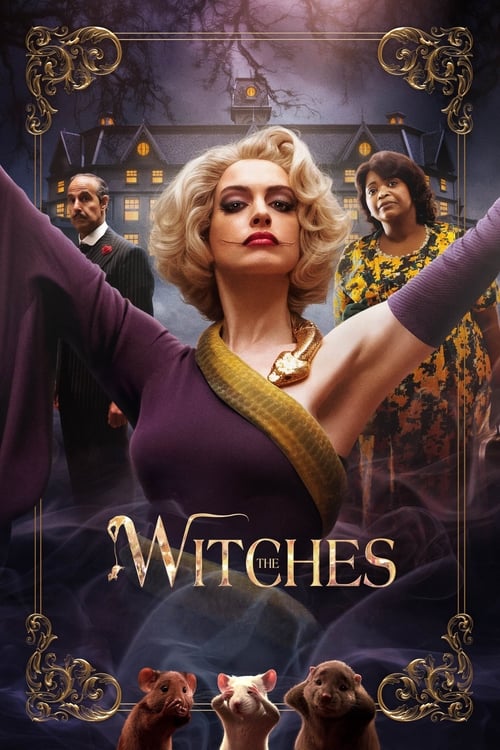
Roald Dahl's The Witches
In late 1967, a young orphaned boy goes to live with his loving grandma in the rural Alabama town of Demopolis. As the boy and his grandmother encounter some deceptively glamorous but thoroughly diabolical witches, she wisely whisks him away to a seaside resort. Regrettably, they arrive at precisely the same time that the world's Grand High Witch has gathered.
The film earned $29.3M at the global box office.


Plot Structure
Story beats plotted across runtime


Narrative Arc
Emotional journey through the story's key moments
Story Circle
Blueprint 15-beat structure
Arcplot Score Breakdown
Weighted: Precision (70%) + Arc (15%) + Theme (15%)
Roald Dahl's The Witches (2020) reveals precise plot construction, characteristic of Robert Zemeckis's storytelling approach. This structural analysis examines how the film's 15-point plot structure maps to proven narrative frameworks across 1 hour and 44 minutes. With an Arcplot score of 7.5, the film showcases strong structural fundamentals.
Characters
Cast & narrative archetypes

Hero Boy
Grandma
Grand High Witch
Bruno Jenkins
Daisy
Main Cast & Characters
Hero Boy
Played by Jahzir Bruno
A young orphaned boy who discovers a coven of witches planning to turn children into mice.
Grandma
Played by Octavia Spencer
The boy's loving and wise grandmother who teaches him about witches and protects him.
Grand High Witch
Played by Anne Hathaway
The terrifying leader of the witches who plots to eliminate all children by turning them into mice.
Bruno Jenkins
Played by Codie-Lei Eastick
A gluttonous boy who befriends Hero Boy and gets turned into a mouse by the witches.
Daisy
Played by Kristin Chenoweth
A spirited girl who was previously turned into a mouse by witches and helps the boys.
Structural Analysis
The Status Quo at 1 minutes (1% through the runtime) establishes Young Hero Boy lives happily with his parents in Chicago, 1968. His mother tells him stories, establishing their loving family dynamic before tragedy strikes.. The analysis reveals that this early placement immediately immerses viewers in the story world.
The inciting incident occurs at 12 minutes when Hero Boy encounters a witch at the local store who tries to lure him with a snake. He recognizes her from Grandma's warnings and barely escapes, confirming that witches are real and hunting him.. At 12% through the film, this Disruption aligns precisely with traditional story structure. This beat shifts the emotional landscape, launching the protagonist into the central conflict.
The First Threshold at 25 minutes marks the transition into Act II, occurring at 24% of the runtime. This indicates the protagonist's commitment to Hero Boy chooses to train his mouse in the hotel ballroom and accidentally discovers a secret witches' convention led by the Grand High Witch. He decides to stay hidden and spy rather than flee, actively choosing to enter their dangerous world., moving from reaction to action.
At 51 minutes, the Midpoint arrives at 49% of the runtime—precisely centered, creating perfect narrative symmetry. Of particular interest, this crucial beat Hero Boy and Bruno successfully communicate with Grandma, who believes them and vows to help. False defeat: though they have an ally, they are still mice, the witches have the formula, and the Grand High Witch is preparing to distribute it worldwide. Stakes are raised enormously., fundamentally raising what's at risk. The emotional intensity shifts, dividing the narrative into clear before-and-after phases.
The Collapse moment at 76 minutes (73% through) represents the emotional nadir. Here, The Grand High Witch discovers the theft and corners Hero Boy. She crushes Daisy the mouse, killing her. Hero Boy faces literal death as the witch tries to stomp him. He loses his beloved pet and nearly loses his own life—the darkest moment., demonstrates the protagonist at their lowest point. This beat's placement in the final quarter sets up the climactic reversal.
The Second Threshold at 83 minutes initiates the final act resolution at 80% of the runtime. Hero Boy synthesizes Grandma's wisdom with his own courage. He devises a plan to poison the witches' soup with their own Formula 86, using his small size as an advantage. He chooses to act, accepting his mouse form as a tool rather than a curse., demonstrating the transformation achieved throughout the journey.
Emotional Journey
Roald Dahl's The Witches's emotional architecture traces a deliberate progression across 15 carefully calibrated beats.
Narrative Framework
This structural analysis employs systematic plot point analysis that identifies crucial turning points. By mapping Roald Dahl's The Witches against these established plot points, we can identify how Robert Zemeckis utilizes or subverts traditional narrative conventions. The plot point approach reveals not only adherence to structural principles but also creative choices that distinguish Roald Dahl's The Witches within the comedy genre.
Robert Zemeckis's Structural Approach
Among the 20 Robert Zemeckis films analyzed on Arcplot, the average structural score is 6.9, demonstrating varied approaches to story architecture. Roald Dahl's The Witches represents one of the director's most structurally precise works. For comparative analysis, explore the complete Robert Zemeckis filmography.
Comparative Analysis
Additional comedy films include The Bad Guys, Ella Enchanted and The Evening Star. For more Robert Zemeckis analyses, see Who Framed Roger Rabbit, Beowulf and Welcome to Marwen.
Plot Points by Act
Act I
SetupStatus Quo
Young Hero Boy lives happily with his parents in Chicago, 1968. His mother tells him stories, establishing their loving family dynamic before tragedy strikes.
Theme
Grandma tells Hero Boy about witches: "They hate children more than anything." She warns that evil exists in the world disguised as normalcy, but love and bravery can overcome it.
Worldbuilding
Hero Boy loses his parents in a car accident and goes to live with his Grandma in Alabama. She teaches him about witches: their purple eyes, toeless feet, bald heads, and heightened sense of smell that makes clean children targets. He adopts a pet mouse named Daisy.
Disruption
Hero Boy encounters a witch at the local store who tries to lure him with a snake. He recognizes her from Grandma's warnings and barely escapes, confirming that witches are real and hunting him.
Resistance
Grandma becomes ill with diabetes, and they travel to a seaside hotel for her to recuperate. She continues to mentor Hero Boy about witches and survival. He trains his pet mouse Daisy and explores the hotel cautiously.
Act II
ConfrontationFirst Threshold
Hero Boy chooses to train his mouse in the hotel ballroom and accidentally discovers a secret witches' convention led by the Grand High Witch. He decides to stay hidden and spy rather than flee, actively choosing to enter their dangerous world.
Mirror World
Hero Boy meets Bruno Jenkins, a gluttonous boy who becomes an unlikely ally. Bruno represents the opposite approach—selfish and reckless where Hero Boy is cautious—but their friendship embodies the theme that misfits must unite against evil.
Premise
Hero Boy witnesses the Grand High Witch's plan to turn all children into mice using Formula 86. He and Bruno are discovered, force-fed the potion, and transformed into mice. Now in mouse form, they must navigate the hotel, evade detection, and find a way to stop the witches.
Midpoint
Hero Boy and Bruno successfully communicate with Grandma, who believes them and vows to help. False defeat: though they have an ally, they are still mice, the witches have the formula, and the Grand High Witch is preparing to distribute it worldwide. Stakes are raised enormously.
Opposition
The Grand High Witch discovers their interference. Bruno's parents reject him in mouse form. The trio plans to steal Formula 86 from the Grand High Witch's room. They infiltrate her suite, dodging her familiar, and barely escape with a vial of the potion.
Collapse
The Grand High Witch discovers the theft and corners Hero Boy. She crushes Daisy the mouse, killing her. Hero Boy faces literal death as the witch tries to stomp him. He loses his beloved pet and nearly loses his own life—the darkest moment.
Crisis
Hero Boy grieves Daisy and processes his fear. Grandma comforts him, reminding him that bravery means acting despite fear. He realizes that staying a mouse forever might be his fate, but he can still save other children.
Act III
ResolutionSecond Threshold
Hero Boy synthesizes Grandma's wisdom with his own courage. He devises a plan to poison the witches' soup with their own Formula 86, using his small size as an advantage. He chooses to act, accepting his mouse form as a tool rather than a curse.
Synthesis
Hero Boy and Bruno infiltrate the kitchen and pour Formula 86 into the witches' soup during their banquet. All the witches, including the Grand High Witch, consume the soup and transform into mice. The hotel staff and guests eliminate the mouse-witches. Hero Boy and Grandma retrieve the Grand High Witch's addresses to warn others.
Transformation
Hero Boy remains a mouse but returns home with Grandma, happy and transformed internally. He has found family, purpose, and bravery. The closing image shows him thriving as a mouse-boy with Grandma, proving that love transcends form and that heroes come in all sizes.