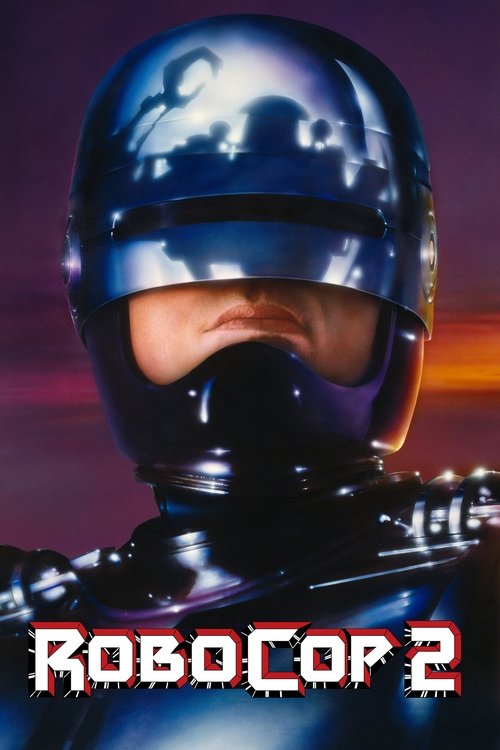
RoboCop 2
After a successful deployment of the RoboCop Law Enforcement unit, OCP sees its goal of urban pacification come closer and closer, but as this develops, a new narcotic known as "Nuke" invades the streets led by God-delirious leader Cane. As this menace grows, it may prove to be too much for Murphy to handle. OCP tries to replicate the success of the first unit, but ends up with failed prototypes with suicidal issues... until Dr. Faxx, a scientist straying away from OCP's path, uses Cane as the new subject for the RoboCop 2 project, a living God.
Working with a moderate budget of $35.0M, the film achieved a modest success with $45.7M in global revenue (+31% profit margin).


Plot Structure
Story beats plotted across runtime


Narrative Arc
Emotional journey through the story's key moments
Story Circle
Blueprint 15-beat structure
Arcplot Score Breakdown
Weighted: Precision (70%) + Arc (15%) + Theme (15%)
RoboCop 2 (1990) showcases meticulously timed story structure, characteristic of Irvin Kershner's storytelling approach. This structural analysis examines how the film's 15-point plot structure maps to proven narrative frameworks across 1 hour and 57 minutes. With an Arcplot score of 6.5, the film balances conventional beats with creative variation.
Characters
Cast & narrative archetypes

RoboCop / Alex Murphy
Cain
Anne Lewis
Juliette Faxx
The Old Man
Donald Johnson
Hob
Main Cast & Characters
RoboCop / Alex Murphy
Played by Peter Weller
A cyborg police officer struggling to maintain his humanity while serving as OCP's law enforcement tool in crime-ridden Detroit.
Cain
Played by Tom Noonan
A charismatic drug lord leading the Nuke cult who becomes the basis for the RoboCop 2 cyborg, making him RoboCop's dark mirror.
Anne Lewis
Played by Nancy Allen
RoboCop's loyal partner and the person who most consistently sees and supports the human Alex Murphy within the machine.
Juliette Faxx
Played by Belinda Bauer
An ambitious OCP psychologist who manipulates the RoboCop 2 project for corporate advancement, using psychological warfare and manipulation.
The Old Man
Played by Dan O'Herlihy
The pragmatic CEO of OCP who maintains a paternalistic relationship with RoboCop while pursuing corporate interests.
Donald Johnson
Played by Felton Perry
The corrupt mayor of Detroit who is addicted to Nuke and compromised by Cain's organization.
Hob
Played by Gabriel Damon
A ruthless and intelligent child gang leader working with Cain who represents the corruption of innocence in Detroit's dystopia.
Structural Analysis
The Status Quo at 1 minutes (1% through the runtime) establishes Detroit is on the brink of collapse. RoboCop patrols a chaotic, crime-ridden city while OCP struggles with bankruptcy and a police strike looms.. Of particular interest, this early placement immediately immerses viewers in the story world.
The inciting incident occurs at 15 minutes when RoboCop confronts Cain's gang at their Nuke lab and is ambushed. The gang brutally dismantles him piece by piece, leaving him destroyed and helpless.. At 13% through the film, this Disruption is delayed, allowing extended setup of the story world. This beat shifts the emotional landscape, launching the protagonist into the central conflict.
The First Threshold at 29 minutes marks the transition into Act II, occurring at 25% of the runtime. This indicates the protagonist's commitment to RoboCop actively chooses to electrocute himself to purge the restrictive directives, reclaiming his autonomy and identity. He decides to be his own man, not OCP's puppet., moving from reaction to action.
At 59 minutes, the Midpoint arrives at 50% of the runtime—precisely centered, creating perfect narrative symmetry. Notably, this crucial beat Cain awakens as RoboCop 2, a heavily-armed cyborg. Instead of serving OCP, he goes berserk, killing scientists and escaping. The creation meant to replace RoboCop becomes an unstoppable monster., fundamentally raising what's at risk. The emotional intensity shifts, dividing the narrative into clear before-and-after phases.
The Collapse moment at 88 minutes (75% through) represents the emotional nadir. Here, At the OCP gala unveiling RoboCop 2, Cain's Nuke addiction is triggered and he goes on a rampage, killing the Old Man. RoboCop arrives but is brutally overpowered and beaten nearly to death by the superior machine., demonstrates the protagonist at their lowest point. This beat's placement in the final quarter sets up the climactic reversal.
The Second Threshold at 94 minutes initiates the final act resolution at 80% of the runtime. RoboCop realizes Cain's weakness: his Nuke addiction and human ego. He understands he must use his humanity—what makes him different from RoboCop 2—to win., demonstrating the transformation achieved throughout the journey.
Emotional Journey
RoboCop 2's emotional architecture traces a deliberate progression across 15 carefully calibrated beats.
Narrative Framework
This structural analysis employs systematic plot point analysis that identifies crucial turning points. By mapping RoboCop 2 against these established plot points, we can identify how Irvin Kershner utilizes or subverts traditional narrative conventions. The plot point approach reveals not only adherence to structural principles but also creative choices that distinguish RoboCop 2 within the action genre.
Irvin Kershner's Structural Approach
Among the 4 Irvin Kershner films analyzed on Arcplot, the average structural score is 7.0, reflecting strong command of classical structure. RoboCop 2 takes a more unconventional approach compared to the director's typical style. For comparative analysis, explore the complete Irvin Kershner filmography.
Comparative Analysis
Additional action films include The Bad Guys, Puss in Boots and Venom: The Last Dance. For more Irvin Kershner analyses, see Eyes of Laura Mars, Star Wars: Episode V - The Empire Strikes Back and Never Say Never Again.
Plot Points by Act
Act I
SetupStatus Quo
Detroit is on the brink of collapse. RoboCop patrols a chaotic, crime-ridden city while OCP struggles with bankruptcy and a police strike looms.
Theme
The Old Man discusses humanity vs. machinery with executives: "We can't let sentiment cloud our judgment." The film's central question: what makes someone human when they're part machine?
Worldbuilding
OCP's financial crisis deepens as the Old Man loses control. Detroit's decay accelerates under Nuke addiction epidemic run by cult leader Cain. RoboCop struggles with glitching directives while trying to reconnect with his wife and son.
Disruption
RoboCop confronts Cain's gang at their Nuke lab and is ambushed. The gang brutally dismantles him piece by piece, leaving him destroyed and helpless.
Resistance
RoboCop is rebuilt but loaded with hundreds of ridiculous new directives that paralyze him. OCP psychologists attempt to "fix" him. Meanwhile, Faxx pitches the RoboCop 2 program using Cain's brain, and OCP's corrupt takeover scheme unfolds.
Act II
ConfrontationFirst Threshold
RoboCop actively chooses to electrocute himself to purge the restrictive directives, reclaiming his autonomy and identity. He decides to be his own man, not OCP's puppet.
Mirror World
RoboCop reconnects with Anne Lewis, his partner who sees him as Murphy, not just a machine. Their relationship represents the humanity he's fighting to preserve.
Premise
Free from restrictions, RoboCop hunts Cain's operation while OCP's RoboCop 2 program proceeds in parallel. Cain is captured after a violent arcade confrontation. Faxx begins the process of turning Cain into RoboCop 2.
Midpoint
Cain awakens as RoboCop 2, a heavily-armed cyborg. Instead of serving OCP, he goes berserk, killing scientists and escaping. The creation meant to replace RoboCop becomes an unstoppable monster.
Opposition
RoboCop 2/Cain escapes and reunites with his cult, becoming more dangerous than ever. OCP's corruption is exposed. The Mayor capitulates to OCP's demands. RoboCop is marginalized and outmatched by his successor.
Collapse
At the OCP gala unveiling RoboCop 2, Cain's Nuke addiction is triggered and he goes on a rampage, killing the Old Man. RoboCop arrives but is brutally overpowered and beaten nearly to death by the superior machine.
Crisis
RoboCop lies broken as RoboCop 2 rampages with the Nuke supply. Everything has failed—his mentor is dead, the city is lost, and he's been replaced by a superior but evil version of himself.
Act III
ResolutionSecond Threshold
RoboCop realizes Cain's weakness: his Nuke addiction and human ego. He understands he must use his humanity—what makes him different from RoboCop 2—to win.
Synthesis
RoboCop confronts RoboCop 2 and uses psychological warfare, exploiting Cain's addiction and vanity. He smashes the Nuke canister, driving Cain into withdrawal rage. In the brutal final fight, RoboCop tears out Cain's brain, ending the threat.
Transformation
RoboCop stands victorious with Anne Lewis. A young boy thanks him, calling him "Murphy." He nods, fully accepting both identities—machine and man united.