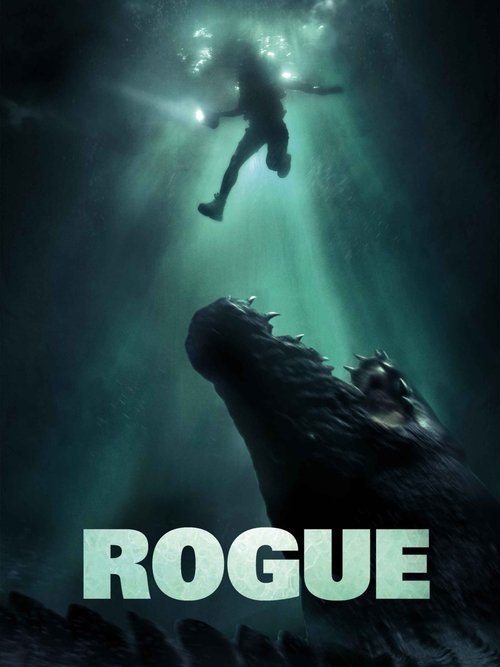
Rogue
When a group of tourists stumble into the remote Australian river territory of an enormous crocodile, the deadly creature traps them on a tiny mud island with the tide quickly rising and darkness descending. As the hungry predator closes in, they must fight for survival against all odds.
The film box office disappointment against its moderate budget of $20.0M, earning $4.6M globally (-77% loss). While initial box office returns were modest, the film has gained appreciation for its compelling narrative within the action genre.


Plot Structure
Story beats plotted across runtime


Narrative Arc
Emotional journey through the story's key moments
Story Circle
Blueprint 15-beat structure
Arcplot Score Breakdown
Weighted: Precision (70%) + Arc (15%) + Theme (15%)
Rogue (2007) exemplifies precise dramatic framework, characteristic of Greg McLean's storytelling approach. This structural analysis examines how the film's 15-point plot structure maps to proven narrative frameworks across 1 hour and 39 minutes. With an Arcplot score of 7.2, the film balances conventional beats with creative variation.
Characters
Cast & narrative archetypes

Pete McKell
Kate Ryan
Neil Kelly
Russell
Everett Kennedy
Gwen
Allen
Sherry
Main Cast & Characters
Pete McKell
Played by Michael Vartan
An American travel journalist who becomes stranded with tourists when a massive crocodile attacks their boat in the Australian outback.
Kate Ryan
Played by Radha Mitchell
An experienced and resourceful river cruise guide who must protect her passengers from a territorial saltwater crocodile.
Neil Kelly
Played by Sam Worthington
An aggressive and confrontational tourist whose reckless behavior endangers the group.
Russell
Played by John Jarratt
A pragmatic businessman and family man trying to keep his wife and daughter safe.
Everett Kennedy
Played by Barry Otto
A cynical and impatient tourist who doubts Kate's competence as their guide.
Gwen
Played by Heather Mitchell
A nervous tourist who struggles with the increasingly dangerous situation.
Allen
Played by Geoff Morrell
An elderly tourist who provides a voice of reason and calm during the crisis.
Sherry
Played by Mia Wasikowska
Russell's wife and protective mother caught in the terrifying ordeal.
Structural Analysis
The Status Quo at 1 minutes (1% through the runtime) establishes Pete McKell arrives in the Australian Outback, a cynical American travel writer on assignment. He's detached and dismissive of the natural beauty around him, representing urban disconnection from nature.. Of particular interest, this early placement immediately immerses viewers in the story world.
The inciting incident occurs at 12 minutes when A distress flare is spotted in the distance. Despite being outside her permitted route, Kate makes the fateful decision to investigate, taking the group into uncharted crocodile territory.. At 12% through the film, this Disruption aligns precisely with traditional story structure. This beat shifts the emotional landscape, launching the protagonist into the central conflict.
The First Threshold at 25 minutes marks the transition into Act II, occurring at 25% of the runtime. This demonstrates the protagonist's commitment to The group realizes they are trapped on a mudflat that will be completely submerged at high tide. There is no escape by water - the crocodile patrols below. They must find another way or die. Survival mode begins., moving from reaction to action.
At 50 minutes, the Midpoint arrives at 50% of the runtime—precisely centered, creating perfect narrative symmetry. The analysis reveals that this crucial beat Neil successfully swims the rope across but is killed by the crocodile moments after reaching shore. The one viable escape route has been established but at a devastating cost - and the predator now knows their plan., fundamentally raising what's at risk. The emotional intensity shifts, dividing the narrative into clear before-and-after phases.
The Collapse moment at 74 minutes (75% through) represents the emotional nadir. Here, Kate is taken by the crocodile and presumed dead. The remaining survivors are almost out of time as the island disappears beneath the rising tide. Pete, who started as a detached observer, now faces losing everyone including the woman who changed him., indicates the protagonist at their lowest point. This beat's placement in the final quarter sets up the climactic reversal.
The Second Threshold at 80 minutes initiates the final act resolution at 80% of the runtime. Pete makes the heroic choice to enter the crocodile's lair - an underwater cave where it stores its kills. Armed only with a knife and desperate courage, he chooses to risk everything to save Kate, fully embracing his transformation., demonstrating the transformation achieved throughout the journey.
Emotional Journey
Rogue's emotional architecture traces a deliberate progression across 15 carefully calibrated beats.
Narrative Framework
This structural analysis employs structural analysis methodology used to understand storytelling architecture. By mapping Rogue against these established plot points, we can identify how Greg McLean utilizes or subverts traditional narrative conventions. The plot point approach reveals not only adherence to structural principles but also creative choices that distinguish Rogue within the action genre.
Greg McLean's Structural Approach
Among the 5 Greg McLean films analyzed on Arcplot, the average structural score is 7.4, reflecting strong command of classical structure. Rogue takes a more unconventional approach compared to the director's typical style. For comparative analysis, explore the complete Greg McLean filmography.
Comparative Analysis
Additional action films include The Bad Guys, Puss in Boots and Venom: The Last Dance. For more Greg McLean analyses, see Wolf Creek 2, The Darkness and The Belko Experiment.
Plot Points by Act
Act I
SetupStatus Quo
Pete McKell arrives in the Australian Outback, a cynical American travel writer on assignment. He's detached and dismissive of the natural beauty around him, representing urban disconnection from nature.
Theme
Kate, the tour guide, warns the group about respecting the territory and the creatures that live there - "Out here, we're visitors in their world." This establishes the theme of human hubris versus nature's dominance.
Worldbuilding
The tour group is introduced aboard the river cruise: tourists including a bickering couple, a family with a teenage daughter, and locals. The stunning but dangerous landscape of Kakadu-like territory is established, along with hints of the apex predator lurking beneath.
Disruption
A distress flare is spotted in the distance. Despite being outside her permitted route, Kate makes the fateful decision to investigate, taking the group into uncharted crocodile territory.
Resistance
The group ventures deeper into the forbidden waterways searching for survivors. Tension builds as locals Neil and Collin express concern. The massive crocodile attacks and destroys the boat's hull, leaving them stranded on a tiny tidal island.
Act II
ConfrontationFirst Threshold
The group realizes they are trapped on a mudflat that will be completely submerged at high tide. There is no escape by water - the crocodile patrols below. They must find another way or die. Survival mode begins.
Mirror World
Pete and Kate share a moment of genuine connection as they work together to assess their options. Kate reveals her deep knowledge and respect for this land. Pete begins to see beyond his cynicism, finding purpose in protecting the group.
Premise
The survivors attempt various escape plans: swimming a rope to the far shore, building a makeshift raft. Each attempt ends in terror as the crocodile picks off victims one by one. The group dynamics fracture under stress as the water slowly rises.
Midpoint
Neil successfully swims the rope across but is killed by the crocodile moments after reaching shore. The one viable escape route has been established but at a devastating cost - and the predator now knows their plan.
Opposition
Survivors attempt to cross using the rope line but the crocodile continues its assault. More people die. The island shrinks as tide rises. Internal conflicts erupt. Pete must step up as de facto leader as Kate is dragged underwater by the beast.
Collapse
Kate is taken by the crocodile and presumed dead. The remaining survivors are almost out of time as the island disappears beneath the rising tide. Pete, who started as a detached observer, now faces losing everyone including the woman who changed him.
Crisis
Pete is consumed by despair and guilt. He's transformed from cynical bystander to someone who cares deeply. He realizes Kate might still be alive - crocodiles store prey. He must make an impossible choice: flee to safety or go after her.
Act III
ResolutionSecond Threshold
Pete makes the heroic choice to enter the crocodile's lair - an underwater cave where it stores its kills. Armed only with a knife and desperate courage, he chooses to risk everything to save Kate, fully embracing his transformation.
Synthesis
Pete navigates the nightmarish underwater lair, finding Kate barely alive among the crocodile's stored victims. In a brutal confrontation, Pete kills the massive crocodile using its own environment against it. He carries Kate to safety as dawn breaks.
Transformation
Pete and Kate emerge into daylight, survivors transformed by their ordeal. Pete is no longer the cynical outsider - he has proven his courage and found connection. The vast, beautiful, dangerous landscape remains, but Pete now sees it with reverent respect.