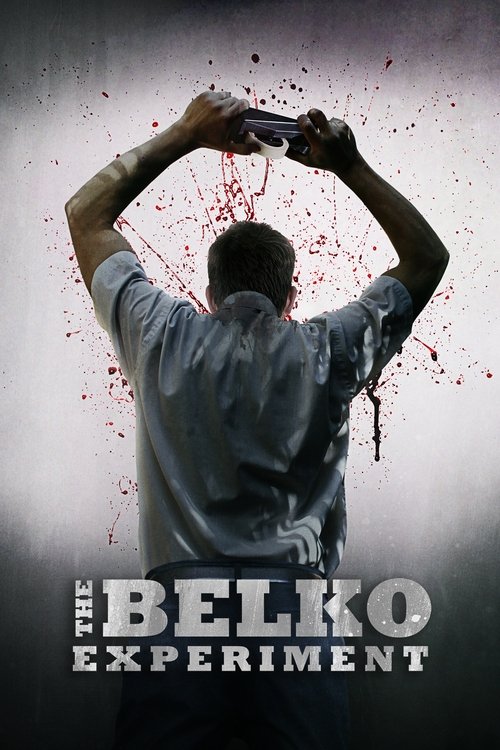
The Belko Experiment
A group of eighty American workers are locked in their office and ordered by an unknown voice to participate in a twisted game.
Despite its small-scale budget of $5.0M, The Belko Experiment became a box office success, earning $11.8M worldwide—a 136% return.


Plot Structure
Story beats plotted across runtime


Narrative Arc
Emotional journey through the story's key moments
Story Circle
Blueprint 15-beat structure
Arcplot Score Breakdown
Weighted: Precision (70%) + Arc (15%) + Theme (15%)
The Belko Experiment (2016) demonstrates carefully calibrated plot construction, characteristic of Greg McLean's storytelling approach. This structural analysis examines how the film's 15-point plot structure maps to proven narrative frameworks across 1 hour and 29 minutes. With an Arcplot score of 7.4, the film balances conventional beats with creative variation.
Characters
Cast & narrative archetypes

Mike Milch
Barry Norris
Leandra Florez
Wendell Dukes
Dany Wilkins
Vince Agostino
Terry Winters
Marty Espenscheid
Keith McLure
Lonny Crane
Main Cast & Characters
Mike Milch
Played by John Gallagher Jr.
A level-headed office worker who becomes the moral center of the survival scenario, trying to maintain humanity amid chaos.
Barry Norris
Played by Tony Goldwyn
The COO and ruthless pragmatist who organizes killing teams to maximize survival odds, becoming the primary antagonist.
Leandra Florez
Played by Adria Arjona
Mike's girlfriend and a compassionate employee who represents hope and humanity in the death game.
Wendell Dukes
Played by John C. McGinley
A maintenance worker and military veteran who reluctantly uses his combat skills to survive the ordeal.
Dany Wilkins
Played by Melonie Diaz
An employee who struggles with the moral horror of the situation and seeks to protect others.
Vince Agostino
Played by Brent Sexton
A violent and unstable employee who embraces the brutality of the game with disturbing enthusiasm.
Terry Winters
Played by Owain Yeoman
A security guard and former Marine who becomes one of Barry's enforcers in the killing operation.
Marty Espenscheid
Played by Sean Gunn
An alcoholic employee with substance issues who becomes increasingly unhinged during the lockdown.
Keith McLure
Played by Michael Rooker
A newer employee caught in the nightmare, struggling to comprehend the horror unfolding around him.
Lonny Crane
Played by David Dastmalchian
A creepy and socially awkward employee whose disturbing behavior becomes more pronounced under pressure.
Structural Analysis
The Status Quo at 1 minutes (1% through the runtime) establishes Mike Milch arrives at the Belko Industries office in Bogotá, showing a normal workday beginning with friendly interactions and routine security checks at the entrance.. Structural examination shows that this early placement immediately immerses viewers in the story world.
The inciting incident occurs at 10 minutes when The building goes into lockdown with metal shutters sealing all windows and exits. A voice over the intercom orders employees to kill two people within 30 minutes or four will die.. At 11% through the film, this Disruption aligns precisely with traditional story structure. This beat shifts the emotional landscape, launching the protagonist into the central conflict.
The First Threshold at 22 minutes marks the transition into Act II, occurring at 25% of the runtime. This demonstrates the protagonist's commitment to Four employees' heads explode via the tracking devices when the first deadline passes, proving the threat is real and forcing everyone to accept they are in a deadly game with no escape., moving from reaction to action.
At 44 minutes, the Midpoint arrives at 49% of the runtime—precisely centered, creating perfect narrative symmetry. Notably, this crucial beat The voice demands 30 people be killed within two hours or 60 will die. The stakes escalate massively, and Barry's faction begins systematically hunting and executing employees, turning the office into a war zone., fundamentally raising what's at risk. The emotional intensity shifts, dividing the narrative into clear before-and-after phases.
The Collapse moment at 66 minutes (74% through) represents the emotional nadir. Here, Leandra is killed by Barry's men despite Mike's efforts to save her. Mike's hope and moral anchor dies, leaving him devastated and alone in the carnage., illustrates the protagonist at their lowest point. This beat's placement in the final quarter sets up the climactic reversal.
The Second Threshold at 71 minutes initiates the final act resolution at 80% of the runtime. Mike realizes he must kill Barry and his remaining enforcers to end the experiment. He arms himself and chooses violent action, becoming what he resisted to survive and win., demonstrating the transformation achieved throughout the journey.
Emotional Journey
The Belko Experiment's emotional architecture traces a deliberate progression across 15 carefully calibrated beats.
Narrative Framework
This structural analysis employs a 15-point narrative structure framework that maps key story moments. By mapping The Belko Experiment against these established plot points, we can identify how Greg McLean utilizes or subverts traditional narrative conventions. The plot point approach reveals not only adherence to structural principles but also creative choices that distinguish The Belko Experiment within the horror genre.
Greg McLean's Structural Approach
Among the 5 Greg McLean films analyzed on Arcplot, the average structural score is 7.4, reflecting strong command of classical structure. The Belko Experiment represents one of the director's most structurally precise works. For comparative analysis, explore the complete Greg McLean filmography.
Comparative Analysis
Additional horror films include Thinner, A Nightmare on Elm Street and Mary Reilly. For more Greg McLean analyses, see Wolf Creek 2, The Darkness and Rogue.
Plot Points by Act
Act I
SetupStatus Quo
Mike Milch arrives at the Belko Industries office in Bogotá, showing a normal workday beginning with friendly interactions and routine security checks at the entrance.
Theme
Barry Norris jokes about office politics and survival, foreshadowing the ethical question: "What would you do to survive, and who decides who lives or dies?"
Worldbuilding
Introduction to Belko Industries employees, office dynamics, relationships (Mike and Leandra, Dany and Wendell), the mysterious tracking devices implanted in employees, and the isolated compound setting.
Disruption
The building goes into lockdown with metal shutters sealing all windows and exits. A voice over the intercom orders employees to kill two people within 30 minutes or four will die.
Resistance
Employees debate whether the threat is real, attempt to escape, search for solutions, and resist the idea of killing. COO Barry Norris begins asserting control while Mike tries to find peaceful alternatives.
Act II
ConfrontationFirst Threshold
Four employees' heads explode via the tracking devices when the first deadline passes, proving the threat is real and forcing everyone to accept they are in a deadly game with no escape.
Mirror World
Mike and Leandra's relationship deepens as they represent the moral center—those who refuse to participate in murder and seek to protect the innocent, contrasting with Barry's utilitarian approach.
Premise
The office splits into factions: Barry's group embraces killing to survive by selecting the "least valuable" employees, while Mike's group attempts to resist and find alternatives, leading to escalating violence and moral breakdown.
Midpoint
The voice demands 30 people be killed within two hours or 60 will die. The stakes escalate massively, and Barry's faction begins systematically hunting and executing employees, turning the office into a war zone.
Opposition
Barry's armed group hunts down employees throughout the building. Mike's group is overwhelmed, friends are killed, and the moral resisters are pushed to the brink. Violence becomes total and inescapable.
Collapse
Leandra is killed by Barry's men despite Mike's efforts to save her. Mike's hope and moral anchor dies, leaving him devastated and alone in the carnage.
Crisis
Mike grieves Leandra's death and processes the horror of what has happened. He must decide whether to give up or fight back against Barry and the system that created this nightmare.
Act III
ResolutionSecond Threshold
Mike realizes he must kill Barry and his remaining enforcers to end the experiment. He arms himself and chooses violent action, becoming what he resisted to survive and win.
Synthesis
Mike systematically kills Barry's faction in brutal confrontations, winning the death game. He discovers the experiment was orchestrated by unknown observers and eliminates the final threat, becoming the sole survivor.
Transformation
Mike stands alone in the blood-soaked office as the sole survivor. The voice congratulates him, and he is released—but a gunshot reveals he is killed by the experimenters, showing no one truly wins.