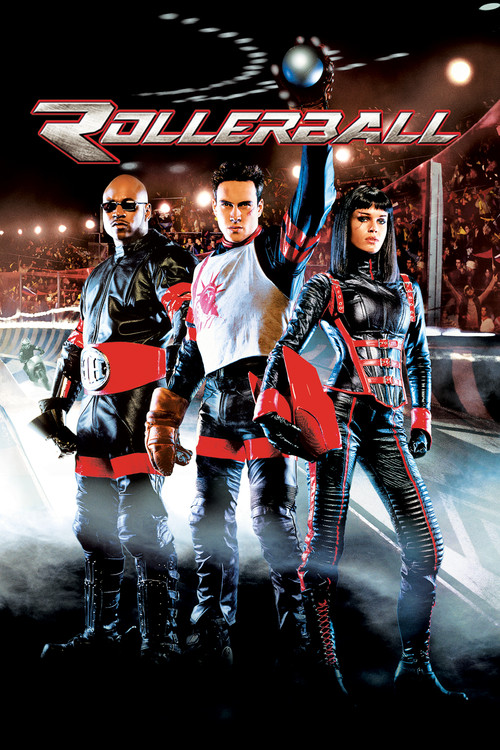
Rollerball
In this fast action-packed thriller, Jonathan, Marcus, and Aurora compete in a dangerous, fierce sport called Rollerball. Although, Johnathan and Marcus try to quit, cruel and vindictive promoter Alexi Petrovich encourages them to still participate.
The film box office disappointment against its respectable budget of $70.0M, earning $25.9M globally (-63% loss). While initial box office returns were modest, the film has gained appreciation for its innovative storytelling within the action genre.
5 wins & 3 nominations


Plot Structure
Story beats plotted across runtime


Narrative Arc
Emotional journey through the story's key moments
Story Circle
Blueprint 15-beat structure
Arcplot Score Breakdown
Weighted: Precision (70%) + Arc (15%) + Theme (15%)
Rollerball (2002) showcases meticulously timed narrative architecture, characteristic of John McTiernan's storytelling approach. This structural analysis examines how the film's 15-point plot structure maps to proven narrative frameworks across 1 hour and 38 minutes. With an Arcplot score of 7.4, the film balances conventional beats with creative variation.
Characters
Cast & narrative archetypes

Jonathan Cross
Marcus Ridley
Aurora
Alexis Petrovich
Sanjay
Denekin
Main Cast & Characters
Jonathan Cross
Played by Chris Klein
American hockey player recruited to play Rollerball in Central Asia who uncovers corruption and fights for survival
Marcus Ridley
Played by LL Cool J
Jonathan's best friend and teammate who gets caught up in the dangerous game alongside him
Aurora
Played by Rebecca Romijn
Tough female Rollerball player who becomes Jonathan's love interest and ally in their fight for freedom
Alexis Petrovich
Played by Jean Reno
Ruthless team owner and promoter who manipulates the game for ratings and profit, willing to kill for entertainment
Sanjay
Played by Naveen Andrews
Team manager who recruits Jonathan and Marcus but becomes complicit in Petrovich's deadly schemes
Denekin
Played by Oleg Taktarov
Petrovich's cold and calculating right-hand man who enforces his boss's violent agenda
Structural Analysis
The Status Quo at 1 minutes (1% through the runtime) establishes Jonathan Cross participates in illegal street luge racing in San Francisco, living on the edge for thrills and money in an underground scene.. The analysis reveals that this early placement immediately immerses viewers in the story world.
The inciting incident occurs at 12 minutes when Jonathan accepts Ridley's offer and travels to Kazakhstan to join the Rollerball team, leaving his old life behind for promised glory and wealth.. At 13% through the film, this Disruption is delayed, allowing extended setup of the story world. This beat shifts the emotional landscape, launching the protagonist into the central conflict.
The First Threshold at 24 minutes marks the transition into Act II, occurring at 24% of the runtime. This demonstrates the protagonist's commitment to Jonathan plays his first official Rollerball game, fully committing to the violent sport and experiencing the adrenaline rush and danger firsthand. He proves himself and becomes part of the team., moving from reaction to action.
At 50 minutes, the Midpoint arrives at 51% of the runtime—precisely centered, creating perfect narrative symmetry. Significantly, this crucial beat Jonathan discovers that team owner Petrovich is manipulating the game rules to increase injuries and deaths for higher television ratings. False victory turns to realization: the sport is rigged for carnage., fundamentally raising what's at risk. The emotional intensity shifts, dividing the narrative into clear before-and-after phases.
The Collapse moment at 73 minutes (75% through) represents the emotional nadir. Here, During a catastrophic game, Jonathan's close friend is killed in brutal fashion on the track. The whiff of death is literal. Jonathan realizes people are dying for entertainment and profit., shows the protagonist at their lowest point. This beat's placement in the final quarter sets up the climactic reversal.
The Second Threshold at 78 minutes initiates the final act resolution at 80% of the runtime. Jonathan decides to defy Petrovich by attempting to escape with Aurora and Marcus. He synthesizes his street-racing survival skills with insider knowledge of the system to plan their escape during a final match., demonstrating the transformation achieved throughout the journey.
Emotional Journey
Rollerball's emotional architecture traces a deliberate progression across 15 carefully calibrated beats.
Narrative Framework
This structural analysis employs proven narrative structure principles that track dramatic progression. By mapping Rollerball against these established plot points, we can identify how John McTiernan utilizes or subverts traditional narrative conventions. The plot point approach reveals not only adherence to structural principles but also creative choices that distinguish Rollerball within the action genre.
John McTiernan's Structural Approach
Among the 11 John McTiernan films analyzed on Arcplot, the average structural score is 7.0, reflecting strong command of classical structure. Rollerball represents one of the director's most structurally precise works. For comparative analysis, explore the complete John McTiernan filmography.
Comparative Analysis
Additional action films include The Bad Guys, Puss in Boots and Venom: The Last Dance. For more John McTiernan analyses, see Die Hard, Die Hard: With a Vengeance and Medicine Man.
Plot Points by Act
Act I
SetupStatus Quo
Jonathan Cross participates in illegal street luge racing in San Francisco, living on the edge for thrills and money in an underground scene.
Theme
Marcus Ridley recruits Jonathan, suggesting that fame and fortune await in the new world of extreme sports: "This is your chance to be somebody." Theme: selling out vs. integrity.
Worldbuilding
Jonathan's reckless lifestyle is established. Marcus Ridley offers him a contract to play Rollerball in Central Asia. Jonathan meets his friend Marcus and sees an opportunity to escape his dead-end life.
Disruption
Jonathan accepts Ridley's offer and travels to Kazakhstan to join the Rollerball team, leaving his old life behind for promised glory and wealth.
Resistance
Jonathan arrives in the former Soviet state and learns the brutal rules of Rollerball. He meets Aurora, the lead female player, and teammate Ridley. He experiences culture shock and begins training for the deadly sport.
Act II
ConfrontationFirst Threshold
Jonathan plays his first official Rollerball game, fully committing to the violent sport and experiencing the adrenaline rush and danger firsthand. He proves himself and becomes part of the team.
Mirror World
Jonathan develops a romantic relationship with Aurora, who represents a different perspective on the sport and life in this world. She becomes his emotional anchor and thematic counterpoint.
Premise
Jonathan experiences the "fun and games" of Rollerball stardom: fame, parties, wealth, and intense matches. The team becomes successful, and Jonathan becomes a fan favorite. He enjoys the perks while the violence escalates.
Midpoint
Jonathan discovers that team owner Petrovich is manipulating the game rules to increase injuries and deaths for higher television ratings. False victory turns to realization: the sport is rigged for carnage.
Opposition
Petrovich increases the danger, removing safety rules. Players begin dying in matches. Jonathan and his teammates try to resist but are trapped by contracts. The games become increasingly deadly as Petrovich tightens control.
Collapse
During a catastrophic game, Jonathan's close friend is killed in brutal fashion on the track. The whiff of death is literal. Jonathan realizes people are dying for entertainment and profit.
Crisis
Jonathan mourns his friend and confronts the reality that he sold his soul for fame. He and the remaining team members face the dark truth: they must escape or die in the arena.
Act III
ResolutionSecond Threshold
Jonathan decides to defy Petrovich by attempting to escape with Aurora and Marcus. He synthesizes his street-racing survival skills with insider knowledge of the system to plan their escape during a final match.
Synthesis
The final game becomes a battleground. Jonathan uses the match as cover for escape, fighting against Petrovich's enforcers. High-speed chase and confrontation ensue as Jonathan fights to free himself and his friends from the corrupt system.
Transformation
Jonathan escapes the arena and Petrovich's control, having learned that true freedom is worth more than manufactured fame. He chooses integrity over spectacle, transformed from thrill-seeker to principled survivor.