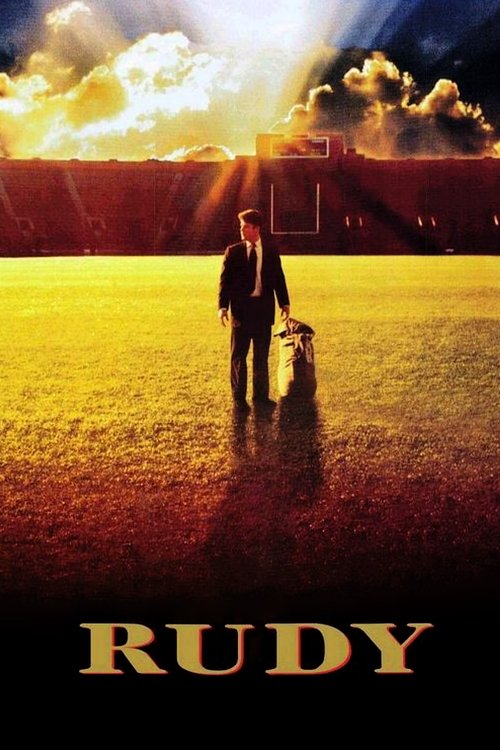
Rudy
Rudy grew up in a steel mill town where most people ended up working, but wanted to play football at Notre Dame instead. There were only a couple of problems. His grades were a little low, his athletic skills were poor, and he was only half the size of the other players. But he had the drive and the spirit of 5 people and has set his sights upon joining the team.
Working with a tight budget of $12.0M, the film achieved a respectable showing with $22.8M in global revenue (+90% profit margin).
2 wins & 1 nomination


Plot Structure
Story beats plotted across runtime


Narrative Arc
Emotional journey through the story's key moments
Story Circle
Blueprint 15-beat structure
Arcplot Score Breakdown
Weighted: Precision (70%) + Arc (15%) + Theme (15%)
Rudy (1993) exhibits strategically placed story structure, characteristic of David Anspaugh's storytelling approach. This structural analysis examines how the film's 15-point plot structure maps to proven narrative frameworks across 1 hour and 54 minutes. With an Arcplot score of 6.9, the film balances conventional beats with creative variation.
Characters
Cast & narrative archetypes

Rudy Ruettiger
Fortune
D-Bob
Pete
Dan Ruettiger
Frank Ruettiger
Ara Parseghian
Dan Devine
Main Cast & Characters
Rudy Ruettiger
Played by Sean Astin
A determined young man who dreams of playing football for Notre Dame despite overwhelming obstacles including size, grades, and family expectations.
Fortune
Played by Charles S. Dutton
A groundskeeper at Notre Dame who becomes Rudy's mentor and friend, helping him maintain perspective and persistence.
D-Bob
Played by Jon Favreau
Rudy's quirky tutor and friend at Notre Dame who helps him academically while pursuing his own dreams.
Pete
Played by Christopher Reed
Rudy's best friend and biggest supporter who believes in Rudy's dream and tragically dies in an industrial accident.
Dan Ruettiger
Played by Ned Beatty
Rudy's father, a steel mill worker who is skeptical of Rudy's dreams and wants him to accept a practical working-class life.
Frank Ruettiger
Played by Scott Benjaminson
Rudy's older brother who is dismissive and antagonistic toward Rudy's aspirations, representing family doubt.
Ara Parseghian
Played by Jason Miller
The Notre Dame head coach who allows Rudy to practice with the team but doesn't play him in games.
Dan Devine
Played by Chelcie Ross
The new Notre Dame head coach who initially excludes Rudy from the final game roster before ultimately relenting.
Structural Analysis
The Status Quo at 1 minutes (1% through the runtime) establishes Young Rudy watches Notre Dame football on TV with his family in their working-class Joliet home. His father dismisses his dream of playing for Notre Dame, establishing Rudy's world of limitations and impossibility.. Significantly, this early placement immediately immerses viewers in the story world.
The inciting incident occurs at 13 minutes when Pete, Rudy's best friend and only believer, dies in an explosion at the steel mill. This tragic death destroys Rudy's complacency and forces him to confront whether he'll pursue his dream or die with regrets.. At 12% through the film, this Disruption aligns precisely with traditional story structure. This beat shifts the emotional landscape, launching the protagonist into the central conflict.
The First Threshold at 27 minutes marks the transition into Act II, occurring at 24% of the runtime. This illustrates the protagonist's commitment to Rudy boards the bus to Notre Dame alone, leaving his old life behind. This is his active choice to enter the world of his dream, despite having no acceptance letter, no plan, and no support., moving from reaction to action.
At 56 minutes, the Midpoint arrives at 49% of the runtime—precisely centered, creating perfect narrative symmetry. Of particular interest, this crucial beat Rudy is accepted to Notre Dame and joins the football practice squad. This false victory seems like dream achieved, but he quickly learns that practice players never suit up for games - he's still an outsider to his actual dream., fundamentally raising what's at risk. The emotional intensity shifts, dividing the narrative into clear before-and-after phases.
The Collapse moment at 83 minutes (73% through) represents the emotional nadir. Here, After two years of sacrifice with no reward, new coach Dan Devine tells Rudy he won't dress for the final game of his senior year. Rudy's dream dies - he realizes he gave up everything for nothing. He quits the team., indicates the protagonist at their lowest point. This beat's placement in the final quarter sets up the climactic reversal.
The Second Threshold at 91 minutes initiates the final act resolution at 79% of the runtime. The entire team turns in their jerseys to Coach Devine, offering to give up their spots so Rudy can dress for the final game. This act of solidarity gives Rudy new understanding - his relentless effort has inspired others, which was the real victory all along., demonstrating the transformation achieved throughout the journey.
Emotional Journey
Rudy's emotional architecture traces a deliberate progression across 15 carefully calibrated beats.
Narrative Framework
This structural analysis employs a 15-point narrative structure framework that maps key story moments. By mapping Rudy against these established plot points, we can identify how David Anspaugh utilizes or subverts traditional narrative conventions. The plot point approach reveals not only adherence to structural principles but also creative choices that distinguish Rudy within the drama genre.
David Anspaugh's Structural Approach
Among the 2 David Anspaugh films analyzed on Arcplot, the average structural score is 6.5, demonstrating varied approaches to story architecture. Rudy represents one of the director's most structurally precise works. For comparative analysis, explore the complete David Anspaugh filmography.
Comparative Analysis
Additional drama films include After Thomas, South Pacific and Dirty Dancing: Havana Nights. For more David Anspaugh analyses, see Hoosiers.
Plot Points by Act
Act I
SetupStatus Quo
Young Rudy watches Notre Dame football on TV with his family in their working-class Joliet home. His father dismisses his dream of playing for Notre Dame, establishing Rudy's world of limitations and impossibility.
Theme
Rudy's friend Pete tells him, "Having dreams is what makes life tolerable." This encapsulates the film's central theme about the power of pursuing dreams despite impossible odds.
Worldbuilding
Rudy graduates high school with poor grades and no college prospects. He works at the steel mill with his father and brother. His family and girlfriend expect him to settle for this life, but he remains obsessed with Notre Dame.
Disruption
Pete, Rudy's best friend and only believer, dies in an explosion at the steel mill. This tragic death destroys Rudy's complacency and forces him to confront whether he'll pursue his dream or die with regrets.
Resistance
Rudy debates leaving for Notre Dame. His family ridicules the idea, his girlfriend refuses to support him. He visits Pete's grave and decides to honor his friend by pursuing the impossible. He breaks up with his girlfriend and leaves for South Bend.
Act II
ConfrontationFirst Threshold
Rudy boards the bus to Notre Dame alone, leaving his old life behind. This is his active choice to enter the world of his dream, despite having no acceptance letter, no plan, and no support.
Mirror World
Rudy meets Fortune, the groundskeeper at Notre Dame stadium, who becomes his thematic guide. Fortune initially represents the cynical acceptance of limitations that Rudy must overcome, but will later teach him about true persistence.
Premise
Rudy enrolls at Holy Cross junior college to earn grades for Notre Dame admission. He struggles academically, discovers he has dyslexia, gets tutored by D-Bob, applies repeatedly to Notre Dame. After three rejections, he's finally accepted. He walks onto the practice squad despite his small size.
Midpoint
Rudy is accepted to Notre Dame and joins the football practice squad. This false victory seems like dream achieved, but he quickly learns that practice players never suit up for games - he's still an outsider to his actual dream.
Opposition
Rudy endures brutal practices as a tackling dummy, faces harassment from varsity players, struggles to maintain grades while working multiple jobs. Coach Ara Parseghian refuses to dress him for games. His older brother Frank visits and cruelly mocks his efforts.
Collapse
After two years of sacrifice with no reward, new coach Dan Devine tells Rudy he won't dress for the final game of his senior year. Rudy's dream dies - he realizes he gave up everything for nothing. He quits the team.
Crisis
Rudy sits alone in the empty stadium, broken. Fortune finds him and reveals his own story of regret - he quit the team years ago and has regretted it ever since. He tells Rudy he's already accomplished more than Fortune ever did and shouldn't quit before the finish line.
Act III
ResolutionSecond Threshold
The entire team turns in their jerseys to Coach Devine, offering to give up their spots so Rudy can dress for the final game. This act of solidarity gives Rudy new understanding - his relentless effort has inspired others, which was the real victory all along.
Synthesis
Devine allows Rudy to dress for the final game. Rudy sits on the bench as the game winds down. The crowd and players chant his name. With seconds left, he enters the game, records a sack, and is carried off the field by his teammates - the only player ever carried off at Notre Dame.
Transformation
Rudy is carried off the field in triumph by his teammates as his father and brother watch from the stands, finally understanding and respecting what he accomplished. The boy who was told he'd never amount to anything proved that heart and persistence can overcome any limitation.