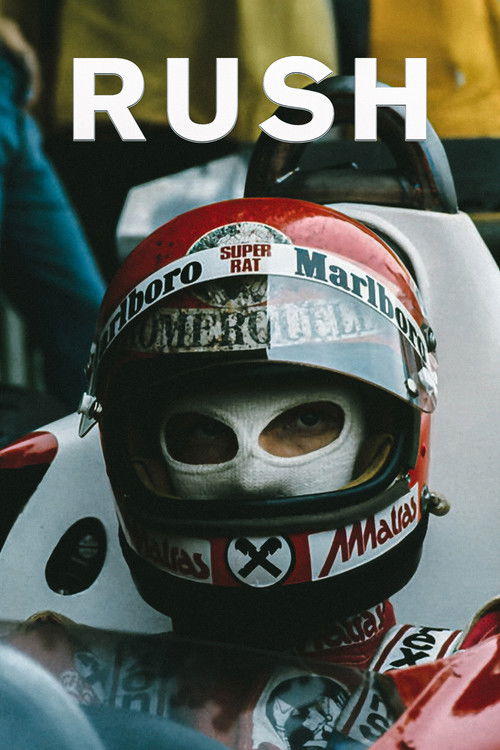
Rush
In the 1970s, a rivalry propels race car drivers Niki Lauda and James Hunt to fame and glory — until a horrible accident threatens to end it all.
Despite a moderate budget of $38.0M, Rush became a box office success, earning $90.2M worldwide—a 137% return.
1 BAFTA Award6 wins & 66 nominations


Plot Structure
Story beats plotted across runtime


Narrative Arc
Emotional journey through the story's key moments
Story Circle
Blueprint 15-beat structure
Arcplot Score Breakdown
Weighted: Precision (70%) + Arc (15%) + Theme (15%)
Rush (2013) reveals carefully calibrated plot construction, characteristic of Ron Howard's storytelling approach. This structural analysis examines how the film's 15-point plot structure maps to proven narrative frameworks across 2 hours and 3 minutes. With an Arcplot score of 7.3, the film balances conventional beats with creative variation.
Characters
Cast & narrative archetypes

Niki Lauda
James Hunt
Marlene Lauda
Suzy Miller
Clay Regazzoni
Main Cast & Characters
Niki Lauda
Played by Daniel Brühl
Methodical Austrian Formula 1 driver who relies on precision, calculation, and technical mastery to win races.
James Hunt
Played by Chris Hemsworth
Charismatic British playboy racer who drives on instinct, courage, and natural talent.
Marlene Lauda
Played by Alexandra Maria Lara
Niki Lauda's wife who supports him through his racing career and horrific accident recovery.
Suzy Miller
Played by Olivia Wilde
James Hunt's glamorous wife, a model whose marriage to Hunt becomes strained by his lifestyle.
Clay Regazzoni
Played by Pierfrancesco Favino
Swiss racing driver and Niki Lauda's teammate at Ferrari who becomes a friend and ally.
Structural Analysis
The Status Quo at 1 minutes (1% through the runtime) establishes Opening montage: Niki Lauda's voiceover establishes the 1976 German Grand Prix as the pivotal moment. We see both Hunt and Lauda in their separate worlds - Hunt the playboy, Lauda the methodical technician.. The analysis reveals that this early placement immediately immerses viewers in the story world.
The inciting incident occurs at 13 minutes when Lauda buys his way into Formula 1 with Ferrari, while Hunt struggles with a failing team. The rivalry escalates to the highest level of racing, raising the stakes dramatically.. At 11% through the film, this Disruption aligns precisely with traditional story structure. This beat shifts the emotional landscape, launching the protagonist into the central conflict.
The First Threshold at 30 minutes marks the transition into Act II, occurring at 24% of the runtime. This demonstrates the protagonist's commitment to The 1976 season begins. Hunt fully commits to McLaren and the championship fight. Lauda and Hunt both choose to risk everything for the title, entering a new level of competition., moving from reaction to action.
At 62 minutes, the Midpoint arrives at 50% of the runtime—precisely centered, creating perfect narrative symmetry. Of particular interest, this crucial beat The Nürburgring crash. Lauda's Ferrari bursts into flames. He is pulled from the wreckage with severe burns, given last rites. False defeat for Lauda; false victory for Hunt who now leads the championship but at a terrible cost., fundamentally raising what's at risk. The emotional intensity shifts, dividing the narrative into clear before-and-after phases.
The Collapse moment at 90 minutes (73% through) represents the emotional nadir. Here, Lauda withdraws from the final race at Fuji due to dangerous conditions. Hunt must finish third or better to win the championship. Lauda's withdrawal feels like defeat - has he lost his will? Hunt faces his moment of truth alone., shows the protagonist at their lowest point. This beat's placement in the final quarter sets up the climactic reversal.
The Second Threshold at 97 minutes initiates the final act resolution at 79% of the runtime. Hunt finds new resolve and makes his final push. Lauda realizes that survival and choosing life over glory is its own form of courage. Both men synthesize their experiences - Hunt channels his chaos into focus, Lauda chooses wisdom over pride., demonstrating the transformation achieved throughout the journey.
Emotional Journey
Rush's emotional architecture traces a deliberate progression across 15 carefully calibrated beats.
Narrative Framework
This structural analysis employs structural analysis methodology used to understand storytelling architecture. By mapping Rush against these established plot points, we can identify how Ron Howard utilizes or subverts traditional narrative conventions. The plot point approach reveals not only adherence to structural principles but also creative choices that distinguish Rush within the drama genre.
Ron Howard's Structural Approach
Among the 24 Ron Howard films analyzed on Arcplot, the average structural score is 7.0, demonstrating varied approaches to story architecture. Rush represents one of the director's most structurally precise works. For comparative analysis, explore the complete Ron Howard filmography.
Comparative Analysis
Additional drama films include After Thomas, South Pacific and Dirty Dancing: Havana Nights. For more Ron Howard analyses, see Apollo 13, Solo: A Star Wars Story and Cinderella Man.
Plot Points by Act
Act I
SetupStatus Quo
Opening montage: Niki Lauda's voiceover establishes the 1976 German Grand Prix as the pivotal moment. We see both Hunt and Lauda in their separate worlds - Hunt the playboy, Lauda the methodical technician.
Theme
Lauda states the theme: "A wise man can learn more from his enemies than a fool from his friends." The rivalry will define both men and push them beyond their limits.
Worldbuilding
Flashback to 1970: Hunt and Lauda meet at Formula 3 race. Establishes their contrasting personalities - Hunt is charismatic and reckless, Lauda is precise and calculating. Shows their early rivalry and mutual contempt.
Disruption
Lauda buys his way into Formula 1 with Ferrari, while Hunt struggles with a failing team. The rivalry escalates to the highest level of racing, raising the stakes dramatically.
Resistance
Both drivers navigate the 1975 season. Hunt joins McLaren after Hesketh team folds. Lauda wins his first championship. Hunt's marriage to Suzy Miller crumbles. Both men debate the cost of their obsession.
Act II
ConfrontationFirst Threshold
The 1976 season begins. Hunt fully commits to McLaren and the championship fight. Lauda and Hunt both choose to risk everything for the title, entering a new level of competition.
Mirror World
Lauda marries Marlene, finding balance outside racing. This relationship represents the thematic alternative - that life exists beyond winning. Hunt witnesses this, though he cannot yet embrace it.
Premise
The promise of the premise: the 1976 F1 season in full swing. Spectacular racing sequences, wins and losses traded between Hunt and Lauda. Hunt's disqualification in Spain, his victories, Lauda's dominance. The rivalry intensifies.
Midpoint
The Nürburgring crash. Lauda's Ferrari bursts into flames. He is pulled from the wreckage with severe burns, given last rites. False defeat for Lauda; false victory for Hunt who now leads the championship but at a terrible cost.
Opposition
Hunt dominates while Lauda recovers, but the victory feels hollow. Lauda's agonizing recovery and impossible return to racing after just 6 weeks. Hunt's self-destructive behavior intensifies. The championship lead swings back and forth.
Collapse
Lauda withdraws from the final race at Fuji due to dangerous conditions. Hunt must finish third or better to win the championship. Lauda's withdrawal feels like defeat - has he lost his will? Hunt faces his moment of truth alone.
Crisis
The Fuji race in torrential rain. Hunt struggles in dangerous conditions, falls behind, nearly gives up. Both men face their dark night - Lauda watching helplessly, Hunt fighting alone in the storm.
Act III
ResolutionSecond Threshold
Hunt finds new resolve and makes his final push. Lauda realizes that survival and choosing life over glory is its own form of courage. Both men synthesize their experiences - Hunt channels his chaos into focus, Lauda chooses wisdom over pride.
Synthesis
Hunt overtakes and finishes third, winning the championship by one point. The finale shows the aftermath: Hunt's victory celebration, Lauda's acceptance. Epilogue reveals their later lives - Hunt's decline, Lauda's continued success, and eventual mutual respect.
Transformation
Final scene mirrors the opening: Lauda's voiceover reflects on how their rivalry made them both better. Hunt and Lauda shake hands as equals, having learned from each other. The "wise man learning from his enemies" theme fulfilled.