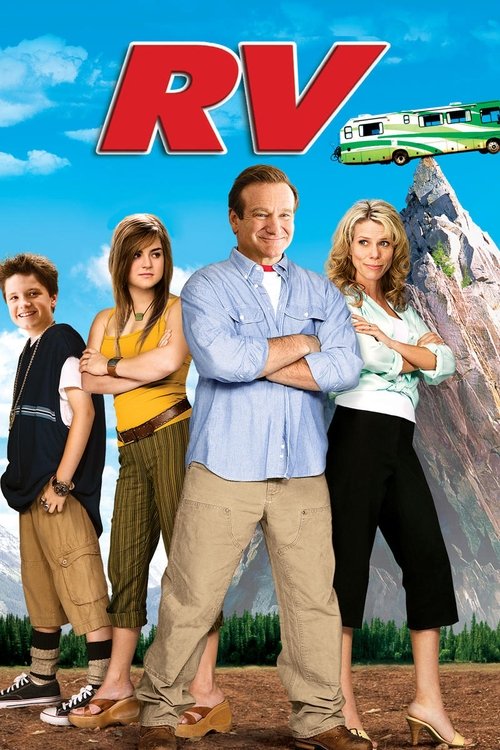
RV
Climbing aboard their mammoth recreational vehicle for a cross-country road trip to the Colorado Rockies, the Munro family – led by dysfunctional patriarch, Bob – prepares for the adventure of a lifetime. But spending two weeks together in one seriously small space has a way of cramping their style.
Working with a moderate budget of $50.0M, the film achieved a steady performer with $87.5M in global revenue (+75% profit margin).
1 win & 2 nominations


Plot Structure
Story beats plotted across runtime


Narrative Arc
Emotional journey through the story's key moments
Story Circle
Blueprint 15-beat structure
Arcplot Score Breakdown
Weighted: Precision (70%) + Arc (15%) + Theme (15%)
RV (2006) exemplifies strategically placed plot construction, characteristic of Barry Sonnenfeld's storytelling approach. This structural analysis examines how the film's 15-point plot structure maps to proven narrative frameworks across 1 hour and 39 minutes. With an Arcplot score of 6.7, the film balances conventional beats with creative variation.
Characters
Cast & narrative archetypes

Bob Munro
Jamie Munro
Cassie Munro
Carl Munro
Travis Gornicke
Mary Jo Gornicke
Todd Mallory
Main Cast & Characters
Bob Munro
Played by Robin Williams
A workaholic beverage company executive who lies to his family about a business trip, disguising it as an RV vacation to Colorado.
Jamie Munro
Played by Cheryl Hines
Bob's wife who initially resists the RV trip but gradually embraces the adventure and reconnects with her family.
Cassie Munro
Played by JoJo
Bob and Jamie's teenage daughter who is resistant and embarrassed by the family vacation, preferring to be with her boyfriend.
Carl Munro
Played by Josh Hutcherson
Bob and Jamie's young son who is initially excited about the trip and more adaptable than his sister.
Travis Gornicke
Played by Jeff Daniels
The enthusiastic and overly friendly patriarch of the Gornicke family who befriends the Munros.
Mary Jo Gornicke
Played by Kristin Chenoweth
Travis's wife, equally friendly and down-to-earth, who embraces the RV lifestyle fully.
Todd Mallory
Played by Will Arnett
Bob's ambitious and conniving colleague who tries to sabotage Bob's position at the company.
Structural Analysis
The Status Quo at 1 minutes (1% through the runtime) establishes Bob Munro rushes through his corporate job, distracted and disconnected from his family at breakfast. His kids barely acknowledge him, his wife Jamie tolerates his absence - establishing a household where career has eclipsed family connection.. Structural examination shows that this early placement immediately immerses viewers in the story world.
The inciting incident occurs at 12 minutes when Bob's boss Todd demands he cancel the Hawaii vacation and go to a merger meeting in Colorado instead, threatening his job. Bob realizes he must choose between his career and disappointing his family - the disruption that will force him into the adventure.. At 13% through the film, this Disruption is delayed, allowing extended setup of the story world. This beat shifts the emotional landscape, launching the protagonist into the central conflict.
The First Threshold at 25 minutes marks the transition into Act II, occurring at 25% of the runtime. This illustrates the protagonist's commitment to The Munro family reluctantly gets into the rented RV and pulls out of the driveway, beginning the road trip. Bob has committed to the deception and there's no turning back - they're entering the world of RV travel and all its complications., moving from reaction to action.
At 50 minutes, the Midpoint arrives at 50% of the runtime—precisely centered, creating perfect narrative symmetry. Structural examination shows that this crucial beat A false victory: the family actually starts bonding during the trip, sharing genuine moments together. Bob begins to see what he's been missing, and the kids warm up to the adventure. For a moment, it seems like Bob might pull off both the business deal and family reconnection - but the stakes are about to rise., fundamentally raising what's at risk. The emotional intensity shifts, dividing the narrative into clear before-and-after phases.
The Collapse moment at 74 minutes (75% through) represents the emotional nadir. Here, Bob's deception is exposed - the family discovers the trip was never about them, but about his business meeting. Jamie and the kids feel utterly betrayed. The fragile connection they'd been rebuilding shatters completely, and the family abandons Bob. The death of trust and the dream of reconciliation., demonstrates the protagonist at their lowest point. This beat's placement in the final quarter sets up the climactic reversal.
The Second Threshold at 79 minutes initiates the final act resolution at 80% of the runtime. Bob makes a choice: he stands up to his boss Todd, quits his job, and commits fully to his family for the first time. He synthesizes what the Gornickes showed him about authentic presence with his own capabilities. Armed with new clarity, he goes to win his family back., demonstrating the transformation achieved throughout the journey.
Emotional Journey
RV's emotional architecture traces a deliberate progression across 15 carefully calibrated beats.
Narrative Framework
This structural analysis employs proven narrative structure principles that track dramatic progression. By mapping RV against these established plot points, we can identify how Barry Sonnenfeld utilizes or subverts traditional narrative conventions. The plot point approach reveals not only adherence to structural principles but also creative choices that distinguish RV within the family genre.
Barry Sonnenfeld's Structural Approach
Among the 10 Barry Sonnenfeld films analyzed on Arcplot, the average structural score is 7.2, reflecting strong command of classical structure. RV takes a more unconventional approach compared to the director's typical style. For comparative analysis, explore the complete Barry Sonnenfeld filmography.
Comparative Analysis
Additional family films include The Black Stallion, The Bad Guys and Ella Enchanted. For more Barry Sonnenfeld analyses, see Get Shorty, Addams Family Values and Nine Lives.
Plot Points by Act
Act I
SetupStatus Quo
Bob Munro rushes through his corporate job, distracted and disconnected from his family at breakfast. His kids barely acknowledge him, his wife Jamie tolerates his absence - establishing a household where career has eclipsed family connection.
Theme
Jamie or a family member comments on how Bob is "always working" and missing what matters, or Bob's boss Todd mentions that "family is what you make time for" - establishing the central tension between professional success and personal presence.
Worldbuilding
Introduction to the Munro family dynamics: teenage daughter Cassie is embarrassed by her family, son Carl is nerdy and ignored, wife Jamie tries to hold things together. Bob's corporate world at the beverage company is shown, along with the planned Hawaii vacation that everyone is looking forward to.
Disruption
Bob's boss Todd demands he cancel the Hawaii vacation and go to a merger meeting in Colorado instead, threatening his job. Bob realizes he must choose between his career and disappointing his family - the disruption that will force him into the adventure.
Resistance
Bob debates how to handle the situation and concocts a plan: rent an RV and convince his family the road trip to Colorado is better than Hawaii. He researches RVs, makes the rental, and nervously prepares to sell the idea to his skeptical family.
Act II
ConfrontationFirst Threshold
The Munro family reluctantly gets into the rented RV and pulls out of the driveway, beginning the road trip. Bob has committed to the deception and there's no turning back - they're entering the world of RV travel and all its complications.
Mirror World
The Munros encounter the Gornicke family - an overly friendly, genuinely connected RV clan who represent everything Bob's family isn't: present, authentic, and truly enjoying each other. They embody the thematic lesson Bob needs to learn about real family connection.
Premise
The "fun and games" of RV disasters: Bob struggles with driving the massive vehicle, the family deals with the tiny bathroom, septic tank mishaps, mechanical breakdowns, and repeatedly running into the Gornickes. Comic set pieces of everything that can go wrong with RV travel while Bob tries to hide his business agenda.
Midpoint
A false victory: the family actually starts bonding during the trip, sharing genuine moments together. Bob begins to see what he's been missing, and the kids warm up to the adventure. For a moment, it seems like Bob might pull off both the business deal and family reconnection - but the stakes are about to rise.
Opposition
Bob's lies become harder to maintain as the family wants to spend more time together while he needs to sneak away for work. The Gornickes keep appearing and bonding with the Munros, making Bob's inauthenticity more obvious. Technical disasters escalate, and the pressure of keeping his secret while managing the business deal intensifies.
Collapse
Bob's deception is exposed - the family discovers the trip was never about them, but about his business meeting. Jamie and the kids feel utterly betrayed. The fragile connection they'd been rebuilding shatters completely, and the family abandons Bob. The death of trust and the dream of reconciliation.
Crisis
Bob sits alone with the wreckage of his choices, processing what he's lost. He attends his business meeting but realizes professional success means nothing without his family. His dark night of the soul as he confronts that his priorities have been destroying what matters most.
Act III
ResolutionSecond Threshold
Bob makes a choice: he stands up to his boss Todd, quits his job, and commits fully to his family for the first time. He synthesizes what the Gornickes showed him about authentic presence with his own capabilities. Armed with new clarity, he goes to win his family back.
Synthesis
Bob races to find his family, using help from the Gornickes. He makes a grand gesture proving his transformation, choosing family over career publicly and irreversibly. The family reunites, this time with authentic connection. Resolution of the business subplot and establishment of new family priorities.
Transformation
Final image mirrors the opening but transformed: Bob is fully present with his family, phone away, genuinely engaged. Perhaps another family breakfast, but this time he's truly there - listening, laughing, connected. The executive who chose success has become the father who chooses presence.