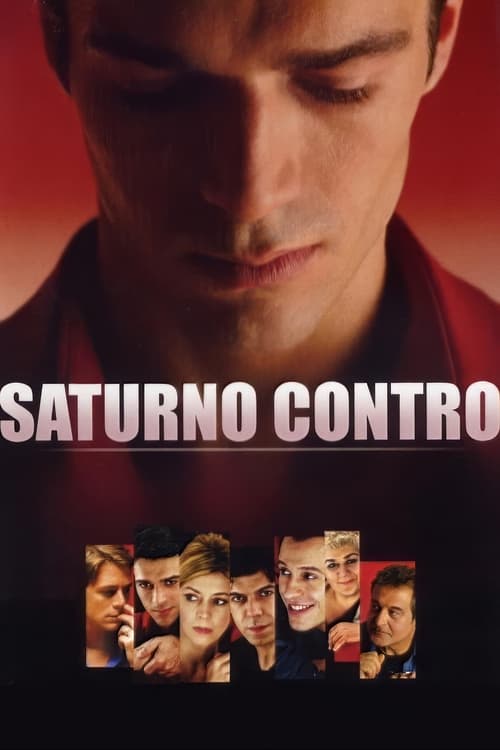
Saturn in Opposition
This film focuses on contemporary 30- and 40-somethings trying to make sense of their lives in an age in which the old certainties have disappeared. Lorenzo and Davide make their lives together within a circle that includes Antonio and Angelica, married with children; Nerval and her policeman husband.
Despite its small-scale budget of $5.5M, Saturn in Opposition became a solid performer, earning $11.2M worldwide—a 104% return.

Plot Structure
Story beats plotted across runtime


Narrative Arc
Emotional journey through the story's key moments
Story Circle
Blueprint 15-beat structure
Arcplot Score Breakdown
Weighted: Precision (70%) + Arc (15%) + Theme (15%)
Saturn in Opposition (2007) reveals carefully calibrated dramatic framework, characteristic of Ferzan Özpetek's storytelling approach. This structural analysis examines how the film's 15-point plot structure maps to proven narrative frameworks across 1 hour and 50 minutes. With an Arcplot score of 7.5, the film showcases strong structural fundamentals.
Structural Analysis
The Status Quo at 2 minutes (2% through the runtime) establishes Davide and his close-knit group of friends gather for a lively dinner party at their Roman apartment, laughing and celebrating their bohemian lifestyle together.. Of particular interest, this early placement immediately immerses viewers in the story world.
The inciting incident occurs at 13 minutes when Lorenzo reveals he is seriously ill, confiding in Davide about his terminal condition. The news shatters the carefree world they've built.. At 11% through the film, this Disruption aligns precisely with traditional story structure. This beat shifts the emotional landscape, launching the protagonist into the central conflict.
The First Threshold at 27 minutes marks the transition into Act II, occurring at 25% of the runtime. This indicates the protagonist's commitment to Davide makes the conscious choice to fully commit to caring for Lorenzo through his illness, accepting that their lives have irrevocably changed and choosing love over escape., moving from reaction to action.
At 56 minutes, the Midpoint arrives at 50% of the runtime—precisely centered, creating perfect narrative symmetry. Structural examination shows that this crucial beat Lorenzo's condition worsens significantly during a group outing, a false hope of stability shattered. The reality of his impending death becomes undeniable to everyone, raising the stakes for the final act of their time together., fundamentally raising what's at risk. The emotional intensity shifts, dividing the narrative into clear before-and-after phases.
The Collapse moment at 82 minutes (74% through) represents the emotional nadir. Here, Lorenzo dies peacefully, surrounded by Davide and their closest friends. The literal death fulfills the "whiff of death" as their world together ends., indicates the protagonist at their lowest point. This beat's placement in the final quarter sets up the climactic reversal.
The Second Threshold at 89 minutes initiates the final act resolution at 81% of the runtime. Davide finds Lorenzo's final gift—a letter or message reminding him to keep living and loving. This synthesis of Lorenzo's wisdom with Davide's grief gives him permission to move forward while honoring the past., demonstrating the transformation achieved throughout the journey.
Emotional Journey
Saturn in Opposition's emotional architecture traces a deliberate progression across 15 carefully calibrated beats.
Narrative Framework
This structural analysis employs systematic plot point analysis that identifies crucial turning points. By mapping Saturn in Opposition against these established plot points, we can identify how Ferzan Özpetek utilizes or subverts traditional narrative conventions. The plot point approach reveals not only adherence to structural principles but also creative choices that distinguish Saturn in Opposition within the drama genre.
Ferzan Özpetek's Structural Approach
Among the 6 Ferzan Özpetek films analyzed on Arcplot, the average structural score is 7.1, reflecting strong command of classical structure. Saturn in Opposition represents one of the director's most structurally precise works. For comparative analysis, explore the complete Ferzan Özpetek filmography.
Comparative Analysis
Additional drama films include Eye for an Eye, South Pacific and Kiss of the Spider Woman. For more Ferzan Özpetek analyses, see Facing Windows, Loose Cannons and Naples in Veils.
Plot Points by Act
Act I
SetupStatus Quo
Davide and his close-knit group of friends gather for a lively dinner party at their Roman apartment, laughing and celebrating their bohemian lifestyle together.
Theme
Antonio mentions that "We think we have forever, but we don't" during a conversation about relationships and time, foreshadowing the film's meditation on mortality and friendship.
Worldbuilding
Introduction to the ensemble: Davide the writer, his partner Lorenzo, Roberta and her husband, Antonio the actor, Angelica, and others. Their relationships, creative pursuits, and interconnected lives in Rome are established.
Disruption
Lorenzo reveals he is seriously ill, confiding in Davide about his terminal condition. The news shatters the carefree world they've built.
Resistance
Davide struggles with how to process Lorenzo's diagnosis. The group continues their activities—rehearsals, gatherings—while Davide internally debates whether he can face this reality. He seeks solace in memories and avoids confronting the truth.
Act II
ConfrontationFirst Threshold
Davide makes the conscious choice to fully commit to caring for Lorenzo through his illness, accepting that their lives have irrevocably changed and choosing love over escape.
Mirror World
Sergio, a new acquaintance, enters the group's orbit and brings fresh perspective on love and loss, having experienced his own grief. His presence offers Davide a mirror for what's to come.
Premise
The group rallies around Lorenzo and Davide, maintaining their traditions and gatherings while Lorenzo's health gradually declines. Moments of joy, creativity, and friendship punctuate the growing awareness of mortality. The ensemble explores how to live fully while facing loss.
Midpoint
Lorenzo's condition worsens significantly during a group outing, a false hope of stability shattered. The reality of his impending death becomes undeniable to everyone, raising the stakes for the final act of their time together.
Opposition
Lorenzo's health deteriorates rapidly. Davide and the friends struggle to maintain normalcy as hospital visits increase and difficult conversations arise. Tensions emerge as each person confronts their own fears about death and loss.
Collapse
Lorenzo dies peacefully, surrounded by Davide and their closest friends. The literal death fulfills the "whiff of death" as their world together ends.
Crisis
Davide spirals into grief, isolating himself from the group. He processes the profound loss and questions whether he can continue without Lorenzo. The friends also mourn, each dealing with their own pain.
Act III
ResolutionSecond Threshold
Davide finds Lorenzo's final gift—a letter or message reminding him to keep living and loving. This synthesis of Lorenzo's wisdom with Davide's grief gives him permission to move forward while honoring the past.
Synthesis
Davide reconnects with the group at a gathering in Lorenzo's memory. They share stories, laughter, and tears, celebrating the life they shared. Davide begins to integrate his loss into a new understanding of love's permanence beyond death.
Transformation
Davide sits among his friends at another dinner party, similar to the opening but transformed. Though Lorenzo is absent, his presence is felt. Davide smiles, carrying both grief and gratitude, having learned that love transcends loss.