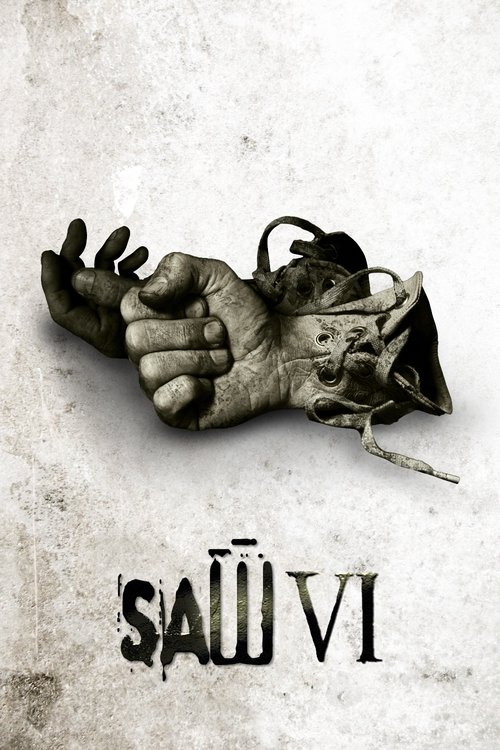
Saw VI
Special Agent Strahm is dead, and Detective Hoffman has emerged as the unchallenged successor to Jigsaw's legacy. However, when the FBI draws closer to Hoffman, he is forced to set a game into motion, and Jigsaw's grand scheme is finally understood.
Despite its tight budget of $11.0M, Saw VI became a box office phenomenon, earning $69.8M worldwide—a remarkable 534% return. The film's distinctive approach connected with viewers, illustrating how strong storytelling can transcend budget limitations.


Plot Structure
Story beats plotted across runtime


Narrative Arc
Emotional journey through the story's key moments
Story Circle
Blueprint 15-beat structure
Arcplot Score Breakdown
Weighted: Precision (70%) + Arc (15%) + Theme (15%)
Saw VI (2009) exhibits carefully calibrated story structure, characteristic of Kevin Greutert's storytelling approach. This structural analysis examines how the film's 15-point plot structure maps to proven narrative frameworks across 1 hour and 30 minutes. With an Arcplot score of 7.3, the film balances conventional beats with creative variation.
Characters
Cast & narrative archetypes

William Easton
Mark Hoffman
Pamela Jenkins
Jill Tuck
Brent Abbott
Dan Erickson
John Kramer
Lindsey Perez
Main Cast & Characters
William Easton
Played by Peter Outerbridge
A health insurance executive who must face Jigsaw's games after denying coverage to John Kramer
Mark Hoffman
Played by Costas Mandylor
A corrupt detective continuing Jigsaw's work while being blackmailed by the deceased killer
Pamela Jenkins
Played by Samantha Lemole
An investigative journalist trying to uncover the truth about Jigsaw and his accomplices
Jill Tuck
Played by Betsy Russell
John Kramer's ex-wife who holds the key to his final wishes and Hoffman's fate
Brent Abbott
Played by Devon Bostick
The son of a man who died after being denied insurance coverage by William Easton
Dan Erickson
Played by Mark Rolston
FBI Special Agent investigating the Jigsaw murders and suspecting police corruption
John Kramer
Played by Tobin Bell
The original Jigsaw killer whose final game is executed posthumously
Lindsey Perez
Played by Athena Karkanis
FBI agent revealed to have survived her apparent death, investigating Hoffman
Structural Analysis
The Status Quo at 1 minutes (1% through the runtime) establishes Two predatory lenders wake up in a trap, establishing the film's harsh moral universe where those who profit from others' suffering face judgment.. The analysis reveals that this early placement immediately immerses viewers in the story world.
The inciting incident occurs at 10 minutes when William Easton wakes up in Jigsaw's trap with a breathing apparatus attached to his chest. His test has begun—he must face those he condemned through his insurance formulas.. At 11% through the film, this Disruption aligns precisely with traditional story structure. This beat shifts the emotional landscape, launching the protagonist into the central conflict.
The First Threshold at 22 minutes marks the transition into Act II, occurring at 24% of the runtime. This shows the protagonist's commitment to William actively chooses to continue through the gauntlet, selecting which employee dies in the steam maze. He commits to the game and can't turn back., moving from reaction to action.
At 44 minutes, the Midpoint arrives at 49% of the runtime—precisely centered, creating perfect narrative symmetry. Notably, this crucial beat Hoffman kills Agent Strahm in the water cube, eliminating the last person who could expose him. Stakes raise dramatically—the real villain is now fully hidden and in control., fundamentally raising what's at risk. The emotional intensity shifts, dividing the narrative into clear before-and-after phases.
The Collapse moment at 67 minutes (75% through) represents the emotional nadir. Here, William reaches the final room to find his family in danger. Aaron, whose claim William denied causing his death, holds the key. William has failed—too much of his flesh sacrificed, he cannot save his family., indicates the protagonist at their lowest point. This beat's placement in the final quarter sets up the climactic reversal.
The Second Threshold at 71 minutes initiates the final act resolution at 79% of the runtime. Aaron's mother chooses vengeance over mercy, sealing William's fate. Simultaneously, Hoffman escapes the reverse bear trap, proving he will survive to continue Jigsaw's work., demonstrating the transformation achieved throughout the journey.
Emotional Journey
Saw VI's emotional architecture traces a deliberate progression across 15 carefully calibrated beats.
Narrative Framework
This structural analysis employs structural analysis methodology used to understand storytelling architecture. By mapping Saw VI against these established plot points, we can identify how Kevin Greutert utilizes or subverts traditional narrative conventions. The plot point approach reveals not only adherence to structural principles but also creative choices that distinguish Saw VI within the horror genre.
Kevin Greutert's Structural Approach
Among the 4 Kevin Greutert films analyzed on Arcplot, the average structural score is 7.0, reflecting strong command of classical structure. Saw VI represents one of the director's most structurally precise works. For comparative analysis, explore the complete Kevin Greutert filmography.
Comparative Analysis
Additional horror films include Thinner, A Nightmare on Elm Street and Mary Reilly. For more Kevin Greutert analyses, see Saw X, Jessabelle and Saw 3D.
Plot Points by Act
Act I
SetupStatus Quo
Two predatory lenders wake up in a trap, establishing the film's harsh moral universe where those who profit from others' suffering face judgment.
Theme
Jigsaw's tape asks: "Which one of you deserves to live?" The central theme of life's value versus cold calculation is stated explicitly.
Worldbuilding
FBI investigates Jigsaw aftermath; William Easton runs his insurance company using formulas to deny coverage; Agent Strahm pursues Hoffman; flashbacks reveal Jigsaw's connection to Easton.
Disruption
William Easton wakes up in Jigsaw's trap with a breathing apparatus attached to his chest. His test has begun—he must face those he condemned through his insurance formulas.
Resistance
William learns the rules of his game; parallel investigation by Hoffman and FBI; William faces his first test involving two of his employees, learning he must make impossible life-or-death choices.
Act II
ConfrontationFirst Threshold
William actively chooses to continue through the gauntlet, selecting which employee dies in the steam maze. He commits to the game and can't turn back.
Mirror World
William encounters his file clerk and those he denied coverage to—they represent the human cost of his policies, the thematic mirror showing him what his formulas really mean.
Premise
William progresses through elaborate traps testing his values: the carousel of policy holders, choosing between employees. Each test forces him to reckon with his formula-based decisions.
Midpoint
Hoffman kills Agent Strahm in the water cube, eliminating the last person who could expose him. Stakes raise dramatically—the real villain is now fully hidden and in control.
Opposition
William faces increasingly difficult choices; his sister and family are revealed to be at stake; Hoffman manipulates evidence; Jill Tuck executes John's final wishes regarding Hoffman.
Collapse
William reaches the final room to find his family in danger. Aaron, whose claim William denied causing his death, holds the key. William has failed—too much of his flesh sacrificed, he cannot save his family.
Crisis
William begs for his family's life while Aaron and his mother decide his fate. Jill Tuck places Hoffman in the reverse bear trap, John's final test for his successor.
Act III
ResolutionSecond Threshold
Aaron's mother chooses vengeance over mercy, sealing William's fate. Simultaneously, Hoffman escapes the reverse bear trap, proving he will survive to continue Jigsaw's work.
Synthesis
William dies in the acid, his family watching. Hoffman survives his trap and begins eliminating witnesses. The FBI closes the Jigsaw case, unaware the real killer remains free.
Transformation
Hoffman walks free, scarred but victorious. The final image shows the new status quo: Jigsaw's work continues, justice perverted, the wrong man carrying forward a corrupted legacy.