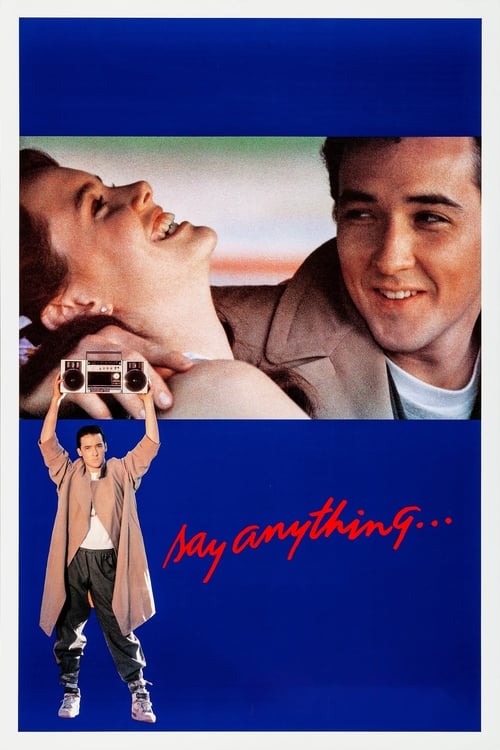
Say Anything...
Lloyd, an eternal optimist, seeks to capture the heart of Diane, an unattainable high school beauty and straight-A student. He surprises just about everyone-including himself-when she returns the sentiment. But Diane's over-possessive, divorced Dad disapproves and it's going to take more than just the power of love to conquer all.
Working with a respectable budget of $16.0M, the film achieved a modest success with $20.0M in global revenue (+25% profit margin).
1 win & 3 nominations


Plot Structure
Story beats plotted across runtime


Narrative Arc
Emotional journey through the story's key moments
Story Circle
Blueprint 15-beat structure
Arcplot Score Breakdown
Weighted: Precision (70%) + Arc (15%) + Theme (15%)
Say Anything... (1989) reveals strategically placed plot construction, characteristic of Cameron Crowe's storytelling approach. This structural analysis examines how the film's 15-point plot structure maps to proven narrative frameworks across 1 hour and 40 minutes. With an Arcplot score of 7.7, the film showcases strong structural fundamentals.
Characters
Cast & narrative archetypes

Lloyd Dobler
Diane Court
James Court
Corey Flood
Constance Dobler
Main Cast & Characters
Lloyd Dobler
Played by John Cusack
An optimistic underachiever and kickboxing enthusiast who falls for the class valedictorian and refuses to give up on their relationship.
Diane Court
Played by Ione Skye
The brilliant, sheltered valedictorian who must navigate her first serious relationship while discovering her father's criminal activities.
James Court
Played by John Mahoney
Diane's devoted single father who runs a nursing home and has an inappropriately close relationship with his daughter while hiding financial crimes.
Corey Flood
Played by Lili Taylor
Lloyd's best friend and surrogate sister figure, a cynical songwriter recovering from heartbreak who provides comic relief and emotional support.
Constance Dobler
Played by Joan Cusack
Lloyd's loving and supportive older sister who raises him and offers maternal guidance.
Structural Analysis
The Status Quo at 1 minutes (1% through the runtime) establishes Lloyd Dobler at high school graduation with friends Corey and D.C., embodying the underachiever with no clear direction or plan for the future beyond his kickboxing hobby.. The analysis reveals that this early placement immediately immerses viewers in the story world.
The inciting incident occurs at 11 minutes when Lloyd decides to call Diane Court and ask her out despite everyone saying she's out of his league. This decision disrupts his status quo of safe, uncomplicated relationships.. At 11% through the film, this Disruption aligns precisely with traditional story structure. This beat shifts the emotional landscape, launching the protagonist into the central conflict.
The First Threshold at 24 minutes marks the transition into Act II, occurring at 24% of the runtime. This reveals the protagonist's commitment to After the graduation party date, Diane actively chooses to spend more time with Lloyd in the car instead of going home, beginning their genuine relationship. She crosses into his world., moving from reaction to action.
At 48 minutes, the Midpoint arrives at 48% of the runtime—precisely centered, creating perfect narrative symmetry. Significantly, this crucial beat The IRS investigation into Diane's father James becomes serious; he's questioned about financial fraud. This false defeat raises stakes—the foundation of Diane's world (her father's integrity) begins to crack, threatening everything., fundamentally raising what's at risk. The emotional intensity shifts, dividing the narrative into clear before-and-after phases.
The Collapse moment at 72 minutes (72% through) represents the emotional nadir. Here, Diane confronts her father and he admits to the fraud, destroying her idealized image of him. The "whiff of death"—her innocence and trust in the person she loved most dies. She's utterly alone., demonstrates the protagonist at their lowest point. This beat's placement in the final quarter sets up the climactic reversal.
The Second Threshold at 78 minutes initiates the final act resolution at 78% of the runtime. Diane realizes that Lloyd represented the truth she needs—genuine love without agenda. She chooses honesty over the facade. She goes to Lloyd, and he chooses to believe in them again despite being hurt., demonstrating the transformation achieved throughout the journey.
Emotional Journey
Say Anything...'s emotional architecture traces a deliberate progression across 15 carefully calibrated beats.
Narrative Framework
This structural analysis employs a 15-point narrative structure framework that maps key story moments. By mapping Say Anything... against these established plot points, we can identify how Cameron Crowe utilizes or subverts traditional narrative conventions. The plot point approach reveals not only adherence to structural principles but also creative choices that distinguish Say Anything... within the romance genre.
Cameron Crowe's Structural Approach
Among the 7 Cameron Crowe films analyzed on Arcplot, the average structural score is 7.0, demonstrating varied approaches to story architecture. Say Anything... represents one of the director's most structurally precise works. For comparative analysis, explore the complete Cameron Crowe filmography.
Comparative Analysis
Additional romance films include South Pacific, Dirty Dancing: Havana Nights and The Evening Star. For more Cameron Crowe analyses, see Singles, Aloha and We Bought a Zoo.
Plot Points by Act
Act I
SetupStatus Quo
Lloyd Dobler at high school graduation with friends Corey and D.C., embodying the underachiever with no clear direction or plan for the future beyond his kickboxing hobby.
Theme
Corey tells Lloyd about relationships and honesty. The film's theme centers on genuine connection versus facade—choosing vulnerability and truth over safety and pretense.
Worldbuilding
Establishing Lloyd's world of loyal friends, his devoted relationship with his young nephew, and introducing Diane Court—the class valedictorian, beautiful and brilliant but isolated. Her father James runs a nursing home and is her closest confidant.
Disruption
Lloyd decides to call Diane Court and ask her out despite everyone saying she's out of his league. This decision disrupts his status quo of safe, uncomplicated relationships.
Resistance
Lloyd debates whether to pursue Diane, gets advice from friends, makes the call, and navigates the nervousness of their first date. Diane is hesitant, concerned about getting involved before leaving for England.
Act II
ConfrontationFirst Threshold
After the graduation party date, Diane actively chooses to spend more time with Lloyd in the car instead of going home, beginning their genuine relationship. She crosses into his world.
Mirror World
Lloyd and Diane's relationship deepens as she opens up to him. This relationship becomes the thematic mirror—Lloyd offers her honesty and genuine connection versus her father's deception.
Premise
The promise of the premise: watching the unlikely romance between Lloyd and Diane blossom. Summer together, the iconic boombox scene, Lloyd meeting her father, Diane experiencing genuine connection for the first time.
Midpoint
The IRS investigation into Diane's father James becomes serious; he's questioned about financial fraud. This false defeat raises stakes—the foundation of Diane's world (her father's integrity) begins to crack, threatening everything.
Opposition
James pressures Diane to break up with Lloyd, claiming he's a distraction from her fellowship in England. Diane complies, breaking Lloyd's heart via proxy. Lloyd struggles to cope while Diane grows increasingly aware of her father's lies.
Collapse
Diane confronts her father and he admits to the fraud, destroying her idealized image of him. The "whiff of death"—her innocence and trust in the person she loved most dies. She's utterly alone.
Crisis
Diane processes the devastation of her father's betrayal. Lloyd processes being broken up with. Both are in their dark night, separated but connected by pain.
Act III
ResolutionSecond Threshold
Diane realizes that Lloyd represented the truth she needs—genuine love without agenda. She chooses honesty over the facade. She goes to Lloyd, and he chooses to believe in them again despite being hurt.
Synthesis
Diane says goodbye to her father before leaving for England. Lloyd and Diane reunite fully. He decides to accompany her to England, choosing her over safety. They board the plane together, facing the unknown as partners.
Transformation
On the airplane, Diane nervously grips Lloyd's hand during takeoff. When the seatbelt sign turns off, Lloyd says "We're cruising" and she relaxes, trusting him. She's transformed from isolated achiever to someone who accepts genuine love.