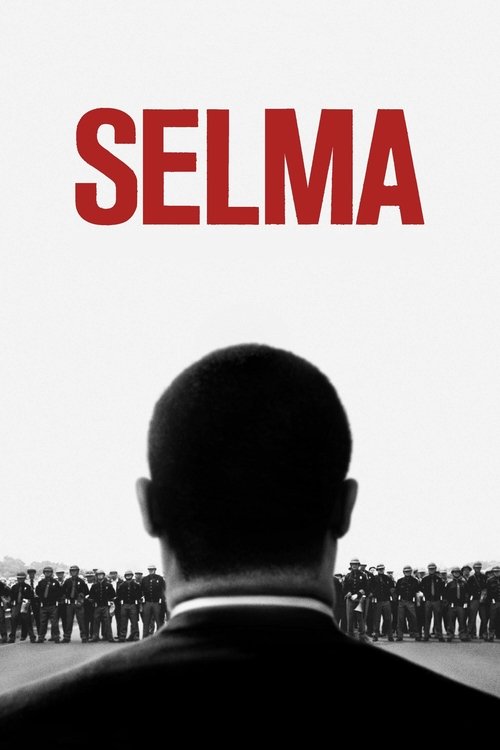
Selma
"Selma," as in Alabama, the place where segregation in the South was at its worst, leading to a march that ended in violence, forcing a famous statement by President Lyndon B. Johnson that ultimately led to the signing of the Voting Rights Act.
Despite a moderate budget of $20.0M, Selma became a box office success, earning $66.8M worldwide—a 234% return.
1 Oscar. 58 wins & 91 nominations


Plot Structure
Story beats plotted across runtime


Narrative Arc
Emotional journey through the story's key moments
Story Circle
Blueprint 15-beat structure
Arcplot Score Breakdown
Weighted: Precision (70%) + Arc (15%) + Theme (15%)
Selma (2014) demonstrates strategically placed plot construction, characteristic of Ava DuVernay's storytelling approach. This structural analysis examines how the film's 15-point plot structure maps to proven narrative frameworks across 2 hours and 8 minutes. With an Arcplot score of 6.6, the film balances conventional beats with creative variation.
Characters
Cast & narrative archetypes

Dr. Martin Luther King Jr.
Coretta Scott King
President Lyndon B. Johnson
Governor George Wallace
Andrew Young
John Lewis
Hosea Williams
Diane Nash
James Bevel
Ralph Abernathy
Main Cast & Characters
Dr. Martin Luther King Jr.
Played by David Oyelowo
Civil rights leader who orchestrates the historic Selma to Montgomery voting rights marches while facing political opposition and personal threats.
Coretta Scott King
Played by Carmen Ejogo
MLK's wife who provides emotional support while grappling with the toll of activism on their family and her husband's safety.
President Lyndon B. Johnson
Played by Tom Wilkinson
U.S. President who initially resists the voting rights push, prioritizing other legislation before eventually supporting the cause.
Governor George Wallace
Played by Tim Roth
Alabama Governor who actively opposes civil rights and uses state power to suppress voting rights demonstrations.
Andrew Young
Played by André Holland
Young SCLC leader and strategic advisor to King, helping coordinate the Selma campaign and navigate political complexities.
John Lewis
Played by Stephan James
SNCC chairman and brave activist who leads the march on Bloody Sunday and endures brutal violence on the Edmund Pettus Bridge.
Hosea Williams
Played by Wendell Pierce
SCLC leader who co-leads the Bloody Sunday march with Lewis and demonstrates unwavering commitment to the movement.
Diane Nash
Played by Tessa Thompson
Veteran civil rights activist who challenges King to continue the march despite court orders and federal pressure.
James Bevel
Played by Common
SCLC strategist known for creative tactics and pushing aggressive action in the civil rights movement.
Ralph Abernathy
Played by Colman Domingo
King's closest friend and trusted advisor within SCLC, providing steady support throughout the campaign.
Structural Analysis
The Status Quo at 1 minutes (1% through the runtime) establishes MLK practices his Nobel Peace Prize acceptance speech in a hotel mirror, establishing him as a celebrated civil rights leader at the height of his recognition, yet the work remains unfinished.. Notably, this early placement immediately immerses viewers in the story world.
The inciting incident occurs at 15 minutes when Jimmie Lee Jackson is shot by state troopers during a peaceful protest in Marion, Alabama. This brutal murder galvanizes the movement and makes it clear that incremental approaches are insufficient—a direct confrontation is necessary.. At 12% through the film, this Disruption aligns precisely with traditional story structure. This beat shifts the emotional landscape, launching the protagonist into the central conflict.
The First Threshold at 31 minutes marks the transition into Act II, occurring at 24% of the runtime. This reveals the protagonist's commitment to MLK makes the definitive decision to march from Selma to Montgomery despite all warnings and dangers. He commits the movement to a direct confrontation with Alabama authorities, crossing the threshold into active, organized resistance that will demand everything from participants., moving from reaction to action.
At 64 minutes, the Midpoint arrives at 50% of the runtime—precisely centered, creating perfect narrative symmetry. Of particular interest, this crucial beat Bloody Sunday: State troopers and deputized citizens brutally attack peaceful marchers on the Edmund Pettus Bridge with clubs, tear gas, and whips. John Lewis' skull is fractured. The violence is televised nationwide. This false defeat raises stakes enormously and transforms a local campaign into a national crisis., fundamentally raising what's at risk. The emotional intensity shifts, dividing the narrative into clear before-and-after phases.
The Collapse moment at 96 minutes (75% through) represents the emotional nadir. Here, White supremacists murder Reverend James Reeb, a white minister who came to support the marchers. This death—the "whiff of death"—represents the ultimate cost and the loss of innocence. The movement faces its darkest moment: violence escalates, unity fractures, and the moral cost becomes unbearably real., reveals the protagonist at their lowest point. This beat's placement in the final quarter sets up the climactic reversal.
The Second Threshold at 103 minutes initiates the final act resolution at 81% of the runtime. President Johnson addresses Congress and the nation on television, declaring "We shall overcome" and committing federal support for voting rights legislation. This breakthrough moment synthesizes moral pressure with political action, vindicating the strategy and providing the protection needed for the march to proceed., demonstrating the transformation achieved throughout the journey.
Emotional Journey
Selma's emotional architecture traces a deliberate progression across 15 carefully calibrated beats.
Narrative Framework
This structural analysis employs structural analysis methodology used to understand storytelling architecture. By mapping Selma against these established plot points, we can identify how Ava DuVernay utilizes or subverts traditional narrative conventions. The plot point approach reveals not only adherence to structural principles but also creative choices that distinguish Selma within the history genre.
Ava DuVernay's Structural Approach
Among the 2 Ava DuVernay films analyzed on Arcplot, the average structural score is 6.7, demonstrating varied approaches to story architecture. Selma takes a more unconventional approach compared to the director's typical style. For comparative analysis, explore the complete Ava DuVernay filmography.
Comparative Analysis
Additional history films include The Attacks Of 26/11, Joyeux Noel and Rob Roy. For more Ava DuVernay analyses, see A Wrinkle in Time.
Plot Points by Act
Act I
SetupStatus Quo
MLK practices his Nobel Peace Prize acceptance speech in a hotel mirror, establishing him as a celebrated civil rights leader at the height of his recognition, yet the work remains unfinished.
Theme
Annie Lee Cooper attempts to register to vote but is turned away with impossible questions by a racist registrar. The scene states the film's theme: systematic oppression requires systematic resistance, and the right to vote is the foundation of dignity and power.
Worldbuilding
Establishes the landscape of 1965 Alabama: the 16th Street Baptist Church bombing kills four girls; MLK receives the Nobel Prize; black citizens are systematically denied voting rights; MLK meets with President Johnson who deflects focus to other issues; the movement debates strategy.
Disruption
Jimmie Lee Jackson is shot by state troopers during a peaceful protest in Marion, Alabama. This brutal murder galvanizes the movement and makes it clear that incremental approaches are insufficient—a direct confrontation is necessary.
Resistance
MLK and the SCLC debate whether to march from Selma to Montgomery. They face resistance from local leaders, warnings from the FBI, and pressure from the White House. MLK weighs the risks of violence against the necessity of action. Coretta expresses concerns about his safety and their family.
Act II
ConfrontationFirst Threshold
MLK makes the definitive decision to march from Selma to Montgomery despite all warnings and dangers. He commits the movement to a direct confrontation with Alabama authorities, crossing the threshold into active, organized resistance that will demand everything from participants.
Mirror World
An intimate scene between MLK and Coretta reveals the personal cost of leadership. She represents the human sacrifice behind the movement—their marriage strained by his infidelity and the constant threat of death, embodying the theme that justice demands personal as well as public sacrifice.
Premise
The promise of the premise: the march begins. Hundreds gather at the Edmund Pettus Bridge. The movement gains momentum as volunteers arrive, organizers strategize, and the media watches. The sequence delivers what the film promised—witnessing the Selma campaign unfold with its hope, courage, and community power.
Midpoint
Bloody Sunday: State troopers and deputized citizens brutally attack peaceful marchers on the Edmund Pettus Bridge with clubs, tear gas, and whips. John Lewis' skull is fractured. The violence is televised nationwide. This false defeat raises stakes enormously and transforms a local campaign into a national crisis.
Opposition
The opposition intensifies on all sides: Governor Wallace refuses to protect marchers; President Johnson pressures MLK to call off protests; a federal judge issues a restraining order; the movement fractures over whether to defy the injunction; white supremacists become more violent; MLK leads "Turnaround Tuesday" but stops at the bridge, creating internal controversy.
Collapse
White supremacists murder Reverend James Reeb, a white minister who came to support the marchers. This death—the "whiff of death"—represents the ultimate cost and the loss of innocence. The movement faces its darkest moment: violence escalates, unity fractures, and the moral cost becomes unbearably real.
Crisis
MLK processes the devastating losses and questions whether the cost is too high. He prays, reflects on mortality, and wrestles with doubt. The movement mourns and faces the darkness of their sacrifice. Coretta and others provide support but cannot remove the burden of leadership and conscience.
Act III
ResolutionSecond Threshold
President Johnson addresses Congress and the nation on television, declaring "We shall overcome" and committing federal support for voting rights legislation. This breakthrough moment synthesizes moral pressure with political action, vindicating the strategy and providing the protection needed for the march to proceed.
Synthesis
The finale: Protected by federal forces, the marchers complete the 54-mile journey from Selma to Montgomery. Thousands join the march, growing from hundreds to 25,000. MLK delivers the "How Long? Not Long" speech at the Alabama State Capitol. The movement achieves its goal through the synthesis of moral courage, strategic action, and sacrifice.
Transformation
Closing title cards reveal that the Voting Rights Act was signed into law five months later, transforming American democracy. The image mirrors the opening but shows the transformation: from disenfranchisement to empowerment, from individual suffering to collective victory, from question to answer.