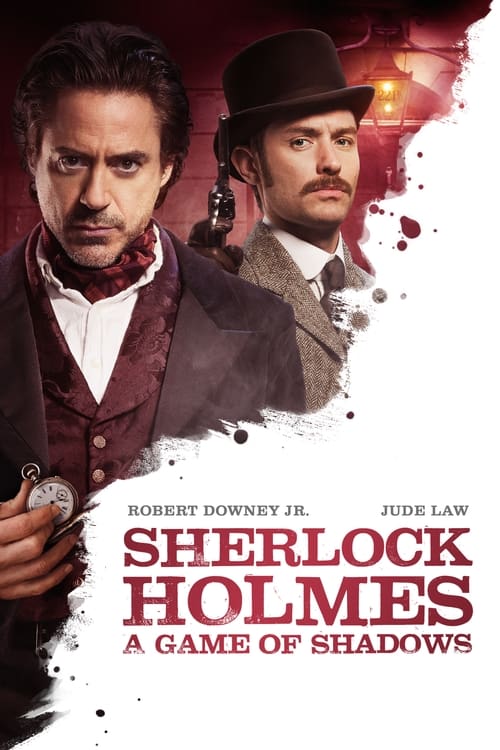
Sherlock Holmes: A Game of Shadows
There is a new criminal mastermind at large (Professor Moriarty) and not only is he Holmes’ intellectual equal, but his capacity for evil and lack of conscience may give him an advantage over the detective.
Despite a considerable budget of $125.0M, Sherlock Holmes: A Game of Shadows became a box office success, earning $334.6M worldwide—a 168% return.
3 wins & 10 nominations


Plot Structure
Story beats plotted across runtime


Narrative Arc
Emotional journey through the story's key moments
Story Circle
Blueprint 15-beat structure
Arcplot Score Breakdown
Weighted: Precision (70%) + Arc (15%) + Theme (15%)
Sherlock Holmes: A Game of Shadows (2011) reveals precise narrative architecture, characteristic of Guy Ritchie's storytelling approach. This structural analysis examines how the film's 15-point plot structure maps to proven narrative frameworks across 2 hours and 9 minutes. With an Arcplot score of 6.8, the film balances conventional beats with creative variation.
Characters
Cast & narrative archetypes

Sherlock Holmes
Professor James Moriarty
Dr. John Watson
Madame Simza Heron
Mycroft Holmes
Mary Watson
Irene Adler
Main Cast & Characters
Sherlock Holmes
Played by Robert Downey Jr.
The world's greatest detective, using deduction and disguise to stop Professor Moriarty's plot for world domination.
Professor James Moriarty
Played by Jared Harris
Holmes' intellectual equal and archenemy, orchestrating a conspiracy to profit from an impending world war.
Dr. John Watson
Played by Jude Law
Holmes' loyal friend and chronicler, recently married but drawn back into danger to help stop Moriarty.
Madame Simza Heron
Played by Noomi Rapace
A French gypsy fortune teller whose brother is caught up in Moriarty's schemes, joining Holmes and Watson on their quest.
Mycroft Holmes
Played by Stephen Fry
Sherlock's older brother, a government official who provides crucial intelligence and assistance.
Mary Watson
Played by Kelly Reilly
Dr. Watson's new wife who wants a peaceful life but understands her husband's loyalty to Holmes.
Irene Adler
Played by Rachel McAdams
Holmes' former adversary and romantic interest, coerced into working for Moriarty with fatal consequences.
Structural Analysis
The Status Quo at 2 minutes (1% through the runtime) establishes Holmes infiltrates a hidden auction house in disguise, demonstrating his mastery of deduction and disguise while tracking a pattern of bombings across Europe. He rescues Irene Adler from an ambush, showing his world of intellectual superiority and controlled chaos.. Significantly, this early placement immediately immerses viewers in the story world.
The inciting incident occurs at 16 minutes when Irene Adler is poisoned and killed by Moriarty after delivering a package to Holmes. Holmes realizes Moriarty is eliminating anyone connected to him, and Watson's honeymoon train will be targeted. The stakes become personal and deadly.. At 13% through the film, this Disruption is delayed, allowing extended setup of the story world. This beat shifts the emotional landscape, launching the protagonist into the central conflict.
The First Threshold at 32 minutes marks the transition into Act II, occurring at 25% of the runtime. This shows the protagonist's commitment to Watson makes the choice to fully commit to the investigation with Holmes instead of returning to Mary. They agree to travel to Germany together to pursue Moriarty's conspiracy, crossing into a dangerous adventure that will test their partnership., moving from reaction to action.
At 65 minutes, the Midpoint arrives at 50% of the runtime—precisely centered, creating perfect narrative symmetry. The analysis reveals that this crucial beat Holmes and Moriarty meet face-to-face at the opera. Moriarty reveals he has captured Mary Watson and threatens her life, raising the stakes enormously. Holmes realizes Moriarty is always one step ahead, and the game has become deeply personal. False defeat: Moriarty appears to have total control., fundamentally raising what's at risk. The emotional intensity shifts, dividing the narrative into clear before-and-after phases.
The Collapse moment at 97 minutes (75% through) represents the emotional nadir. Here, Despite their efforts, the assassination succeeds and war is declared. Moriarty has won. Holmes is captured and tortured by Moriarty, who has orchestrated everything perfectly. Watson is badly wounded. The whiff of death: their mission has failed, Europe will burn, and Holmes faces his nemesis alone., reveals the protagonist at their lowest point. This beat's placement in the final quarter sets up the climactic reversal.
The Second Threshold at 103 minutes initiates the final act resolution at 80% of the runtime. Holmes realizes Moriarty's tell during their chess game and deduces the real target: a hotel where all the ambassadors are gathering. He synthesizes everything—his brother's resources, Watson's loyalty, Simza's courage—and formulates a final plan. The breakthrough: Moriarty can be beaten at his own game., demonstrating the transformation achieved throughout the journey.
Emotional Journey
Sherlock Holmes: A Game of Shadows's emotional architecture traces a deliberate progression across 15 carefully calibrated beats.
Narrative Framework
This structural analysis employs systematic plot point analysis that identifies crucial turning points. By mapping Sherlock Holmes: A Game of Shadows against these established plot points, we can identify how Guy Ritchie utilizes or subverts traditional narrative conventions. The plot point approach reveals not only adherence to structural principles but also creative choices that distinguish Sherlock Holmes: A Game of Shadows within the adventure genre.
Guy Ritchie's Structural Approach
Among the 14 Guy Ritchie films analyzed on Arcplot, the average structural score is 6.4, demonstrating varied approaches to story architecture. Sherlock Holmes: A Game of Shadows represents one of the director's most structurally precise works. For comparative analysis, explore the complete Guy Ritchie filmography.
Comparative Analysis
Additional adventure films include The Black Stallion, The Bad Guys and Puss in Boots. For more Guy Ritchie analyses, see RocknRolla, The Man from U.N.C.L.E. and Guy Ritchie's The Covenant.
Plot Points by Act
Act I
SetupStatus Quo
Holmes infiltrates a hidden auction house in disguise, demonstrating his mastery of deduction and disguise while tracking a pattern of bombings across Europe. He rescues Irene Adler from an ambush, showing his world of intellectual superiority and controlled chaos.
Theme
Watson confronts Holmes about his chaotic methods disrupting Watson's impending marriage, stating "You've never complained about my methods before." The theme emerges: the tension between solitary genius and human connection, between logic and emotion.
Worldbuilding
Establishment of Holmes' world on the eve of Watson's wedding: his obsession with Professor Moriarty's bombing conspiracy, his reliance on Watson, the impending loss of his only friend, and the introduction of Moriarty as the Napoleon of crime orchestrating a vast conspiracy.
Disruption
Irene Adler is poisoned and killed by Moriarty after delivering a package to Holmes. Holmes realizes Moriarty is eliminating anyone connected to him, and Watson's honeymoon train will be targeted. The stakes become personal and deadly.
Resistance
Holmes crashes Watson's honeymoon train, saves Watson and Mary from Moriarty's assassins, and reluctantly brings Watson into the investigation. They travel to Paris, meet with Simza (a gypsy fortune teller connected to the conspiracy), and Holmes debates whether to involve Watson further.
Act II
ConfrontationFirst Threshold
Watson makes the choice to fully commit to the investigation with Holmes instead of returning to Mary. They agree to travel to Germany together to pursue Moriarty's conspiracy, crossing into a dangerous adventure that will test their partnership.
Mirror World
Introduction of Simza as the thematic mirror: she represents the emotional, instinctive approach versus Holmes' cold logic. Her relationship with her anarchist brother and her loyalty despite danger reflects the film's theme of connection versus isolation.
Premise
The "fun and games" of Holmes and Watson investigating across Europe: escaping assassins on a train, slow-motion forest chase sequences, Holmes' deductive montages, disguises and infiltrations, meeting Mycroft Holmes, and piecing together Moriarty's plan involving anarchists and weapons manufacturers.
Midpoint
Holmes and Moriarty meet face-to-face at the opera. Moriarty reveals he has captured Mary Watson and threatens her life, raising the stakes enormously. Holmes realizes Moriarty is always one step ahead, and the game has become deeply personal. False defeat: Moriarty appears to have total control.
Opposition
The team infiltrates a peace summit where Moriarty plans to assassinate a key diplomat to trigger a world war. Pressure intensifies as they race against time, fight through Moriarty's forces, and discover the true scope of his plan: profiting from a manufactured European war through his weapons empire.
Collapse
Despite their efforts, the assassination succeeds and war is declared. Moriarty has won. Holmes is captured and tortured by Moriarty, who has orchestrated everything perfectly. Watson is badly wounded. The whiff of death: their mission has failed, Europe will burn, and Holmes faces his nemesis alone.
Crisis
Holmes endures torture and psychological warfare from Moriarty, who explains his complete victory. Holmes appears broken, processing the magnitude of his failure. Watson recovers and regroups with Simza, preparing for a desperate final attempt despite overwhelming odds.
Act III
ResolutionSecond Threshold
Holmes realizes Moriarty's tell during their chess game and deduces the real target: a hotel where all the ambassadors are gathering. He synthesizes everything—his brother's resources, Watson's loyalty, Simza's courage—and formulates a final plan. The breakthrough: Moriarty can be beaten at his own game.
Synthesis
The finale at Reichenbach Falls: Holmes confronts Moriarty while Watson and Simza defuse the bomb at the hotel. Holmes and Moriarty engage in physical and intellectual combat. Holmes uses his predictive combat technique but realizes the only way to stop Moriarty is mutual destruction, taking them both over the falls.
Transformation
Watson types at his typewriter, narrating Holmes' death and their final case together, transformed by grief and loss. The closing image mirrors the opening but shows Watson as a changed man: no longer the sidekick but the chronicler who must carry on. Then the reveal: Holmes survived, watching from afar—transformation complete for both.