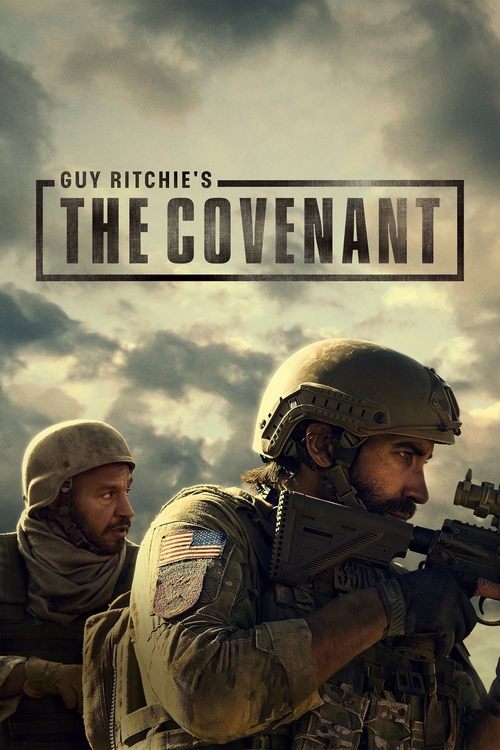
Guy Ritchie's The Covenant
During the war in Afghanistan, a local interpreter risks his own life to carry an injured sergeant across miles of grueling terrain.
The film box office disappointment against its moderate budget of $55.0M, earning $21.9M globally (-60% loss). While initial box office returns were modest, the film has gained appreciation for its compelling narrative within the war genre.
1 win & 3 nominations


Plot Structure
Story beats plotted across runtime


Narrative Arc
Emotional journey through the story's key moments
Story Circle
Blueprint 15-beat structure
Arcplot Score Breakdown
Weighted: Precision (70%) + Arc (15%) + Theme (15%)
Guy Ritchie's The Covenant (2023) exhibits deliberately positioned narrative architecture, characteristic of Guy Ritchie's storytelling approach. This structural analysis examines how the film's 15-point plot structure maps to proven narrative frameworks across 2 hours and 3 minutes. With an Arcplot score of 6.3, the film takes an unconventional approach to traditional narrative frameworks.
Characters
Cast & narrative archetypes

John Kinley
Ahmed
Caroline Kinley
Colonel Vokes
Parker
Main Cast & Characters
John Kinley
Played by Jake Gyllenhaal
U.S. Army Green Beret Master Sergeant who forms a bond with his Afghan interpreter and must repay the debt after Ahmed saves his life.
Ahmed
Played by Dar Salim
Afghan interpreter who risks everything to save Kinley's life, then faces Taliban retribution while waiting for rescue.
Caroline Kinley
Played by Emily Beecham
John Kinley's wife who supports his dangerous mission to rescue Ahmed from Afghanistan.
Colonel Vokes
Played by Jonny Lee Miller
U.S. Army colonel who initially resists Kinley's plan to rescue Ahmed due to military bureaucracy.
Parker
Played by Antony Starr
Member of Kinley's special forces unit operating in Afghanistan.
Structural Analysis
The Status Quo at 1 minutes (1% through the runtime) establishes Afghanistan 2018. Sergeant John Kinley leads his unit on missions to locate Taliban explosives factories, operating with Afghan interpreters in a dangerous warzone where trust is essential for survival.. Notably, this early placement immediately immerses viewers in the story world.
The inciting incident occurs at 15 minutes when Kinley's interpreter is killed by a suicide bomber during a mission, forcing him to find a replacement. Ahmed, a skilled but mysterious interpreter with his own vendetta against the Taliban, joins the unit.. At 12% through the film, this Disruption aligns precisely with traditional story structure. This beat shifts the emotional landscape, launching the protagonist into the central conflict.
The First Threshold at 31 minutes marks the transition into Act II, occurring at 25% of the runtime. This indicates the protagonist's commitment to The unit launches a major raid on a Taliban explosives factory. The mission goes catastrophically wrong when they're ambushed. Most of Kinley's team is killed, and Kinley is severely wounded, leaving only him and Ahmed alive., moving from reaction to action.
At 62 minutes, the Midpoint arrives at 50% of the runtime—precisely centered, creating perfect narrative symmetry. Of particular interest, this crucial beat Ahmed successfully delivers Kinley to an American base after weeks of travel. Kinley is evacuated to the US for medical treatment. False victory: Kinley survived, but Ahmed is now a marked man in Afghanistan., fundamentally raising what's at risk. The emotional intensity shifts, dividing the narrative into clear before-and-after phases.
The Collapse moment at 92 minutes (75% through) represents the emotional nadir. Here, Kinley learns the Taliban has captured Ahmed's family and is actively hunting him. Ahmed is on the run, his wife and child in danger. The bureaucratic system has completely failed—Ahmed will die if Kinley doesn't act., illustrates the protagonist at their lowest point. This beat's placement in the final quarter sets up the climactic reversal.
The Second Threshold at 98 minutes initiates the final act resolution at 80% of the runtime. Kinley decides to return to Afghanistan himself. He assembles a team of private contractors using his savings and contacts, planning an unauthorized extraction mission to rescue Ahmed and his family., demonstrating the transformation achieved throughout the journey.
Emotional Journey
Guy Ritchie's The Covenant's emotional architecture traces a deliberate progression across 15 carefully calibrated beats.
Narrative Framework
This structural analysis employs structural analysis methodology used to understand storytelling architecture. By mapping Guy Ritchie's The Covenant against these established plot points, we can identify how Guy Ritchie utilizes or subverts traditional narrative conventions. The plot point approach reveals not only adherence to structural principles but also creative choices that distinguish Guy Ritchie's The Covenant within the war genre.
Guy Ritchie's Structural Approach
Among the 14 Guy Ritchie films analyzed on Arcplot, the average structural score is 6.4, demonstrating varied approaches to story architecture. Guy Ritchie's The Covenant takes a more unconventional approach compared to the director's typical style. For comparative analysis, explore the complete Guy Ritchie filmography.
Comparative Analysis
Additional war films include Fury, Shenandoah and More American Graffiti. For more Guy Ritchie analyses, see RocknRolla, The Man from U.N.C.L.E. and King Arthur: Legend of the Sword.
Plot Points by Act
Act I
SetupStatus Quo
Afghanistan 2018. Sergeant John Kinley leads his unit on missions to locate Taliban explosives factories, operating with Afghan interpreters in a dangerous warzone where trust is essential for survival.
Theme
A soldier explains to Kinley that the interpreters risk everything for the promise of American visas, establishing the theme of covenant—the weight of promises made and the moral obligation to honor them.
Worldbuilding
Kinley's unit conducts operations targeting Taliban bomb makers. We see the dangerous dynamics between American soldiers and Afghan interpreters, the bureaucratic visa system, and the constant threat of betrayal and death.
Disruption
Kinley's interpreter is killed by a suicide bomber during a mission, forcing him to find a replacement. Ahmed, a skilled but mysterious interpreter with his own vendetta against the Taliban, joins the unit.
Resistance
Kinley and Ahmed develop an uneasy working relationship. Ahmed proves his worth through intelligence and bravery, but tensions arise over methods and trust. Kinley learns Ahmed's brother was killed by the Taliban.
Act II
ConfrontationFirst Threshold
The unit launches a major raid on a Taliban explosives factory. The mission goes catastrophically wrong when they're ambushed. Most of Kinley's team is killed, and Kinley is severely wounded, leaving only him and Ahmed alive.
Mirror World
Ahmed makes the impossible choice to save Kinley rather than escape alone. He begins the grueling journey carrying the wounded sergeant across hostile Taliban territory—embodying the covenant theme through action.
Premise
Ahmed's harrowing journey across Afghanistan with the critically wounded Kinley. Using a wheelbarrow to transport him, Ahmed evades Taliban patrols, navigates treacherous terrain, and risks everything to reach American forces.
Midpoint
Ahmed successfully delivers Kinley to an American base after weeks of travel. Kinley is evacuated to the US for medical treatment. False victory: Kinley survived, but Ahmed is now a marked man in Afghanistan.
Opposition
Kinley recovers in America, haunted by his debt to Ahmed. He discovers Ahmed's visa application is stalled in bureaucracy. The Taliban puts a bounty on Ahmed, forcing him into hiding. Kinley's attempts through official channels fail repeatedly.
Collapse
Kinley learns the Taliban has captured Ahmed's family and is actively hunting him. Ahmed is on the run, his wife and child in danger. The bureaucratic system has completely failed—Ahmed will die if Kinley doesn't act.
Crisis
Kinley faces his dark night: he can return to his comfortable American life and let Ahmed die, or risk everything to honor his covenant. He confronts the gap between official promises and moral obligations.
Act III
ResolutionSecond Threshold
Kinley decides to return to Afghanistan himself. He assembles a team of private contractors using his savings and contacts, planning an unauthorized extraction mission to rescue Ahmed and his family.
Synthesis
Kinley and his team infiltrate Afghanistan, locate Ahmed, and execute a dangerous extraction. They fight through Taliban forces, rescue Ahmed's family, and make a desperate run for the border in a tense action climax.
Transformation
Ahmed and his family arrive safely in America. Kinley greets them at the airport—the covenant fulfilled. The man who once viewed interpreters as expendable assets now understands that honor transcends borders and duty.