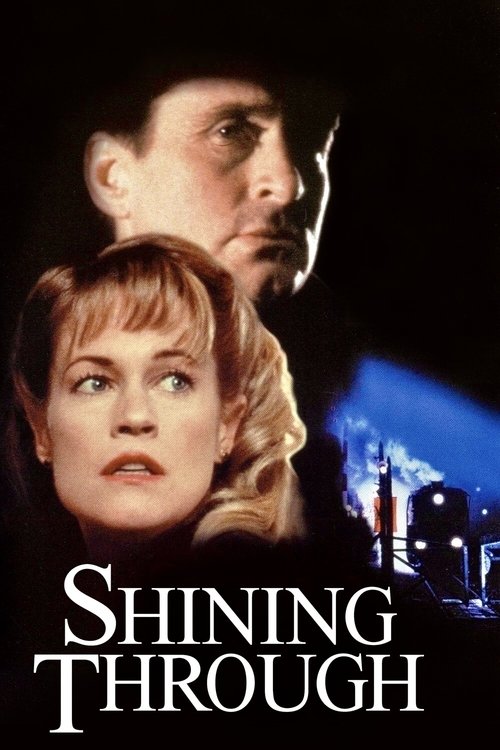
Shining Through
Spirited New Yorker Linda Voss goes to work for international lawyer and secret Office of Strategic Services operative Ed Leland just before World War II. As they fall in love, the United States enters the fight against Hitler, and Linda volunteers to work for Ed spying undercover behind Nazi lines. Assigned to uncover information about a German bomb, Linda also has personal motives to fulfill: discovering the fate of her Jewish family members in Berlin.
Working with a mid-range budget of $35.0M, the film achieved a respectable showing with $43.8M in global revenue (+25% profit margin).


Plot Structure
Story beats plotted across runtime


Narrative Arc
Emotional journey through the story's key moments
Story Circle
Blueprint 15-beat structure
Arcplot Score Breakdown
Weighted: Precision (70%) + Arc (15%) + Theme (15%)
Shining Through (1992) exemplifies precise plot construction, characteristic of David Seltzer's storytelling approach. This structural analysis examines how the film's 15-point plot structure maps to proven narrative frameworks across 2 hours and 12 minutes. With an Arcplot score of 7.6, the film showcases strong structural fundamentals.
Characters
Cast & narrative archetypes

Linda Voss
Ed Leland
Franz-Otto Dietrich
Margrete von Eberstein
Sunflower
Main Cast & Characters
Linda Voss
Played by Melanie Griffith
A spirited secretary who becomes a spy to infiltrate Nazi Germany and prove her worth to the man she loves.
Ed Leland
Played by Michael Douglas
A sophisticated intelligence officer who recruits Linda for a dangerous espionage mission behind enemy lines.
Franz-Otto Dietrich
Played by Liam Neeson
A high-ranking Nazi officer who becomes romantically involved with Linda during her undercover mission.
Margrete von Eberstein
Played by Joely Richardson
A German aristocrat and resistance member who aids Linda in her dangerous mission.
Sunflower
Played by John Gielgud
An underground resistance contact who helps Linda navigate the dangers of wartime Berlin.
Structural Analysis
The Status Quo at 2 minutes (1% through the runtime) establishes Linda Voss works as a secretary in 1940 New York, a smart but overlooked woman with dreams of adventure and proving herself worthy of more than her working-class background.. Structural examination shows that this early placement immediately immerses viewers in the story world.
The inciting incident occurs at 16 minutes when Ed Leland asks Linda to translate German documents, revealing she speaks fluent German due to her heritage. This discovery pulls her into the world of espionage and changes their professional relationship.. At 12% through the film, this Disruption aligns precisely with traditional story structure. This beat shifts the emotional landscape, launching the protagonist into the central conflict.
The First Threshold at 33 minutes marks the transition into Act II, occurring at 25% of the runtime. This reveals the protagonist's commitment to Linda volunteers to go undercover in Nazi Germany as a spy, making an active choice to prove herself. Despite Ed's initial resistance, she convinces the OSS to send her on a mission to gather intelligence., moving from reaction to action.
At 66 minutes, the Midpoint arrives at 50% of the runtime—precisely centered, creating perfect narrative symmetry. Structural examination shows that this crucial beat Linda's cover is compromised when a suspicious Nazi officer begins investigating her background. The stakes raise dramatically as her mission becomes a matter of survival, not just success., fundamentally raising what's at risk. The emotional intensity shifts, dividing the narrative into clear before-and-after phases.
The Collapse moment at 99 minutes (75% through) represents the emotional nadir. Here, Linda is captured by the Gestapo and faces torture and execution. Her contact is killed, and she appears to have no way out - a literal brush with death., demonstrates the protagonist at their lowest point. This beat's placement in the final quarter sets up the climactic reversal.
The Second Threshold at 106 minutes initiates the final act resolution at 80% of the runtime. Ed Leland arrives in Germany to extract Linda, having finally recognized her true worth. Linda uses her wits to escape her captors just as Ed's rescue team arrives, synthesizing her courage with outside help., demonstrating the transformation achieved throughout the journey.
Emotional Journey
Shining Through's emotional architecture traces a deliberate progression across 15 carefully calibrated beats.
Narrative Framework
This structural analysis employs proven narrative structure principles that track dramatic progression. By mapping Shining Through against these established plot points, we can identify how David Seltzer utilizes or subverts traditional narrative conventions. The plot point approach reveals not only adherence to structural principles but also creative choices that distinguish Shining Through within the drama genre.
David Seltzer's Structural Approach
Among the 3 David Seltzer films analyzed on Arcplot, the average structural score is 7.5, reflecting strong command of classical structure. Shining Through represents one of the director's most structurally precise works. For comparative analysis, explore the complete David Seltzer filmography.
Comparative Analysis
Additional drama films include After Thomas, South Pacific and Dirty Dancing: Havana Nights. For more David Seltzer analyses, see Punchline, Lucas.
Plot Points by Act
Act I
SetupStatus Quo
Linda Voss works as a secretary in 1940 New York, a smart but overlooked woman with dreams of adventure and proving herself worthy of more than her working-class background.
Theme
Linda's uncle warns her about getting involved in things beyond her control, stating "You think you're so smart, but you don't know what the real world is like" - establishing the theme of courage versus naivety.
Worldbuilding
Introduction to Linda's world: her secretarial job at a law firm, her unrequited attraction to her boss Ed Leland (who works for the OSS), her working-class Jewish background, and the looming shadow of WWII.
Disruption
Ed Leland asks Linda to translate German documents, revealing she speaks fluent German due to her heritage. This discovery pulls her into the world of espionage and changes their professional relationship.
Resistance
Linda becomes romantically involved with Ed while assisting with intelligence work. She debates whether she can truly be useful to the war effort, while Ed remains skeptical of her abilities as anything more than a translator.
Act II
ConfrontationFirst Threshold
Linda volunteers to go undercover in Nazi Germany as a spy, making an active choice to prove herself. Despite Ed's initial resistance, she convinces the OSS to send her on a mission to gather intelligence.
Mirror World
Linda arrives in Berlin and connects with her contact, beginning her double life as a kitchen worker in a high-ranking Nazi official's household - a relationship that will test her courage and cunning.
Premise
Linda navigates her dangerous new world in Nazi Germany, gathering intelligence while maintaining her cover. She uses her wits and language skills to access secret information, experiencing the spy thriller adventure the premise promised.
Midpoint
Linda's cover is compromised when a suspicious Nazi officer begins investigating her background. The stakes raise dramatically as her mission becomes a matter of survival, not just success.
Opposition
Linda faces increasing danger as the Gestapo closes in. Her extraction plan falls apart, contacts are captured, and she must rely on her own resourcefulness while being hunted by Nazi intelligence.
Collapse
Linda is captured by the Gestapo and faces torture and execution. Her contact is killed, and she appears to have no way out - a literal brush with death.
Crisis
In captivity, Linda confronts her fear and finds resolve. She realizes she must use everything she's learned - her intelligence, her courage, and her ability to read people - to survive.
Act III
ResolutionSecond Threshold
Ed Leland arrives in Germany to extract Linda, having finally recognized her true worth. Linda uses her wits to escape her captors just as Ed's rescue team arrives, synthesizing her courage with outside help.
Synthesis
Linda and Ed fight their way out of Germany together, combining their skills in a desperate escape. The mission intelligence is successfully delivered, and they make it to safety through a combination of Linda's cunning and Ed's operational expertise.
Transformation
Linda returns home, no longer the overlooked secretary but a proven hero. Ed recognizes her as an equal partner, and she has proven to herself that she was capable of extraordinary courage all along.