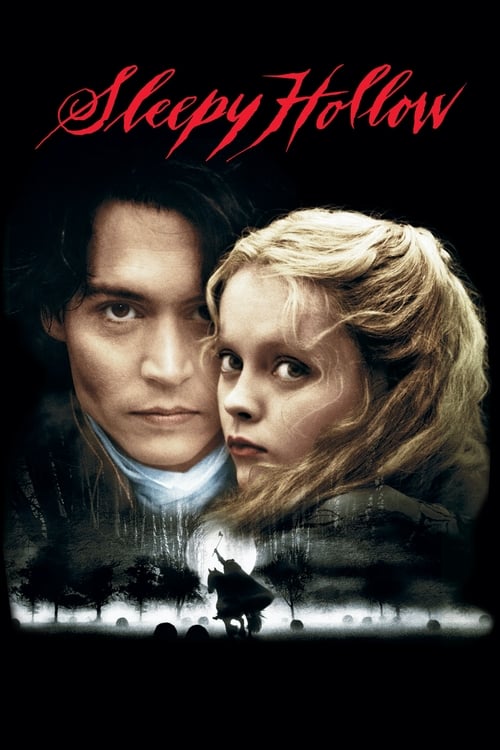
Sleepy Hollow
Skeptical young detective Ichabod Crane gets transferred to the hamlet of Sleepy Hollow, New York, where he is tasked with investigating the decapitations of three people – murders the townsfolk attribute to a legendary specter, The Headless Horseman.
Despite a substantial budget of $100.0M, Sleepy Hollow became a financial success, earning $206.1M worldwide—a 106% return.
1 Oscar. 28 wins & 44 nominations


Plot Structure
Story beats plotted across runtime


Narrative Arc
Emotional journey through the story's key moments
Story Circle
Blueprint 15-beat structure
Arcplot Score Breakdown
Weighted: Precision (70%) + Arc (15%) + Theme (15%)
Sleepy Hollow (1999) reveals carefully calibrated narrative architecture, characteristic of Tim Burton's storytelling approach. This structural analysis examines how the film's 15-point plot structure maps to proven narrative frameworks across 1 hour and 45 minutes. With an Arcplot score of 6.9, the film balances conventional beats with creative variation.
Characters
Cast & narrative archetypes

Ichabod Crane
Katrina Van Tassel
Lady Mary Van Tassel
Brom Van Brunt
Baltus Van Tassel
The Headless Horseman
Young Masbath
Main Cast & Characters
Ichabod Crane
Played by Johnny Depp
A progressive, scientific constable sent to Sleepy Hollow to investigate mysterious murders using forensic methods. Haunted by childhood trauma involving his mother's death.
Katrina Van Tassel
Played by Christina Ricci
The beautiful daughter of Sleepy Hollow's wealthiest citizen, who practices white magic and becomes Crane's love interest and ally.
Lady Mary Van Tassel
Played by Miranda Richardson
Katrina's stepmother who harbors dark secrets and a thirst for revenge against those who wronged her family.
Brom Van Brunt
Played by Casper Van Dien
A strong, traditional suitor for Katrina who is suspicious of Crane's modern methods and rivals him for her affection.
Baltus Van Tassel
Played by Michael Gambon
Katrina's wealthy father and a town elder who summoned Crane to investigate the murders plaguing Sleepy Hollow.
The Headless Horseman
Played by Christopher Walken
A vengeful Hessian mercenary resurrected as an undead specter who decapitates victims at the bidding of his controller.
Young Masbath
Played by Marc Pickering
The orphaned son of one of the Horseman's victims who becomes Crane's loyal assistant in the investigation.
Structural Analysis
The Status Quo at 1 minutes (1% through the runtime) establishes A terrifying prologue shows the Headless Horseman decapitating Peter Van Garrett and his son in their carriage on a lonely road, establishing the supernatural threat that will dominate the story.. Significantly, this early placement immediately immerses viewers in the story world.
The inciting incident occurs at 13 minutes when Ichabod arrives in Sleepy Hollow and is immediately confronted with the tale of the Headless Horseman from the village elders. Three people have been murdered and decapitated, with heads taken—a mystery that defies his rational worldview.. At 12% through the film, this Disruption aligns precisely with traditional story structure. This beat shifts the emotional landscape, launching the protagonist into the central conflict.
The First Threshold at 26 minutes marks the transition into Act II, occurring at 25% of the runtime. This demonstrates the protagonist's commitment to Ichabod witnesses the Horseman's attack firsthand, watching in horror as the spectral rider decapitates the Killians. His rational worldview shatters as he faints—he can no longer deny the supernatural exists and must adapt his methods accordingly., moving from reaction to action.
At 53 minutes, the Midpoint arrives at 50% of the runtime—precisely centered, creating perfect narrative symmetry. The analysis reveals that this crucial beat Ichabod discovers the Horseman's grave beneath the Tree of the Dead and realizes the skull is missing—someone is controlling the Horseman by possessing his skull. This false victory gives him a path forward: find who controls the skull to stop the murders., fundamentally raising what's at risk. The emotional intensity shifts, dividing the narrative into clear before-and-after phases.
The Collapse moment at 79 minutes (75% through) represents the emotional nadir. Here, Ichabod discovers Katrina's witchcraft book and the evil eye symbol, believing she has betrayed him and is the murderer. The Horseman kills Baltus Van Tassel in the church. Ichabod flees Sleepy Hollow in despair, abandoning the case and the woman he loved., indicates the protagonist at their lowest point. This beat's placement in the final quarter sets up the climactic reversal.
The Second Threshold at 84 minutes initiates the final act resolution at 80% of the runtime. Ichabod realizes the evil eye symbol was actually a protective ward—Katrina was trying to protect him, not curse him. Lady Van Tassel is the true villain. He turns the carriage around to save Katrina, finally synthesizing reason with faith., demonstrating the transformation achieved throughout the journey.
Emotional Journey
Sleepy Hollow's emotional architecture traces a deliberate progression across 15 carefully calibrated beats.
Narrative Framework
This structural analysis employs structural analysis methodology used to understand storytelling architecture. By mapping Sleepy Hollow against these established plot points, we can identify how Tim Burton utilizes or subverts traditional narrative conventions. The plot point approach reveals not only adherence to structural principles but also creative choices that distinguish Sleepy Hollow within the fantasy genre.
Tim Burton's Structural Approach
Among the 19 Tim Burton films analyzed on Arcplot, the average structural score is 6.9, demonstrating varied approaches to story architecture. Sleepy Hollow takes a more unconventional approach compared to the director's typical style. For comparative analysis, explore the complete Tim Burton filmography.
Comparative Analysis
Additional fantasy films include Thinner, Ella Enchanted and Conan the Barbarian. For more Tim Burton analyses, see Beetlejuice, Dark Shadows and Pee-wee's Big Adventure.
Plot Points by Act
Act I
SetupStatus Quo
A terrifying prologue shows the Headless Horseman decapitating Peter Van Garrett and his son in their carriage on a lonely road, establishing the supernatural threat that will dominate the story.
Theme
In the New York courtroom, the magistrate dismisses Ichabod's scientific methods, telling him the law is not about sense and reason but about imposing order through fear and superstition—the very approach Ichabod must eventually transcend.
Worldbuilding
We establish Ichabod Crane as a progressive New York constable who believes in science and deductive reasoning over superstition. He clashes with authorities and is sent to Sleepy Hollow as both punishment and test of his methods.
Disruption
Ichabod arrives in Sleepy Hollow and is immediately confronted with the tale of the Headless Horseman from the village elders. Three people have been murdered and decapitated, with heads taken—a mystery that defies his rational worldview.
Resistance
Ichabod debates with the village leaders about the supernatural explanation, insisting on scientific investigation. He meets Katrina Van Tassel and young Masbath, examines bodies, and gathers evidence while the town warns him against pursuing the Western Woods.
Act II
ConfrontationFirst Threshold
Ichabod witnesses the Horseman's attack firsthand, watching in horror as the spectral rider decapitates the Killians. His rational worldview shatters as he faints—he can no longer deny the supernatural exists and must adapt his methods accordingly.
Mirror World
Katrina tends to the traumatized Ichabod, and their romantic connection deepens. She represents faith and intuition—the feminine mysticism that contrasts with his cold rationalism. Her witchcraft symbols suggest she holds knowledge he lacks.
Premise
Ichabod investigates using forensic science while accepting supernatural elements. He discovers the Tree of the Dead, exhumes bodies, pieces together the conspiracy involving land inheritance, and ventures into the Western Woods to find the Horseman's grave.
Midpoint
Ichabod discovers the Horseman's grave beneath the Tree of the Dead and realizes the skull is missing—someone is controlling the Horseman by possessing his skull. This false victory gives him a path forward: find who controls the skull to stop the murders.
Opposition
The body count rises as Ichabod narrows suspects. The Horseman kills Magistrate Philipse, the midwife, and attacks the Killian farm. Ichabod suspects Baltus Van Tassel, then finds evidence pointing to Katrina herself—discovering occult drawings under her bed.
Collapse
Ichabod discovers Katrina's witchcraft book and the evil eye symbol, believing she has betrayed him and is the murderer. The Horseman kills Baltus Van Tassel in the church. Ichabod flees Sleepy Hollow in despair, abandoning the case and the woman he loved.
Crisis
On the road back to New York, Ichabod processes his defeat and heartbreak. Young Masbath confronts him about abandoning the mission. Ichabod wrestles with his trauma and the evidence, replaying events in his mind.
Act III
ResolutionSecond Threshold
Ichabod realizes the evil eye symbol was actually a protective ward—Katrina was trying to protect him, not curse him. Lady Van Tassel is the true villain. He turns the carriage around to save Katrina, finally synthesizing reason with faith.
Synthesis
Ichabod races back to confront Lady Van Tassel, who has revealed herself and kidnapped Katrina. In the climactic chase through the Western Woods, Ichabod uses both his scientific cunning and acceptance of the supernatural to retrieve the skull and return it to the Horseman.
Transformation
The Horseman reclaims his skull and drags Lady Van Tassel to hell. Ichabod, Katrina, and young Masbath travel to New York together—a new family. The rationalist has found love and faith while keeping his scientific spirit, transformed and whole.