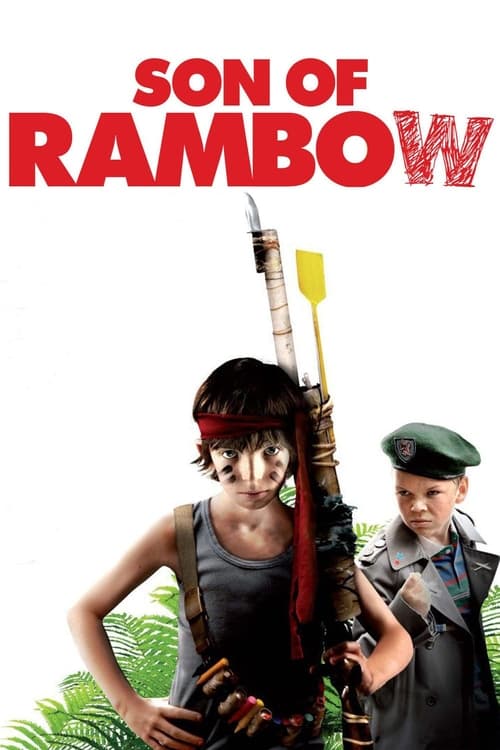
Son of Rambow
Will is looking for an escape from his family when he encounters Lee, the school bully. Armed with a video camera and a copy of Rambo, Lee plans to make his own action-packed video epic.
Despite its modest budget of $4.9M, Son of Rambow became a financial success, earning $10.9M worldwide—a 121% return.
Nominated for 1 BAFTA Award3 wins & 10 nominations


Plot Structure
Story beats plotted across runtime


Narrative Arc
Emotional journey through the story's key moments
Story Circle
Blueprint 15-beat structure
Arcplot Score Breakdown
Weighted: Precision (70%) + Arc (15%) + Theme (15%)
Son of Rambow (2007) demonstrates deliberately positioned narrative design, characteristic of Garth Jennings's storytelling approach. This structural analysis examines how the film's 15-point plot structure maps to proven narrative frameworks across 1 hour and 36 minutes. With an Arcplot score of 7.4, the film balances conventional beats with creative variation.
Characters
Cast & narrative archetypes

Will Proudfoot
Lee Carter
Didier Revol
Mary Proudfoot
Main Cast & Characters
Will Proudfoot
Played by Bill Milner
A sheltered boy from a strict religious family who discovers imagination through filmmaking and friendship.
Lee Carter
Played by Will Poulter
A troubled, neglected boy who channels his pain into creative filmmaking and finds an unlikely friend in Will.
Didier Revol
Played by Jules Sitruk
A charismatic French exchange student who becomes an unwanted presence in Will and Lee's film project.
Mary Proudfoot
Played by Jessica Hynes
Will's caring but strict mother who raises him within the Plymouth Brethren community.
Structural Analysis
The Status Quo at 1 minutes (1% through the runtime) establishes Will Proudfoot sits isolated in the school hallway during film screenings, drawing in his notebook. His strict Plymouth Brethren upbringing forbids television and films, leaving him sheltered and confined to his imagination.. Notably, this early placement immediately immerses viewers in the story world.
The inciting incident occurs at 11 minutes when Will accidentally witnesses Lee watching a pirated copy of "First Blood" and is transfixed by Rambo. For the first time, he sees a world of action, violence, and freedom completely alien to his sheltered existence.. At 12% through the film, this Disruption aligns precisely with traditional story structure. This beat shifts the emotional landscape, launching the protagonist into the central conflict.
The First Threshold at 24 minutes marks the transition into Act II, occurring at 25% of the runtime. This demonstrates the protagonist's commitment to Will actively chooses to participate in making "Son of Rambow," performing a dangerous stunt by jumping off a roof. He fully commits to this secret filmmaking world, crossing the line from observer to creator., moving from reaction to action.
At 47 minutes, the Midpoint arrives at 49% of the runtime—precisely centered, creating perfect narrative symmetry. Significantly, this crucial beat French exchange student Didier and his cool entourage discover the film project and want to join. Lee, desperate for popularity and acceptance, embraces them, pushing Will aside. The pure friendship is corrupted by outside influence., fundamentally raising what's at risk. The emotional intensity shifts, dividing the narrative into clear before-and-after phases.
The Collapse moment at 71 minutes (74% through) represents the emotional nadir. Here, Will's brother Joshua is seriously injured during filming, and Will is devastated by guilt. Lee accuses Will of ruining everything. Their friendship appears destroyed, and Will must face his family's disappointment and his own failure., reveals the protagonist at their lowest point. This beat's placement in the final quarter sets up the climactic reversal.
The Second Threshold at 76 minutes initiates the final act resolution at 80% of the runtime. Will sneaks out to complete the film, not for glory but to honor the original creative vision he shared with Lee. Lee also returns, having realized authentic friendship matters more than popularity. They reunite with new understanding., demonstrating the transformation achieved throughout the journey.
Emotional Journey
Son of Rambow's emotional architecture traces a deliberate progression across 15 carefully calibrated beats.
Narrative Framework
This structural analysis employs structural analysis methodology used to understand storytelling architecture. By mapping Son of Rambow against these established plot points, we can identify how Garth Jennings utilizes or subverts traditional narrative conventions. The plot point approach reveals not only adherence to structural principles but also creative choices that distinguish Son of Rambow within the comedy genre.
Garth Jennings's Structural Approach
Among the 4 Garth Jennings films analyzed on Arcplot, the average structural score is 7.4, reflecting strong command of classical structure. Son of Rambow represents one of the director's most structurally precise works. For comparative analysis, explore the complete Garth Jennings filmography.
Comparative Analysis
Additional comedy films include The Bad Guys, Ella Enchanted and The Evening Star. For more Garth Jennings analyses, see Sing 2, Sing and The Hitchhiker's Guide to the Galaxy.
Plot Points by Act
Act I
SetupStatus Quo
Will Proudfoot sits isolated in the school hallway during film screenings, drawing in his notebook. His strict Plymouth Brethren upbringing forbids television and films, leaving him sheltered and confined to his imagination.
Theme
Lee Carter tells Will, "You can do anything you want," introducing the film's central theme about the liberating power of creative imagination and breaking free from restrictions.
Worldbuilding
Establishing Will's repressive religious world, his family's strict rules, and the contrast with Lee Carter's chaotic, unsupervised life. Lee is the school troublemaker; Will is the obedient outsider.
Disruption
Will accidentally witnesses Lee watching a pirated copy of "First Blood" and is transfixed by Rambo. For the first time, he sees a world of action, violence, and freedom completely alien to his sheltered existence.
Resistance
Lee recruits Will to be his stuntman for a homemade action film remake. Will is hesitant, knowing it violates his family's rules, but Lee's anarchic energy and the promise of creative adventure pull him in.
Act II
ConfrontationFirst Threshold
Will actively chooses to participate in making "Son of Rambow," performing a dangerous stunt by jumping off a roof. He fully commits to this secret filmmaking world, crossing the line from observer to creator.
Mirror World
Will and Lee's friendship deepens as they collaborate on the film. Lee represents everything Will lacks: freedom, rebellion, creativity without boundaries. Their partnership becomes the emotional core that teaches both boys what they need.
Premise
The "fun and games" of guerrilla filmmaking. Will and Lee create increasingly elaborate and dangerous stunts, with Will's imagination running wild, filling notebooks with fantastical drawings that become scenes in their film.
Midpoint
French exchange student Didier and his cool entourage discover the film project and want to join. Lee, desperate for popularity and acceptance, embraces them, pushing Will aside. The pure friendship is corrupted by outside influence.
Opposition
The film production spirals out of control with too many people involved. Lee abandons Will to pursue popularity with Didier's group. Will's family discovers his secret activities. The authentic creative partnership dissolves into chaos and betrayal.
Collapse
Will's brother Joshua is seriously injured during filming, and Will is devastated by guilt. Lee accuses Will of ruining everything. Their friendship appears destroyed, and Will must face his family's disappointment and his own failure.
Crisis
Will sits alone in the darkness of consequences, forbidden from seeing Lee. Lee also experiences isolation, realizing Didier's friendship was hollow. Both boys process their loss and what their friendship truly meant.
Act III
ResolutionSecond Threshold
Will sneaks out to complete the film, not for glory but to honor the original creative vision he shared with Lee. Lee also returns, having realized authentic friendship matters more than popularity. They reunite with new understanding.
Synthesis
Will and Lee finish "Son of Rambow" together, just the two of them, recapturing the pure creative joy of their partnership. The film screens at the school competition, celebrating their imagination and friendship rather than seeking validation.
Transformation
Will and Lee watch their completed film together, laughing and celebrating. Will has found his creative voice and authentic friendship; Lee has learned the value of genuine connection. Both are transformed, free in ways that matter.