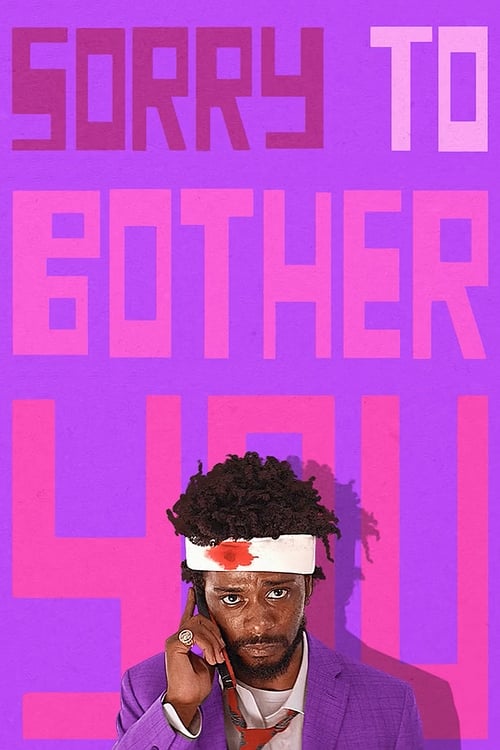
Sorry to Bother You
In an alternate present-day version of Oakland, black telemarketer Cassius Green discovers a magical key to professional success – which propels him into a macabre universe.
Despite its small-scale budget of $3.2M, Sorry to Bother You became a financial success, earning $18.2M worldwide—a 469% return. The film's unconventional structure attracted moviegoers, proving that strong storytelling can transcend budget limitations.
20 wins & 56 nominations


Plot Structure
Story beats plotted across runtime


Narrative Arc
Emotional journey through the story's key moments
Story Circle
Blueprint 15-beat structure
Arcplot Score Breakdown
Weighted: Precision (70%) + Arc (15%) + Theme (15%)
Sorry to Bother You (2018) showcases strategically placed narrative architecture, characteristic of Boots Riley's storytelling approach. This structural analysis examines how the film's 15-point plot structure maps to proven narrative frameworks across 1 hour and 52 minutes. With an Arcplot score of 7.4, the film balances conventional beats with creative variation.
Characters
Cast & narrative archetypes

Cassius "Cash" Green
Detroit
Squeeze
Steve Lift
Langston
Sergio
Salvador
Main Cast & Characters
Cassius "Cash" Green
Played by LaKeith Stanfield
A struggling Black telemarketer who discovers his "white voice" and rises through RegalView's ranks, only to uncover dystopian corporate exploitation.
Detroit
Played by Tessa Thompson
Cash's artist girlfriend who creates protest art and challenges his moral compromises as he climbs the corporate ladder.
Squeeze
Played by Steven Yeun
A fellow telemarketer and union organizer who leads the worker resistance at RegalView against exploitative conditions.
Steve Lift
Played by Armie Hammer
The charismatic but sinister CEO of WorryFree who reveals a horrifying plan to transform workers into horse-human hybrids.
Langston
Played by Danny Glover
Cash's coworker and friend at RegalView who participates in the union organizing effort and witnesses Cash's transformation.
Sergio
Played by Jermaine Fowler
Cash's uncle who rents him the garage, facing foreclosure and representing the economic desperation driving Cash's choices.
Salvador
Played by Omari Hardwick
A RegalView manager who teaches Cash the secret of using his "white voice" to succeed in telemarketing.
Structural Analysis
The Status Quo at 1 minutes (1% through the runtime) establishes Cassius "Cash" Green lives in his uncle's garage, four months behind on rent, broke and desperate. His relationship with Detroit is strained by financial pressure.. Notably, this early placement immediately immerses viewers in the story world.
The inciting incident occurs at 14 minutes when Langston, an older Black telemarketer, tells Cash the secret: use your "white voice." Cash tries it and immediately starts making sales, disrupting his failed status quo.. At 13% through the film, this Disruption is delayed, allowing extended setup of the story world. This beat shifts the emotional landscape, launching the protagonist into the central conflict.
The First Threshold at 28 minutes marks the transition into Act II, occurring at 25% of the runtime. This indicates the protagonist's commitment to Cash is promoted to Power Caller and takes the golden elevator upstairs, leaving his friends and the union effort behind. He actively chooses individual success over collective action., moving from reaction to action.
At 56 minutes, the Midpoint arrives at 50% of the runtime—precisely centered, creating perfect narrative symmetry. Notably, this crucial beat Steve Lift shows Cash the Equisapiens - humans genetically modified into horse-human hybrids for optimal labor. The true horror of what Cash has been selling is revealed. False victory becomes nightmare., fundamentally raising what's at risk. The emotional intensity shifts, dividing the narrative into clear before-and-after phases.
The Collapse moment at 84 minutes (75% through) represents the emotional nadir. Here, Cash is attacked by protestors who saw viral video of him appearing to endorse WorryFree. He loses everything - Detroit, his friends, his reputation. He's alone, exposed, beaten down., demonstrates the protagonist at their lowest point. This beat's placement in the final quarter sets up the climactic reversal.
The Second Threshold at 89 minutes initiates the final act resolution at 79% of the runtime. Cash decides to expose WorryFree and the Equisapiens on national television. He chooses solidarity and truth over self-preservation, synthesizing his salesmanship skills with authentic resistance., demonstrating the transformation achieved throughout the journey.
Emotional Journey
Sorry to Bother You's emotional architecture traces a deliberate progression across 15 carefully calibrated beats.
Narrative Framework
This structural analysis employs proven narrative structure principles that track dramatic progression. By mapping Sorry to Bother You against these established plot points, we can identify how Boots Riley utilizes or subverts traditional narrative conventions. The plot point approach reveals not only adherence to structural principles but also creative choices that distinguish Sorry to Bother You within the fantasy genre.
Comparative Analysis
Additional fantasy films include Thinner, Ella Enchanted and Conan the Barbarian.
Plot Points by Act
Act I
SetupStatus Quo
Cassius "Cash" Green lives in his uncle's garage, four months behind on rent, broke and desperate. His relationship with Detroit is strained by financial pressure.
Theme
Sergio tells Cash at the telemarketing job: "Stick to the script." The theme emerges around authenticity vs. selling out, being yourself vs. using a false voice to succeed.
Worldbuilding
Cash gets a telemarketing job at RegalView, meets coworkers including Squeeze and Salvador. We see his failures at cold calling, his artistic girlfriend Detroit, and the absurdist world of Oakland where WorryFree (corporate slavery) is normalized.
Disruption
Langston, an older Black telemarketer, tells Cash the secret: use your "white voice." Cash tries it and immediately starts making sales, disrupting his failed status quo.
Resistance
Cash practices and perfects his white voice, becomes increasingly successful, makes money. He debates whether to join Squeeze's union organizing effort. Tension builds between success and solidarity.
Act II
ConfrontationFirst Threshold
Cash is promoted to Power Caller and takes the golden elevator upstairs, leaving his friends and the union effort behind. He actively chooses individual success over collective action.
Mirror World
Cash meets Steve Lift, the cocaine-fueled CEO of WorryFree. Lift represents the ultimate sellout, the dark mirror of where Cash's path leads. Detroit continues representing artistic integrity and resistance.
Premise
Cash enjoys Power Caller success, making huge sales of slave labor to corporations. He becomes wealthy, attends wild parties, distances himself from Detroit and his old friends. The fun of success and moral compromise.
Midpoint
Steve Lift shows Cash the Equisapiens - humans genetically modified into horse-human hybrids for optimal labor. The true horror of what Cash has been selling is revealed. False victory becomes nightmare.
Opposition
Lift pressures Cash to become a company man and help create more Equisapiens. Cash's relationship with Detroit collapses. His old friends' union strike intensifies. Cash is caught between all worlds, belonging to none.
Collapse
Cash is attacked by protestors who saw viral video of him appearing to endorse WorryFree. He loses everything - Detroit, his friends, his reputation. He's alone, exposed, beaten down.
Crisis
Cash sits in darkness, processing his complete moral and social collapse. He must decide who he really is and what he stands for.
Act III
ResolutionSecond Threshold
Cash decides to expose WorryFree and the Equisapiens on national television. He chooses solidarity and truth over self-preservation, synthesizing his salesmanship skills with authentic resistance.
Synthesis
Cash goes on a talk show to reveal the truth, but it backfires - the audience loves the Equisapiens. Cash joins the strike, helps lead the resistance, reconnects with his community in authentic solidarity.
Transformation
Cash discovers he's transforming into an Equisapien himself - Lift dosed him. But instead of despair, Cash leads the Equisapiens to break into Lift's mansion. He's found his authentic power through solidarity, even in transformation.