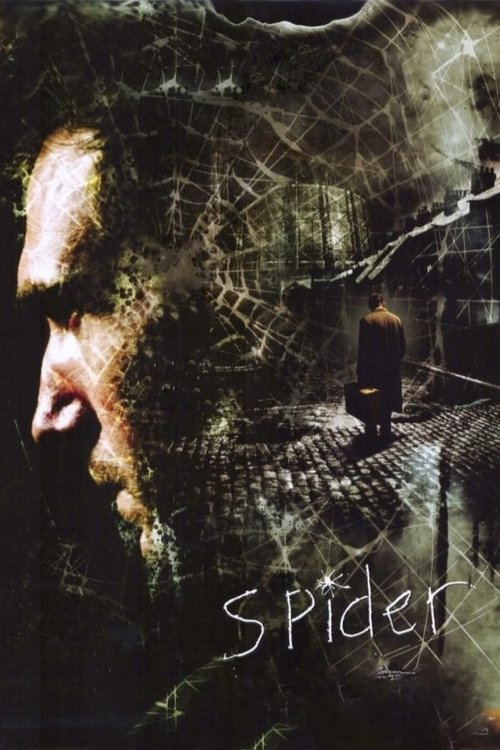
Spider
A mentally disturbed man takes residence in a halfway house. His mind gradually slips back into the realm created by his illness, where he replays a key part of his childhood.
The film underperformed commercially against its small-scale budget of $10.0M, earning $5.8M globally (-42% loss). While initial box office returns were modest, the film has gained appreciation for its bold vision within the drama genre.
13 wins & 25 nominations


Plot Structure
Story beats plotted across runtime


Narrative Arc
Emotional journey through the story's key moments
Story Circle
Blueprint 15-beat structure
Arcplot Score Breakdown
Weighted: Precision (70%) + Arc (15%) + Theme (15%)
Spider (2002) exemplifies strategically placed dramatic framework, characteristic of David Cronenberg's storytelling approach. This structural analysis examines how the film's 15-point plot structure maps to proven narrative frameworks across 1 hour and 38 minutes. With an Arcplot score of 7.4, the film balances conventional beats with creative variation.
Characters
Cast & narrative archetypes

Spider/Dennis Cleg
Bill Cleg (Father)
Mrs. Cleg (Mother)
Yvonne/Mrs. Wilkinson
Young Spider
Main Cast & Characters
Spider/Dennis Cleg
Played by Ralph Fiennes
A schizophrenic man released from a mental institution who returns to the East End of London, haunted by fragmented childhood memories of his mother's death.
Bill Cleg (Father)
Played by Gabriel Byrne
Spider's working-class father, a plumber whose relationship with a prostitute leads to tragic consequences in Spider's traumatic memories.
Mrs. Cleg (Mother)
Played by Miranda Richardson
Spider's loving, nurturing mother whose murder becomes the central traumatic event of his fractured memories.
Yvonne/Mrs. Wilkinson
Played by Miranda Richardson
A blonde prostitute who becomes involved with Spider's father, also played by Miranda Richardson as the boarding house landlady in the present.
Young Spider
Played by Bradley Hall
Spider as a child, witnessing the traumatic events that would shape his mental breakdown and distorted memories.
Structural Analysis
The Status Quo at 1 minutes (1% through the runtime) establishes Spider (Dennis Cleg) arrives at a halfway house in London, a fragile, withdrawn man compulsively writing in his cryptic notebook, establishing his damaged mental state and obsessive need to decode his past.. The analysis reveals that this early placement immediately immerses viewers in the story world.
The inciting incident occurs at 13 minutes when Spider returns to his childhood neighborhood and the memories flood back intensely—he begins reliving his past, watching his younger self with his beloved mother and his coarse father, unable to distinguish memory from present reality.. At 13% through the film, this Disruption is delayed, allowing extended setup of the story world. This beat shifts the emotional landscape, launching the protagonist into the central conflict.
The First Threshold at 26 minutes marks the transition into Act II, occurring at 26% of the runtime. This indicates the protagonist's commitment to Spider commits fully to reconstructing the past, obsessively following the memory of his father and Yvonne, determined to uncover the truth of what happened to his mother—crossing into a world where past and present are indistinguishable., moving from reaction to action.
At 51 minutes, the Midpoint arrives at 52% of the runtime—precisely centered, creating perfect narrative symmetry. Significantly, this crucial beat Spider witnesses (in reconstructed memory) the pivotal night in the garden shed where he believes his father strangled his mother, a false victory of understanding that actually deepens his delusion and sets him on a darker path., fundamentally raising what's at risk. The emotional intensity shifts, dividing the narrative into clear before-and-after phases.
The Collapse moment at 72 minutes (74% through) represents the emotional nadir. Here, The devastating truth emerges: Spider's mother and Yvonne were the same woman. His younger self, unable to accept his mother's sexuality and humanity, split her into two people in his mind—the ultimate collapse of his constructed reality., shows the protagonist at their lowest point. This beat's placement in the final quarter sets up the climactic reversal.
The Second Threshold at 78 minutes initiates the final act resolution at 79% of the runtime. Spider attempts to strangle Mrs. Wilkinson (who resembles his mother), repeating the original crime, but stops—a moment of terrible clarity where he recognizes the pattern but cannot escape it, sealing his fate., demonstrating the transformation achieved throughout the journey.
Emotional Journey
Spider's emotional architecture traces a deliberate progression across 15 carefully calibrated beats.
Narrative Framework
This structural analysis employs systematic plot point analysis that identifies crucial turning points. By mapping Spider against these established plot points, we can identify how David Cronenberg utilizes or subverts traditional narrative conventions. The plot point approach reveals not only adherence to structural principles but also creative choices that distinguish Spider within the drama genre.
David Cronenberg's Structural Approach
Among the 12 David Cronenberg films analyzed on Arcplot, the average structural score is 7.1, reflecting strong command of classical structure. Spider represents one of the director's most structurally precise works. For comparative analysis, explore the complete David Cronenberg filmography.
Comparative Analysis
Additional drama films include After Thomas, South Pacific and Dirty Dancing: Havana Nights. For more David Cronenberg analyses, see The Brood, The Dead Zone and Eastern Promises.
Plot Points by Act
Act I
SetupStatus Quo
Spider (Dennis Cleg) arrives at a halfway house in London, a fragile, withdrawn man compulsively writing in his cryptic notebook, establishing his damaged mental state and obsessive need to decode his past.
Theme
Mrs. Wilkinson mentions that "the past has a way of catching up with you," foreshadowing the film's exploration of memory, guilt, and the inescapability of traumatic truth.
Worldbuilding
Spider settles into the dreary halfway house, showing his peculiar rituals and inability to connect with others. He begins wandering the neighborhood, triggering memories that blur with present reality as he obsessively records observations in his indecipherable journal.
Disruption
Spider returns to his childhood neighborhood and the memories flood back intensely—he begins reliving his past, watching his younger self with his beloved mother and his coarse father, unable to distinguish memory from present reality.
Resistance
Spider immerses himself in childhood memories, particularly his idealized relationship with his gentle mother and his resentment of his gas-worker father. He witnesses (in memory) his father's encounters with a vulgar prostitute, Yvonne, setting up the central trauma.
Act II
ConfrontationFirst Threshold
Spider commits fully to reconstructing the past, obsessively following the memory of his father and Yvonne, determined to uncover the truth of what happened to his mother—crossing into a world where past and present are indistinguishable.
Mirror World
Spider observes his father bringing Yvonne home, the prostitute who he believes replaced his mother. This relationship represents the corrupted mirror of the maternal love he lost—the thematic heart of betrayal and distorted perception.
Premise
Spider relives the deterioration of his family as Yvonne moves in, watching his younger self struggle with the loss of his mother. He pieces together fragments, believing his father murdered his mother to be with the prostitute, his grief and rage intensifying.
Midpoint
Spider witnesses (in reconstructed memory) the pivotal night in the garden shed where he believes his father strangled his mother, a false victory of understanding that actually deepens his delusion and sets him on a darker path.
Opposition
Spider's mental state deteriorates as he obsessively re-enacts and documents the murder. In the present, Mrs. Wilkinson grows concerned about his behavior. The memories become more fragmented and unreliable, truth slipping further from his grasp.
Collapse
The devastating truth emerges: Spider's mother and Yvonne were the same woman. His younger self, unable to accept his mother's sexuality and humanity, split her into two people in his mind—the ultimate collapse of his constructed reality.
Crisis
Spider confronts the horrifying realization that he, not his father, killed his mother in a psychotic break when he couldn't reconcile her dual nature. He sits in anguish, his entire narrative shattered, the darkness of patricide replaced by the worse truth of matricide.
Act III
ResolutionSecond Threshold
Spider attempts to strangle Mrs. Wilkinson (who resembles his mother), repeating the original crime, but stops—a moment of terrible clarity where he recognizes the pattern but cannot escape it, sealing his fate.
Synthesis
Spider is removed from the halfway house and returned to institutional care. He sits in the asylum with his notebook, still compulsively writing his indecipherable code, the truth known but unable to integrate it, condemned to repeat his obsessive rituals.
Transformation
Spider sits in the mental institution, mirroring the opening but with the audience now understanding the full tragic weight of his condition—not a man seeking truth, but a man trapped forever in the maze of his own fractured psyche.