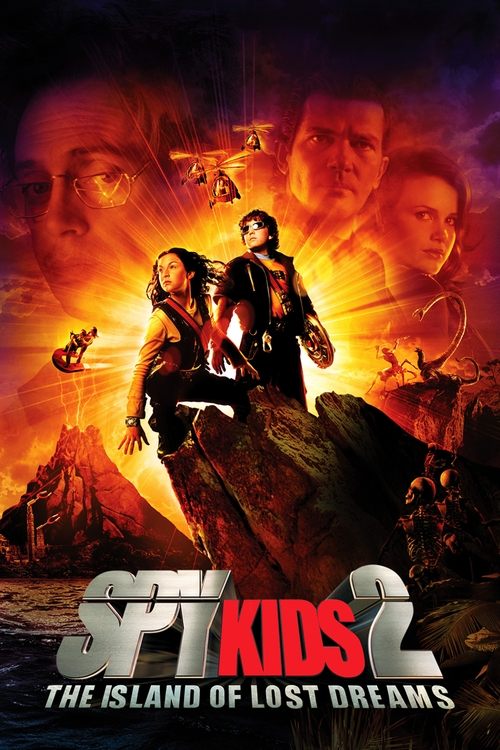
Spy Kids 2: The Island of Lost Dreams
Exploring the further adventures of Carmen and Juni Cortez, who have now joined the family spy business as Level 2 OSS agents. Their new mission is to save the world from a mad scientist living on a volcanic island populated by an imaginative menagerie of creatures. On this bizarre island, none of the Cortez's gadgets work and they must rely on their wits--and each other--to survive and save the day.
Despite a mid-range budget of $38.0M, Spy Kids 2: The Island of Lost Dreams became a solid performer, earning $119.7M worldwide—a 215% return.
3 wins & 3 nominations


Plot Structure
Story beats plotted across runtime


Narrative Arc
Emotional journey through the story's key moments
Story Circle
Blueprint 15-beat structure
Arcplot Score Breakdown
Weighted: Precision (70%) + Arc (15%) + Theme (15%)
Spy Kids 2: The Island of Lost Dreams (2002) reveals meticulously timed plot construction, characteristic of Robert Rodriguez's storytelling approach. This structural analysis examines how the film's 15-point plot structure maps to proven narrative frameworks across 1 hour and 40 minutes. With an Arcplot score of 7.7, the film showcases strong structural fundamentals.
Characters
Cast & narrative archetypes

Carmen Cortez
Juni Cortez
Gary Giggles
Gerti Giggles
Romero
Donnagon Giggles
Ingrid Cortez
Gregorio Cortez
Main Cast & Characters
Carmen Cortez
Played by Alexa PenaVega
A teenage spy who must prove herself on a dangerous mission to a mysterious island while learning to work as a team with her brother.
Juni Cortez
Played by Daryl Sabara
Carmen's younger brother and partner spy, a gadget-loving agent who must overcome his insecurities and step up as a hero.
Gary Giggles
Played by Matt O'Leary
A rival young spy and son of a famous agent, competitive and arrogant but ultimately proves to be an ally.
Gerti Giggles
Played by Emily Osment
Gary's younger sister, a capable spy who serves as both rival and romantic interest to Juni.
Romero
Played by Steve Buscemi
The mysterious scientist who created hybrid creatures on the island, serves as both antagonist and unexpected guide.
Donnagon Giggles
Played by Mike Judge
The ambitious and treacherous head of the OSS who plots to steal the Transmooker device for his own gain.
Ingrid Cortez
Played by Carla Gugino
The children's mother and former super spy who provides guidance and support from OSS headquarters.
Gregorio Cortez
Played by Antonio Banderas
The children's father and former spy who supports his children's mission while working with OSS.
Structural Analysis
The Status Quo at 1 minutes (1% through the runtime) establishes Carmen and Juni Cortez are now Level 2 OSS agents, arriving at a glamorous spy event where they're celebrated but still seen as kids. They're confident, professional, and working as a team.. Structural examination shows that this early placement immediately immerses viewers in the story world.
The inciting incident occurs at 13 minutes when The Transmooker device is stolen by mysterious figures, and Carmen and Juni are blamed for the failure. Gary and Gerti Giggles are assigned the mission to retrieve it instead, humiliating the Cortez siblings.. At 13% through the film, this Disruption is delayed, allowing extended setup of the story world. This beat shifts the emotional landscape, launching the protagonist into the central conflict.
The First Threshold at 26 minutes marks the transition into Act II, occurring at 26% of the runtime. This reveals the protagonist's commitment to Carmen and Juni make the active choice to steal their parents' experimental spy plane and fly to the mysterious island where the Transmooker signal originated, defying OSS orders and striking out on their own., moving from reaction to action.
At 51 minutes, the Midpoint arrives at 51% of the runtime—precisely centered, creating perfect narrative symmetry. The analysis reveals that this crucial beat The kids discover that Romero's rival scientist, Donnagon Giggles (Gary and Gerti's father), is the real villain who wants the Transmooker to shut down all electronics globally. The stakes raise enormously - this isn't just about spy rivalry, but saving the world. False defeat: their gadgets stop working on the island., fundamentally raising what's at risk. The emotional intensity shifts, dividing the narrative into clear before-and-after phases.
The Collapse moment at 74 minutes (74% through) represents the emotional nadir. Here, Carmen and Juni's fighting allows Donnagon to capture them and obtain the Transmooker. Their parents are also captured. All seems lost - the villain has won, the device will be activated, and it's entirely because the siblings couldn't work together. Their relationship appears broken., indicates the protagonist at their lowest point. This beat's placement in the final quarter sets up the climactic reversal.
The Second Threshold at 80 minutes initiates the final act resolution at 80% of the runtime. Carmen and Juni reconcile and devise a plan using Romero's lessons about imagination over technology. They realize they can use the island's creatures and their teamwork - not gadgets - to escape and stop Donnagon. Gary and Gerti also choose to help them instead of their father., demonstrating the transformation achieved throughout the journey.
Emotional Journey
Spy Kids 2: The Island of Lost Dreams's emotional architecture traces a deliberate progression across 15 carefully calibrated beats.
Narrative Framework
This structural analysis employs systematic plot point analysis that identifies crucial turning points. By mapping Spy Kids 2: The Island of Lost Dreams against these established plot points, we can identify how Robert Rodriguez utilizes or subverts traditional narrative conventions. The plot point approach reveals not only adherence to structural principles but also creative choices that distinguish Spy Kids 2: The Island of Lost Dreams within the family genre.
Robert Rodriguez's Structural Approach
Among the 14 Robert Rodriguez films analyzed on Arcplot, the average structural score is 7.3, reflecting strong command of classical structure. Spy Kids 2: The Island of Lost Dreams represents one of the director's most structurally precise works. For comparative analysis, explore the complete Robert Rodriguez filmography.
Comparative Analysis
Additional family films include The Black Stallion, The Bad Guys and Ella Enchanted. For more Robert Rodriguez analyses, see Spy Kids: All the Time in the World, Spy Kids 3-D: Game Over and From Dusk Till Dawn.
Plot Points by Act
Act I
SetupStatus Quo
Carmen and Juni Cortez are now Level 2 OSS agents, arriving at a glamorous spy event where they're celebrated but still seen as kids. They're confident, professional, and working as a team.
Theme
The President tells Carmen and Juni that "the world's greatest spy is a kid" - establishing the theme that youth and inexperience can be strengths, not weaknesses.
Worldbuilding
Carmen and Juni navigate their first major mission, dealing with rival child agents Gary and Gerti Giggles. We learn about the OSS, their family dynamics, Juni's insecurity about being overshadowed, and the introduction of the mysterious Transmooker device that's been stolen.
Disruption
The Transmooker device is stolen by mysterious figures, and Carmen and Juni are blamed for the failure. Gary and Gerti Giggles are assigned the mission to retrieve it instead, humiliating the Cortez siblings.
Resistance
Carmen and Juni struggle with being benched while their rivals get the glory mission. Their parents try to counsel them about working together. The kids debate whether to defy orders, ultimately deciding they must prove themselves by going after the device on their own.
Act II
ConfrontationFirst Threshold
Carmen and Juni make the active choice to steal their parents' experimental spy plane and fly to the mysterious island where the Transmooker signal originated, defying OSS orders and striking out on their own.
Mirror World
The kids crash-land on the mysterious island and meet Romero, the eccentric scientist who lives there. He becomes a mentor figure who embodies the theme - showing that imagination and wonder are more valuable than technology and competition.
Premise
Carmen and Juni explore the fantastical island filled with hybrid creatures and strange phenomena. They encounter giant spiders, skeletal horses, and various dangers while searching for the Transmooker. Their rivalry intensifies as Carmen wants to lead and Juni wants recognition. Gary and Gerti arrive as competition.
Midpoint
The kids discover that Romero's rival scientist, Donnagon Giggles (Gary and Gerti's father), is the real villain who wants the Transmooker to shut down all electronics globally. The stakes raise enormously - this isn't just about spy rivalry, but saving the world. False defeat: their gadgets stop working on the island.
Opposition
Carmen and Juni must work with Gary and Gerti while navigating the island without technology. Their sibling rivalry reaches its peak as they argue about leadership and recognition. Donnagon's forces close in. The kids must solve Romero's challenges using creativity instead of gadgets, but their inability to cooperate makes everything harder.
Collapse
Carmen and Juni's fighting allows Donnagon to capture them and obtain the Transmooker. Their parents are also captured. All seems lost - the villain has won, the device will be activated, and it's entirely because the siblings couldn't work together. Their relationship appears broken.
Crisis
Imprisoned and separated, Carmen and Juni reflect on their failures. They realize that their individual desires for recognition destroyed their partnership. In their darkest moment, they understand that being a team is more important than being the star.
Act III
ResolutionSecond Threshold
Carmen and Juni reconcile and devise a plan using Romero's lessons about imagination over technology. They realize they can use the island's creatures and their teamwork - not gadgets - to escape and stop Donnagon. Gary and Gerti also choose to help them instead of their father.
Synthesis
The four kids work together, using creativity and cooperation to battle Donnagon's forces. They employ the island's creatures, improvised tactics, and pure teamwork. Carmen and Juni function as a perfect unit, each supporting the other. They recover the Transmooker and defeat Donnagon, proving that collaboration beats competition.
Transformation
Back at OSS headquarters, Carmen and Juni are celebrated not as individual agents but as the perfect team. Juni is offered a promotion to Level 3 but turns it down to stay at Level 2 with Carmen - showing he's learned that partnership matters more than recognition. They stand together, transformed from rivals into true partners.