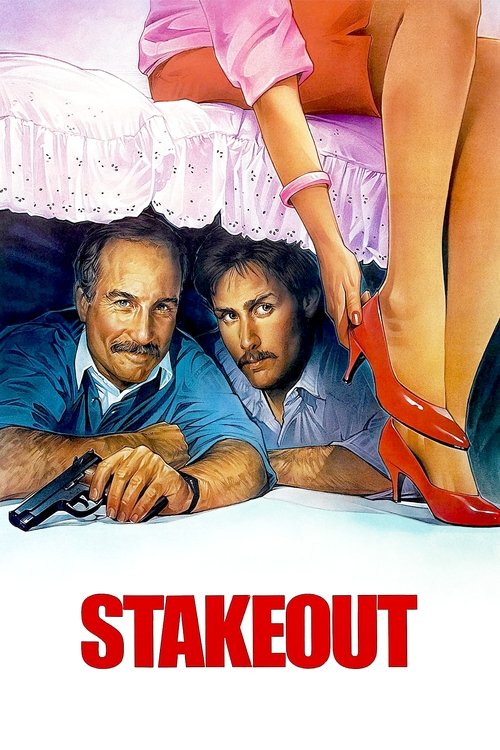
Stakeout
Two detectives observe an escaped convict's ex-girlfriend, but complications set in when one of them falls for her.
Despite its small-scale budget of $14.5M, Stakeout became a box office success, earning $65.7M worldwide—a 353% return. The film's compelling narrative found its audience, confirming that strong storytelling can transcend budget limitations.


Plot Structure
Story beats plotted across runtime


Narrative Arc
Emotional journey through the story's key moments
Story Circle
Blueprint 15-beat structure
Arcplot Score Breakdown
Weighted: Precision (70%) + Arc (15%) + Theme (15%)
Stakeout (1987) demonstrates precise plot construction, characteristic of John Badham's storytelling approach. This structural analysis examines how the film's 15-point plot structure maps to proven narrative frameworks across 1 hour and 56 minutes. With an Arcplot score of 6.7, the film balances conventional beats with creative variation.
Characters
Cast & narrative archetypes

Chris Lecce
Bill Reimers
Maria McGuire
Richard 'Stick' Montgomery
Phil Coldshank
Pappy
Main Cast & Characters
Chris Lecce
Played by Richard Dreyfuss
A wisecracking Seattle detective who falls for the woman he's surveilling during a stakeout assignment.
Bill Reimers
Played by Emilio Estevez
Chris's veteran partner who tries to keep the stakeout professional while dealing with his friend's romantic complications.
Maria McGuire
Played by Madeleine Stowe
The unknowing surveillance target, a kind-hearted woman caught between her criminal ex-boyfriend and a deceptive romance.
Richard 'Stick' Montgomery
Played by Aidan Quinn
Maria's dangerous escaped convict ex-boyfriend who will stop at nothing to reunite with her.
Phil Coldshank
Played by Dan Lauria
The strict police captain who oversees the stakeout operation and demands results by the book.
Pappy
Played by Forest Whitaker
A fellow detective who provides comic relief and backup support during the surveillance operation.
Structural Analysis
The Status Quo at 1 minutes (1% through the runtime) establishes Chris Lecce is shown as a burnt-out Seattle detective dealing with the aftermath of his divorce, establishing him as emotionally closed off and going through the motions of his job and life.. Significantly, this early placement immediately immerses viewers in the story world.
The inciting incident occurs at 14 minutes when Stick Montgomery escapes from prison in a violent breakout, killing guards. Chris and Bill are assigned to stake out Maria McGuire's house, believing Stick will eventually contact his ex-girlfriend.. At 12% through the film, this Disruption aligns precisely with traditional story structure. This beat shifts the emotional landscape, launching the protagonist into the central conflict.
The First Threshold at 29 minutes marks the transition into Act II, occurring at 25% of the runtime. This demonstrates the protagonist's commitment to Chris makes the fateful decision to cross professional boundaries by approaching Maria directly, pretending to be a telephone repairman to get into her house and meet her face-to-face, choosing romance over duty., moving from reaction to action.
At 58 minutes, the Midpoint arrives at 50% of the runtime—precisely centered, creating perfect narrative symmetry. Structural examination shows that this crucial beat Chris and Maria sleep together, consummating their relationship. This false victory marks the peak of Chris's romantic success, but he's built it entirely on deception—Maria doesn't know he's a cop surveilling her for her dangerous ex-boyfriend., fundamentally raising what's at risk. The emotional intensity shifts, dividing the narrative into clear before-and-after phases.
The Collapse moment at 87 minutes (75% through) represents the emotional nadir. Here, Maria discovers Chris is a cop who has been surveilling her the entire time. She feels completely betrayed—their entire relationship was built on lies. She throws him out, devastated, and Chris loses both the woman he loves and his professional integrity., demonstrates the protagonist at their lowest point. This beat's placement in the final quarter sets up the climactic reversal.
The Second Threshold at 93 minutes initiates the final act resolution at 80% of the runtime. Stick arrives at Maria's house, confirming the threat is real and imminent. Chris must now act not as a deceptive lover but as the honest protector he should have been all along—synthesizing his professional duty with his genuine love for Maria., demonstrating the transformation achieved throughout the journey.
Emotional Journey
Stakeout's emotional architecture traces a deliberate progression across 15 carefully calibrated beats.
Narrative Framework
This structural analysis employs a 15-point narrative structure framework that maps key story moments. By mapping Stakeout against these established plot points, we can identify how John Badham utilizes or subverts traditional narrative conventions. The plot point approach reveals not only adherence to structural principles but also creative choices that distinguish Stakeout within the action genre.
John Badham's Structural Approach
Among the 11 John Badham films analyzed on Arcplot, the average structural score is 7.1, reflecting strong command of classical structure. Stakeout takes a more unconventional approach compared to the director's typical style. For comparative analysis, explore the complete John Badham filmography.
Comparative Analysis
Additional action films include The Bad Guys, Puss in Boots and Venom: The Last Dance. For more John Badham analyses, see Nick of Time, Saturday Night Fever and Drop Zone.
Plot Points by Act
Act I
SetupStatus Quo
Chris Lecce is shown as a burnt-out Seattle detective dealing with the aftermath of his divorce, establishing him as emotionally closed off and going through the motions of his job and life.
Theme
Bill jokes about Chris's failed marriage and inability to connect, stating that Chris treats women like suspects rather than people—foreshadowing that Chris must learn to be vulnerable and authentic to find real connection.
Worldbuilding
The world of Seattle detectives is established: Chris's messy personal life, his partnership with Bill, their captain's authority, and the dangerous criminal underworld they navigate. Stick Montgomery's brutal prison escape sets up the threat.
Disruption
Stick Montgomery escapes from prison in a violent breakout, killing guards. Chris and Bill are assigned to stake out Maria McGuire's house, believing Stick will eventually contact his ex-girlfriend.
Resistance
Chris and Bill set up surveillance on Maria's home, establishing their routine of watching her through binoculars and monitoring her calls. Chris becomes increasingly fascinated by Maria, debating internally whether to maintain professional distance.
Act II
ConfrontationFirst Threshold
Chris makes the fateful decision to cross professional boundaries by approaching Maria directly, pretending to be a telephone repairman to get into her house and meet her face-to-face, choosing romance over duty.
Mirror World
Maria is introduced as Chris's romantic interest and thematic mirror. Unlike Chris, she is open, trusting, and emotionally available. Her vulnerability represents everything Chris has closed himself off from since his divorce.
Premise
The "fun and games" of the premise unfold as Chris pursues a secret romance with Maria while maintaining the stakeout. He sneaks over for dinner dates while Bill covers for him, leading to comedic close calls and escalating lies as Chris falls deeper in love.
Midpoint
Chris and Maria sleep together, consummating their relationship. This false victory marks the peak of Chris's romantic success, but he's built it entirely on deception—Maria doesn't know he's a cop surveilling her for her dangerous ex-boyfriend.
Opposition
The walls close in on Chris. His captain grows suspicious of the operation's progress. The FBI becomes involved, adding pressure. Bill struggles to maintain the cover-up. Evidence suggests Stick is getting closer, and Chris must balance protecting Maria while hiding the truth from her.
Collapse
Maria discovers Chris is a cop who has been surveilling her the entire time. She feels completely betrayed—their entire relationship was built on lies. She throws him out, devastated, and Chris loses both the woman he loves and his professional integrity.
Crisis
Chris processes the loss of Maria and faces the consequences of his deception. He must reckon with how his inability to be honest and vulnerable—the very flaw established at the beginning—has cost him everything. The stakeout continues without the personal stakes.
Act III
ResolutionSecond Threshold
Stick arrives at Maria's house, confirming the threat is real and imminent. Chris must now act not as a deceptive lover but as the honest protector he should have been all along—synthesizing his professional duty with his genuine love for Maria.
Synthesis
Chris and Bill confront Stick in a tense, violent showdown at Maria's house. Chris fights to save Maria, proving his love is real despite the deception. The climactic battle tests Chris's commitment and forces him to be the authentic hero Maria deserves.
Transformation
With Stick defeated and Maria safe, she and Chris reconcile. Chris has transformed from an emotionally closed-off detective hiding behind surveillance into a man capable of genuine vulnerability and authentic connection. Their relationship can now begin honestly.