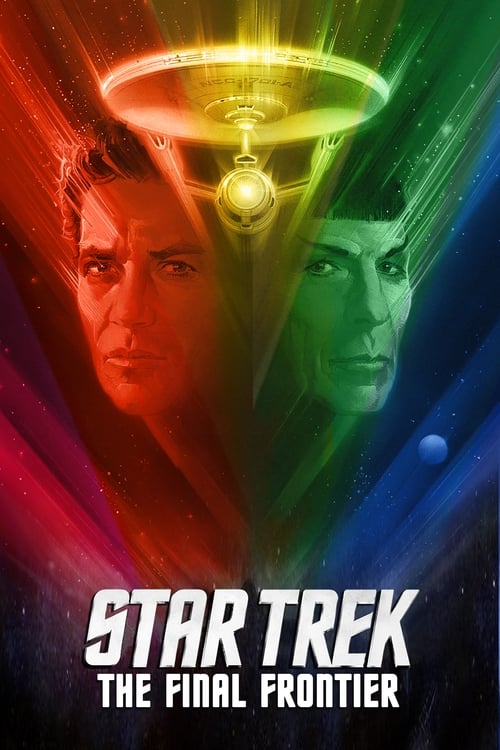
Star Trek V: The Final Frontier
A renegade Vulcan with a startling secret hijacks the U.S.S. Enterprise in order to find a mythical planet.
Working with a mid-range budget of $33.0M, the film achieved a modest success with $63.0M in global revenue (+91% profit margin).
5 wins & 5 nominations


Plot Structure
Story beats plotted across runtime


Narrative Arc
Emotional journey through the story's key moments
Story Circle
Blueprint 15-beat structure
Arcplot Score Breakdown
Weighted: Precision (70%) + Arc (15%) + Theme (15%)
Star Trek V: The Final Frontier (1989) demonstrates carefully calibrated story structure, characteristic of William Shatner's storytelling approach. This structural analysis examines how the film's 15-point plot structure maps to proven narrative frameworks across 1 hour and 46 minutes. With an Arcplot score of 7.1, the film balances conventional beats with creative variation.
Characters
Cast & narrative archetypes

James T. Kirk
Spock
Sybok
Leonard McCoy
Montgomery Scott
Hikaru Sulu
Pavel Chekov
Nyota Uhura
Main Cast & Characters
James T. Kirk
Played by William Shatner
Captain of the USS Enterprise, confronting his own pain and mortality while leading his crew on a quest to find God.
Spock
Played by Leonard Nimoy
Vulcan science officer struggling with his half-brother Sybok's influence and his own emotional suppression.
Sybok
Played by Laurence Luckinbill
Spock's exiled half-brother, a renegade Vulcan who uses empathic abilities to free people from their pain and lead them on a religious quest.
Leonard McCoy
Played by DeForest Kelley
Enterprise's chief medical officer who confronts his painful memory of euthanizing his terminally ill father.
Montgomery Scott
Played by James Doohan
Chief Engineer of the Enterprise, loyal friend who provides technical expertise and comic relief.
Hikaru Sulu
Played by George Takei
Enterprise helmsman who serves faithfully during the crisis at Nimbus III and the journey to Sha Ka Ree.
Pavel Chekov
Played by Walter Koenig
Navigator of the Enterprise who remains loyal to Kirk throughout the unauthorized mission.
Nyota Uhura
Played by Nichelle Nichols
Communications officer who provides fan dance distraction and loyal support during the crisis.
Structural Analysis
The Status Quo at 1 minutes (1% through the runtime) establishes Kirk free-climbs El Capitan in Yosemite while Spock watches with concern and McCoy waits at camp. The trio's shore leave establishes their deep friendship and Kirk's restless, risk-taking nature even in peacetime.. Significantly, this early placement immediately immerses viewers in the story world.
The inciting incident occurs at 13 minutes when Sybok captures the Federation, Klingon, and Romulan representatives on Nimbus III and demands a starship be sent to negotiate. The hostage crisis forces Starfleet to recall Kirk and crew from shore leave despite Enterprise being non-operational.. At 12% through the film, this Disruption aligns precisely with traditional story structure. This beat shifts the emotional landscape, launching the protagonist into the central conflict.
The First Threshold at 27 minutes marks the transition into Act II, occurring at 25% of the runtime. This illustrates the protagonist's commitment to Kirk leads a rescue team to Nimbus III, choosing direct action despite the risks. The away team infiltrates Paradise City to free the hostages, committing fully to the dangerous mission., moving from reaction to action.
At 53 minutes, the Midpoint arrives at 50% of the runtime—precisely centered, creating perfect narrative symmetry. Of particular interest, this crucial beat Sybok takes control of the Enterprise after converting most of the crew to his cause. Kirk, Spock, and McCoy are isolated as the ship crosses the Great Barrier at the galaxy's center, a journey previously thought impossible and deadly., fundamentally raising what's at risk. The emotional intensity shifts, dividing the narrative into clear before-and-after phases.
The Collapse moment at 80 minutes (75% through) represents the emotional nadir. Here, The entity posing as "God" on Sha Ka Ree reveals its true malevolent nature when Kirk asks, "What does God need with a starship?" The creature attacks, and Sybok realizes his life's quest was built on a lie. The whiff of death comes as all hope of transcendence dies., illustrates the protagonist at their lowest point. This beat's placement in the final quarter sets up the climactic reversal.
The Second Threshold at 85 minutes initiates the final act resolution at 80% of the runtime. Spock commandeers the Klingon Bird of Prey with its working transporter, choosing to save Kirk despite the odds. The synthesis arrives: loyalty and brotherhood triumph over Sybok's promised paradise. Spock acts on emotion to save his friend., demonstrating the transformation achieved throughout the journey.
Emotional Journey
Star Trek V: The Final Frontier's emotional architecture traces a deliberate progression across 15 carefully calibrated beats.
Narrative Framework
This structural analysis employs a 15-point narrative structure framework that maps key story moments. By mapping Star Trek V: The Final Frontier against these established plot points, we can identify how William Shatner utilizes or subverts traditional narrative conventions. The plot point approach reveals not only adherence to structural principles but also creative choices that distinguish Star Trek V: The Final Frontier within the science fiction genre.
Comparative Analysis
Additional science fiction films include The Postman, Mad Max 2 and AVP: Alien vs. Predator.
Plot Points by Act
Act I
SetupStatus Quo
Kirk free-climbs El Capitan in Yosemite while Spock watches with concern and McCoy waits at camp. The trio's shore leave establishes their deep friendship and Kirk's restless, risk-taking nature even in peacetime.
Theme
McCoy tells Kirk he's not the man he knew twenty years ago, questioning why Kirk takes such risks. The underlying theme emerges: what drives people to seek the unknowable, whether it's climbing mountains or searching for God.
Worldbuilding
The world is established across two locations: the peaceful Yosemite campsite where the command trio bonds, and the desolate frontier world Nimbus III, the "Planet of Galactic Peace," where Sybok begins gathering followers by removing their innermost pain.
Disruption
Sybok captures the Federation, Klingon, and Romulan representatives on Nimbus III and demands a starship be sent to negotiate. The hostage crisis forces Starfleet to recall Kirk and crew from shore leave despite Enterprise being non-operational.
Resistance
Kirk reluctantly accepts the mission aboard the malfunctioning Enterprise. The crew debates the wisdom of the mission while en route to Nimbus III. A Klingon captain also pursues the situation, seeking glory by killing Kirk.
Act II
ConfrontationFirst Threshold
Kirk leads a rescue team to Nimbus III, choosing direct action despite the risks. The away team infiltrates Paradise City to free the hostages, committing fully to the dangerous mission.
Mirror World
Sybok is revealed to be Spock's estranged half-brother, introducing the emotional subplot about family, faith, and the pain we carry. Sybok's philosophy of releasing inner pain through confrontation represents the thematic counterpoint to Kirk's stoic self-reliance.
Premise
The rescue attempt goes awry as Sybok's followers spring a trap. Sybok boards the Enterprise and begins converting crew members by forcing them to confront their deepest pain. The journey toward the center of the galaxy to find "Sha Ka Ree" begins.
Midpoint
Sybok takes control of the Enterprise after converting most of the crew to his cause. Kirk, Spock, and McCoy are isolated as the ship crosses the Great Barrier at the galaxy's center, a journey previously thought impossible and deadly.
Opposition
Sybok attempts to win over Kirk, Spock, and McCoy by forcing them to confront their pain. Spock relives his birth and rejection; McCoy relives euthanizing his dying father. Kirk refuses, declaring "I need my pain." The Klingon ship follows through the barrier.
Collapse
The entity posing as "God" on Sha Ka Ree reveals its true malevolent nature when Kirk asks, "What does God need with a starship?" The creature attacks, and Sybok realizes his life's quest was built on a lie. The whiff of death comes as all hope of transcendence dies.
Crisis
The malevolent entity attacks the landing party. Kirk is stranded on the planet's surface as Spock and McCoy are beamed away. Kirk faces the wrathful creature alone, seemingly without hope of rescue, as the Enterprise cannot beam him up.
Act III
ResolutionSecond Threshold
Spock commandeers the Klingon Bird of Prey with its working transporter, choosing to save Kirk despite the odds. The synthesis arrives: loyalty and brotherhood triumph over Sybok's promised paradise. Spock acts on emotion to save his friend.
Synthesis
Sybok sacrifices himself to hold back the entity, finding redemption through selfless action. Spock fires the Bird of Prey's weapons to destroy the creature. Kirk is rescued, and the Klingon captain, having witnessed Kirk's bravery, offers a truce over drinks.
Transformation
Kirk, Spock, and McCoy return to Yosemite, their friendship deepened. Spock admits he lost a brother, but says "I also found my brother, I got him back." The campfire scene mirrors the opening but now carries profound emotional weight—they are each other's family.