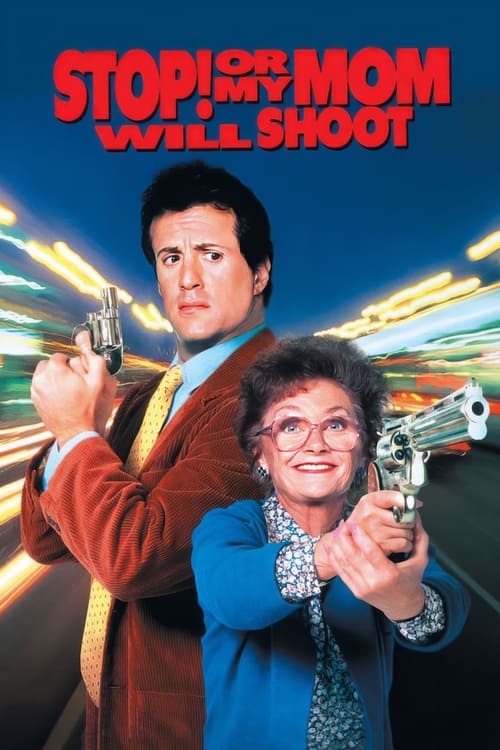
Stop! Or My Mom Will Shoot
A tough police sergeant's mother comes to visit him, and promptly starts trying to fix up his life, much to his embarrassment. For his birthday she buys him a machine gun out of the back of a van, and begins to further interfere with his job and love life, eventually helping him with a case he's on.
The film earned $70.6M at the global box office.


Plot Structure
Story beats plotted across runtime


Narrative Arc
Emotional journey through the story's key moments
Story Circle
Blueprint 15-beat structure
Arcplot Score Breakdown
Weighted: Precision (70%) + Arc (15%) + Theme (15%)
Stop! Or My Mom Will Shoot (1992) exhibits carefully calibrated dramatic framework, characteristic of Roger Spottiswoode's storytelling approach. This structural analysis examines how the film's 15-point plot structure maps to proven narrative frameworks across 1 hour and 27 minutes. With an Arcplot score of 7.7, the film showcases strong structural fundamentals.
Characters
Cast & narrative archetypes

Joe Bomowski
Tutti Bomowski
Lt. Gwen Harper
Lou
Paulie
Main Cast & Characters
Joe Bomowski
Played by Sylvester Stallone
A tough Los Angeles police detective whose ordered life is disrupted when his overbearing mother comes to visit.
Tutti Bomowski
Played by Estelle Getty
Joe's interfering but well-meaning elderly mother who inserts herself into his life and police work.
Lt. Gwen Harper
Played by JoBeth Williams
Joe's colleague and romantic interest, a fellow police officer who becomes caught in the chaos.
Lou
Played by Roger Rees
Joe's partner on the police force who deals with the complications of Tutti's involvement.
Paulie
Played by Dennis Burkley
A criminal weapons dealer and the main antagonist of the film.
Structural Analysis
The Status Quo at 1 minutes (1% through the runtime) establishes Joe Bomowski is a tough, no-nonsense LA detective living his bachelor life, working dangerous cases and maintaining emotional distance from relationships.. Notably, this early placement immediately immerses viewers in the story world.
The inciting incident occurs at 11 minutes when Joe's overbearing mother Tutti unexpectedly arrives from New Jersey for an extended visit, immediately invading his personal space and independence.. At 13% through the film, this Disruption is delayed, allowing extended setup of the story world. This beat shifts the emotional landscape, launching the protagonist into the central conflict.
The First Threshold at 22 minutes marks the transition into Act II, occurring at 25% of the runtime. This illustrates the protagonist's commitment to Tutti witnesses a murder and becomes a key witness, forcing Joe to protect her. He must now work with his mother rather than sending her home, entering a new dynamic., moving from reaction to action.
At 44 minutes, the Midpoint arrives at 50% of the runtime—precisely centered, creating perfect narrative symmetry. Of particular interest, this crucial beat False victory: Tutti's involvement leads to a breakthrough in the case, and Joe begins to appreciate her help. His relationship with Gwen progresses positively., fundamentally raising what's at risk. The emotional intensity shifts, dividing the narrative into clear before-and-after phases.
The Collapse moment at 65 minutes (75% through) represents the emotional nadir. Here, Tutti is kidnapped by the criminals. Joe's worst fear is realized - his mother is in mortal danger because of his work, and his emotional walls have prevented him from protecting what matters most., indicates the protagonist at their lowest point. This beat's placement in the final quarter sets up the climactic reversal.
The Second Threshold at 70 minutes initiates the final act resolution at 80% of the runtime. Joe accepts help from his team and embraces the lessons his mother taught him about connection. He combines his professional skills with newfound emotional openness to mount a rescue., demonstrating the transformation achieved throughout the journey.
Emotional Journey
Stop! Or My Mom Will Shoot's emotional architecture traces a deliberate progression across 15 carefully calibrated beats.
Narrative Framework
This structural analysis employs systematic plot point analysis that identifies crucial turning points. By mapping Stop! Or My Mom Will Shoot against these established plot points, we can identify how Roger Spottiswoode utilizes or subverts traditional narrative conventions. The plot point approach reveals not only adherence to structural principles but also creative choices that distinguish Stop! Or My Mom Will Shoot within the action genre.
Roger Spottiswoode's Structural Approach
Among the 8 Roger Spottiswoode films analyzed on Arcplot, the average structural score is 7.2, reflecting strong command of classical structure. Stop! Or My Mom Will Shoot represents one of the director's most structurally precise works. For comparative analysis, explore the complete Roger Spottiswoode filmography.
Comparative Analysis
Additional action films include The Bad Guys, Puss in Boots and Venom: The Last Dance. For more Roger Spottiswoode analyses, see Tomorrow Never Dies, Shoot to Kill and The 6th Day.
Plot Points by Act
Act I
SetupStatus Quo
Joe Bomowski is a tough, no-nonsense LA detective living his bachelor life, working dangerous cases and maintaining emotional distance from relationships.
Theme
Joe's partner mentions that "you can't do everything alone" - hinting at Joe's need to accept help and vulnerability from those who love him.
Worldbuilding
Establishing Joe's world as a tough cop, his competitive relationship with fellow detective Gwen, his lone-wolf approach to life, and his avoidance of commitment.
Disruption
Joe's overbearing mother Tutti unexpectedly arrives from New Jersey for an extended visit, immediately invading his personal space and independence.
Resistance
Joe resists his mother's presence and interference. Tutti meddles in his life, cleaning his gun improperly, embarrassing him in front of Gwen, and treating him like a child.
Act II
ConfrontationFirst Threshold
Tutti witnesses a murder and becomes a key witness, forcing Joe to protect her. He must now work with his mother rather than sending her home, entering a new dynamic.
Mirror World
Tutti's relationship with Gwen develops as she plays matchmaker, embodying the openness and connection that Joe resists. Her meddling paradoxically helps Joe's romantic prospects.
Premise
The "fun and games" of Tutti helping with the case in her unconventional way, creating chaos in Joe's professional life while simultaneously getting results and bringing him closer to Gwen.
Midpoint
False victory: Tutti's involvement leads to a breakthrough in the case, and Joe begins to appreciate her help. His relationship with Gwen progresses positively.
Opposition
The criminals become aware of Tutti as a witness and target her. Joe's worlds collide as danger threatens his mother, and his inability to be vulnerable puts both the case and his relationships at risk.
Collapse
Tutti is kidnapped by the criminals. Joe's worst fear is realized - his mother is in mortal danger because of his work, and his emotional walls have prevented him from protecting what matters most.
Crisis
Joe faces his dark night: recognizing that his emotional distance and refusal to accept help nearly cost him his mother. He must confront his vulnerability.
Act III
ResolutionSecond Threshold
Joe accepts help from his team and embraces the lessons his mother taught him about connection. He combines his professional skills with newfound emotional openness to mount a rescue.
Synthesis
The finale: Joe leads the rescue operation, saves his mother, defeats the criminals, and demonstrates his transformation by working as part of a team and accepting vulnerability.
Transformation
Joe is shown in a committed relationship with Gwen, warmly interacting with his mother, no longer the lone wolf. He has learned to balance toughness with emotional connection.