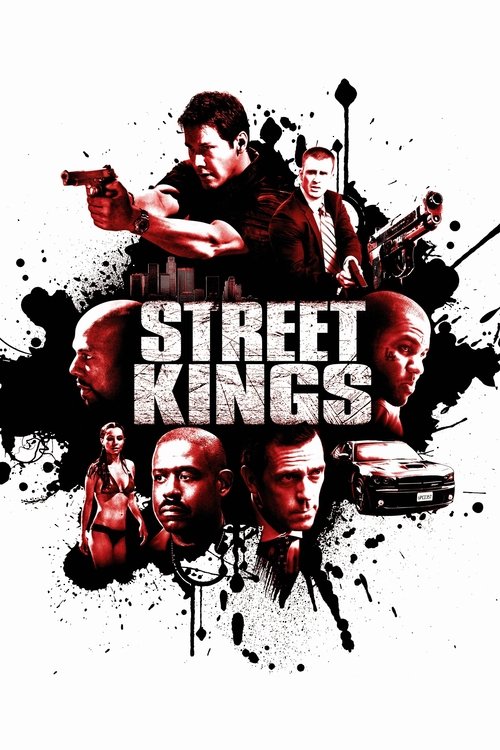
Street Kings
Tom Ludlow is a disillusioned L.A. Police Officer, rarely playing by the rules and haunted by the death of his wife. When evidence implicates him in the execution of a fellow officer, he is forced to go up against the cop culture he's been a part of his entire career, ultimately leading him to question the loyalties of everyone around him.
Despite a moderate budget of $20.0M, Street Kings became a box office success, earning $66.5M worldwide—a 232% return.


Plot Structure
Story beats plotted across runtime


Narrative Arc
Emotional journey through the story's key moments
Story Circle
Blueprint 15-beat structure
Arcplot Score Breakdown
Weighted: Precision (70%) + Arc (15%) + Theme (15%)
Street Kings (2008) exhibits meticulously timed narrative architecture, characteristic of David Ayer's storytelling approach. This structural analysis examines how the film's 15-point plot structure maps to proven narrative frameworks across 1 hour and 49 minutes. With an Arcplot score of 7.1, the film balances conventional beats with creative variation.
Characters
Cast & narrative archetypes

Tom Ludlow
Captain Jack Wander
Captain James Biggs
Terrence Washington
Detective Cosmo Santos
Detective Dante Demille
Sergeant Mike Clady
Grace Garcia
Main Cast & Characters
Tom Ludlow
Played by Keanu Reeves
A morally compromised LAPD detective who uses illegal methods to fight crime, forced to confront corruption within his own unit.
Captain Jack Wander
Played by Forest Whitaker
The commanding officer of Ludlow's unit who manipulates his detectives and orchestrates cover-ups to maintain his power.
Captain James Biggs
Played by Hugh Laurie
An Internal Affairs captain investigating police corruption who becomes Ludlow's unlikely ally in uncovering the truth.
Terrence Washington
Played by Terry Crews
Ludlow's former partner who was preparing to expose corruption before being murdered in a setup.
Detective Cosmo Santos
Played by Amaury Nolasco
A corrupt detective in Wander's unit who participates in illegal operations and cover-ups.
Detective Dante Demille
Played by John Corbett
Another corrupt detective under Wander's command who helps execute illegal operations.
Sergeant Mike Clady
Played by Common
A veteran detective working with Biggs who initially distrusts Ludlow but comes to respect his integrity.
Grace Garcia
Played by Naomie Harris
A convenience store clerk and witness who becomes involved in Ludlow's investigation after the shooting at her store.
Structural Analysis
The Status Quo at 1 minutes (1% through the runtime) establishes Tom Ludlow wakes alone in his empty house, drinks vodka for breakfast, and prepares his gun. He's a broken man drowning in grief after his wife's death, functioning through violence and alcohol.. Significantly, this early placement immediately immerses viewers in the story world.
The inciting incident occurs at 13 minutes when Ludlow's former partner Terrence Washington is gunned down in a convenience store while Ludlow was tailing him. Washington was about to testify against Ludlow to Internal Affairs, making Ludlow a suspect.. At 12% through the film, this Disruption aligns precisely with traditional story structure. This beat shifts the emotional landscape, launching the protagonist into the central conflict.
The First Threshold at 27 minutes marks the transition into Act II, occurring at 25% of the runtime. This illustrates the protagonist's commitment to Ludlow decides to investigate Washington's murder himself, defying Wander's orders to let it go. He actively chooses to pursue the truth, crossing into dangerous territory that will expose his own unit., moving from reaction to action.
At 55 minutes, the Midpoint arrives at 50% of the runtime—precisely centered, creating perfect narrative symmetry. Of particular interest, this crucial beat Ludlow discovers that the shooters who killed Washington were cops - members of his own Vice Special unit. His world inverts as he realizes his brothers-in-arms are murderers operating a criminal enterprise., fundamentally raising what's at risk. The emotional intensity shifts, dividing the narrative into clear before-and-after phases.
The Collapse moment at 82 minutes (75% through) represents the emotional nadir. Here, Detective Diskant is murdered by the corrupt cops. Ludlow loses his partner and the one person who represented redemption. He is now completely alone, hunted by his own unit, with no one to trust., shows the protagonist at their lowest point. This beat's placement in the final quarter sets up the climactic reversal.
The Second Threshold at 87 minutes initiates the final act resolution at 80% of the runtime. Ludlow obtains recorded evidence proving Wander orchestrated Washington's murder and the entire criminal operation. Armed with the truth and nothing left to lose, he chooses to confront the corruption directly., demonstrating the transformation achieved throughout the journey.
Emotional Journey
Street Kings's emotional architecture traces a deliberate progression across 15 carefully calibrated beats.
Narrative Framework
This structural analysis employs a 15-point narrative structure framework that maps key story moments. By mapping Street Kings against these established plot points, we can identify how David Ayer utilizes or subverts traditional narrative conventions. The plot point approach reveals not only adherence to structural principles but also creative choices that distinguish Street Kings within the action genre.
David Ayer's Structural Approach
Among the 7 David Ayer films analyzed on Arcplot, the average structural score is 6.9, demonstrating varied approaches to story architecture. Street Kings represents one of the director's most structurally precise works. For comparative analysis, explore the complete David Ayer filmography.
Comparative Analysis
Additional action films include The Bad Guys, Puss in Boots and Venom: The Last Dance. For more David Ayer analyses, see Fury, Sabotage and End of Watch.
Plot Points by Act
Act I
SetupStatus Quo
Tom Ludlow wakes alone in his empty house, drinks vodka for breakfast, and prepares his gun. He's a broken man drowning in grief after his wife's death, functioning through violence and alcohol.
Theme
Captain Wander tells Ludlow "We're the police. We can do anything." This corrupted philosophy defines the moral question Ludlow must ultimately confront and reject.
Worldbuilding
Ludlow operates as a violent vigilante cop in Vice Special. He executes Korean gangsters, plants evidence, and operates above the law with Wander's protection. Internal Affairs Captain Biggs is investigating the unit.
Disruption
Ludlow's former partner Terrence Washington is gunned down in a convenience store while Ludlow was tailing him. Washington was about to testify against Ludlow to Internal Affairs, making Ludlow a suspect.
Resistance
Ludlow is pressured by Biggs from Internal Affairs who suspects him of the murder. Wander counsels Ludlow to let the unit handle it. Ludlow meets Detective Diskant who was first on the murder scene and debates whether to pursue the truth.
Act II
ConfrontationFirst Threshold
Ludlow decides to investigate Washington's murder himself, defying Wander's orders to let it go. He actively chooses to pursue the truth, crossing into dangerous territory that will expose his own unit.
Mirror World
Ludlow reluctantly partners with Detective Paul Diskant, an idealistic young cop who believes in doing things by the book. Diskant represents the uncorrupted path Ludlow could have taken and embodies true justice.
Premise
Ludlow and Diskant investigate Washington's murder, following leads through drug dealers, gang members, and informants. Their unlikely partnership deepens as they uncover connections pointing to a police conspiracy.
Midpoint
Ludlow discovers that the shooters who killed Washington were cops - members of his own Vice Special unit. His world inverts as he realizes his brothers-in-arms are murderers operating a criminal enterprise.
Opposition
The conspiracy closes in on Ludlow. His unit members Clady, Cosmo, and Demille try to frame him for the murders. Evidence points to higher-level involvement, and Ludlow begins to suspect Wander himself is orchestrating everything.
Collapse
Detective Diskant is murdered by the corrupt cops. Ludlow loses his partner and the one person who represented redemption. He is now completely alone, hunted by his own unit, with no one to trust.
Crisis
Ludlow grieves Diskant's death and confronts the full scope of Wander's betrayal. His mentor, the man who protected him for years, has been the architect of corruption all along. Ludlow must choose: run or fight.
Act III
ResolutionSecond Threshold
Ludlow obtains recorded evidence proving Wander orchestrated Washington's murder and the entire criminal operation. Armed with the truth and nothing left to lose, he chooses to confront the corruption directly.
Synthesis
Ludlow confronts Wander and the corrupt cops at Wander's home. In a violent shootout, Ludlow kills the corrupt members of his unit including Wander. He delivers the evidence to Biggs, exposing the conspiracy and achieving justice.
Transformation
Ludlow walks away wounded but redeemed. He has rejected the corrupted philosophy that the police can do anything, choosing true justice over tribal loyalty. He is no longer the broken vigilante from the opening - he has found his moral center.