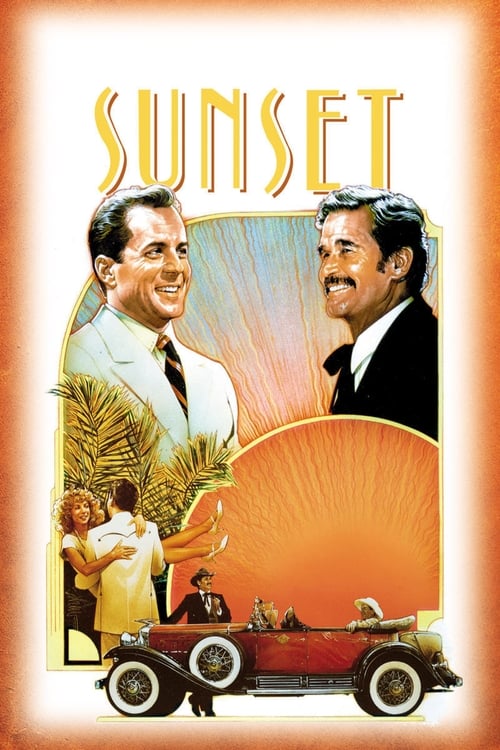
Sunset
Tom Mix and Wyatt Earp team up to solve a murder at the Academy Awards in 1929 Hollywood.
The film box office disappointment against its mid-range budget of $16.0M, earning $4.6M globally (-71% loss). While initial box office returns were modest, the film has gained appreciation for its fresh perspective within the crime genre.
Nominated for 1 Oscar. 1 win & 2 nominations


Plot Structure
Story beats plotted across runtime


Narrative Arc
Emotional journey through the story's key moments
Story Circle
Blueprint 15-beat structure
Arcplot Score Breakdown
Weighted: Precision (70%) + Arc (15%) + Theme (15%)
Sunset (1988) demonstrates strategically placed story structure, characteristic of Blake Edwards's storytelling approach. This structural analysis examines how the film's 15-point plot structure maps to proven narrative frameworks across 1 hour and 47 minutes. With an Arcplot score of 7.7, the film showcases strong structural fundamentals.
Characters
Cast & narrative archetypes

Tom Mix
Wyatt Earp
Cheryl King
Alfie Alperin
Nancy Shoemaker
Dutch Kieffer
Victoria Alperin
Main Cast & Characters
Tom Mix
Played by Bruce Willis
Legendary silent film cowboy star investigating a murder in 1920s Hollywood alongside Wyatt Earp.
Wyatt Earp
Played by James Garner
Aging Old West lawman turned technical advisor, partnering with Tom Mix to solve a conspiracy.
Cheryl King
Played by Mariel Hemingway
Aspiring actress and Tom Mix's love interest caught up in the dangerous Hollywood investigation.
Alfie Alperin
Played by Malcolm McDowell
Shady Hollywood studio executive with connections to organized crime and political corruption.
Nancy Shoemaker
Played by Patricia Hodge
Mysterious woman connected to the murder case with hidden motives.
Dutch Kieffer
Played by Richard Bradford
Corrupt police captain working to cover up the conspiracy.
Victoria Alperin
Played by Kathleen Quinlan
Alfie Alperin's wife, entangled in the web of Hollywood corruption.
Structural Analysis
The Status Quo at 2 minutes (2% through the runtime) establishes Hollywood 1929: Tom Mix films a Western scene as a silent film cowboy star at the height of his fame, embodying the manufactured glamour of Hollywood's Old West fantasy.. Structural examination shows that this early placement immediately immerses viewers in the story world.
The inciting incident occurs at 12 minutes when A young woman is found dead under suspicious circumstances connected to powerful Hollywood figures. The studio head wants the matter covered up rather than investigated, disrupting the glamorous status quo with ugly reality.. At 11% through the film, this Disruption aligns precisely with traditional story structure. This beat shifts the emotional landscape, launching the protagonist into the central conflict.
The First Threshold at 28 minutes marks the transition into Act II, occurring at 26% of the runtime. This reveals the protagonist's commitment to Mix and Earp actively choose to defy the studio and investigate the murder themselves. They cross from the world of movie-making fantasy into real criminal investigation, committing to uncover the truth regardless of consequences., moving from reaction to action.
At 55 minutes, the Midpoint arrives at 51% of the runtime—precisely centered, creating perfect narrative symmetry. Structural examination shows that this crucial beat False defeat: Mix and Earp discover the conspiracy runs much deeper than one murder - it's a systemic operation involving multiple powerful Hollywood figures. The stakes raise dramatically as they realize they're now targets themselves, transitioning from hunters to hunted., fundamentally raising what's at risk. The emotional intensity shifts, dividing the narrative into clear before-and-after phases.
The Collapse moment at 81 minutes (75% through) represents the emotional nadir. Here, All is lost: Mix and Earp are betrayed, their evidence is stolen or compromised. They face the reality that the powerful studio system may be too strong to defeat. Their investigation appears finished, careers threatened, possibly their lives in danger. The whiff of death - justice itself seems to die., reveals the protagonist at their lowest point. This beat's placement in the final quarter sets up the climactic reversal.
The Second Threshold at 86 minutes initiates the final act resolution at 80% of the runtime. Synthesis and breakthrough: Mix combines what he's learned from Earp (authentic courage and justice) with his own skills (Hollywood showmanship and tricks). They discover new evidence or formulate a plan that uses both the real West and the reel West to expose the villains., demonstrating the transformation achieved throughout the journey.
Emotional Journey
Sunset's emotional architecture traces a deliberate progression across 15 carefully calibrated beats.
Narrative Framework
This structural analysis employs structural analysis methodology used to understand storytelling architecture. By mapping Sunset against these established plot points, we can identify how Blake Edwards utilizes or subverts traditional narrative conventions. The plot point approach reveals not only adherence to structural principles but also creative choices that distinguish Sunset within the crime genre.
Blake Edwards's Structural Approach
Among the 15 Blake Edwards films analyzed on Arcplot, the average structural score is 7.1, reflecting strong command of classical structure. Sunset represents one of the director's most structurally precise works. For comparative analysis, explore the complete Blake Edwards filmography.
Comparative Analysis
Additional crime films include The Bad Guys, Rustom and The Whole Ten Yards. For more Blake Edwards analyses, see Revenge of the Pink Panther, Curse of the Pink Panther and 10.
Plot Points by Act
Act I
SetupStatus Quo
Hollywood 1929: Tom Mix films a Western scene as a silent film cowboy star at the height of his fame, embodying the manufactured glamour of Hollywood's Old West fantasy.
Theme
A character observes the contrast between the real Wyatt Earp and Tom Mix's Hollywood version, stating a variation of "There's the real West, and then there's what we sell" - establishing the theme of authenticity versus performance.
Worldbuilding
Establishment of 1929 Hollywood during the silent-to-talkie transition. Tom Mix is introduced as a movie star cowboy, Wyatt Earp as the aging legendary lawman working as a technical advisor. The studio system, the glamorous facade of Hollywood, and the contrast between Mix's showmanship and Earp's authenticity are established.
Disruption
A young woman is found dead under suspicious circumstances connected to powerful Hollywood figures. The studio head wants the matter covered up rather than investigated, disrupting the glamorous status quo with ugly reality.
Resistance
Mix and Earp debate whether to follow the studio's orders to cover up the scandal or to seek justice. They resist, question, and prepare. Earp represents the mentor figure teaching Mix about real investigation versus movie heroics. The duo weighs career safety against doing what's right.
Act II
ConfrontationFirst Threshold
Mix and Earp actively choose to defy the studio and investigate the murder themselves. They cross from the world of movie-making fantasy into real criminal investigation, committing to uncover the truth regardless of consequences.
Mirror World
The friendship and partnership between Mix and Earp deepens. Earp becomes the thematic mirror - representing authentic heroism that will teach Mix what real courage means beyond Hollywood stunts. Christina Alperin may also appear as a romantic subplot carrying themes of truth.
Premise
The "fun and games" of the odd-couple detective story. Mix and Earp investigate together, with the real lawman teaching the fake cowboy actual detective work. They uncover connections to brothels, prostitution rings, and blackmail involving studio executives. Hollywood glamour meets gritty investigation in entertaining contrast.
Midpoint
False defeat: Mix and Earp discover the conspiracy runs much deeper than one murder - it's a systemic operation involving multiple powerful Hollywood figures. The stakes raise dramatically as they realize they're now targets themselves, transitioning from hunters to hunted.
Opposition
The corrupt forces close in. Alfie Alperin and other studio powers escalate threats and intimidation. Evidence disappears, witnesses are silenced, and the duo faces mounting danger. Mix's Hollywood tricks prove insufficient against real threats. The opposition's power seems insurmountable.
Collapse
All is lost: Mix and Earp are betrayed, their evidence is stolen or compromised. They face the reality that the powerful studio system may be too strong to defeat. Their investigation appears finished, careers threatened, possibly their lives in danger. The whiff of death - justice itself seems to die.
Crisis
Dark night of the soul. Mix and Earp process their defeat and must decide whether to surrender to the corrupt system or risk everything for justice. Mix confronts what kind of man he truly is - a manufactured hero or someone with real courage. Earp's authentic heroism provides the answer.
Act III
ResolutionSecond Threshold
Synthesis and breakthrough: Mix combines what he's learned from Earp (authentic courage and justice) with his own skills (Hollywood showmanship and tricks). They discover new evidence or formulate a plan that uses both the real West and the reel West to expose the villains.
Synthesis
The finale confrontation blending Blake Edwards action, wit, and Western justice. Mix and Earp use both old-fashioned gunfighting skills and Hollywood trickery to expose Alperin and the corrupt studio conspiracy. The climactic showdown where authentic and manufactured heroism unite to defeat corruption.
Transformation
Final image: Justice served, though with acknowledgment that Hollywood corruption runs deep. Mix has transformed from a manufactured cowboy hero into someone with authentic courage. The genuine friendship between Mix and Earp bridges legend and reality, proving that real heroism can exist even in Hollywood.