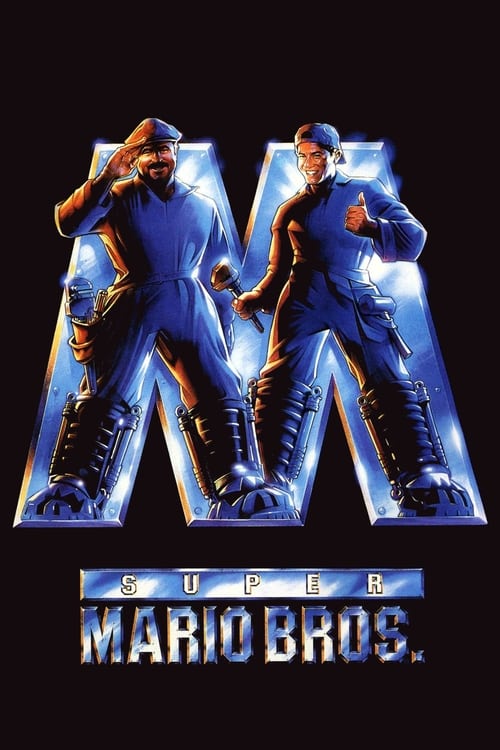
Super Mario Bros.
Mario and Luigi, plumbers from Brooklyn, find themselves in an alternate universe where evolved dinosaurs live in hi-tech squalor. They're the only hope to save our universe from invasion by the dino dictator, Koopa.
The film box office disappointment against its respectable budget of $48.0M, earning $20.9M globally (-56% loss). While initial box office returns were modest, the film has gained appreciation for its bold vision within the adventure genre.
2 nominations
Plot Structure
Story beats plotted across runtime


Narrative Arc
Emotional journey through the story's key moments
Story Circle
Blueprint 15-beat structure
Arcplot Score Breakdown
Weighted: Precision (70%) + Arc (15%) + Theme (15%)
Super Mario Bros. (1993) showcases carefully calibrated story structure, characteristic of Annabel Jankel's storytelling approach. This structural analysis examines how the film's 15-point plot structure maps to proven narrative frameworks across 1 hour and 44 minutes. With an Arcplot score of 7.7, the film showcases strong structural fundamentals.
Characters
Cast & narrative archetypes

Mario Mario
Luigi Mario
Princess Daisy
King Koopa
Iggy
Spike
Main Cast & Characters
Mario Mario
Played by Bob Hoskins
A Brooklyn plumber who becomes an unlikely hero in Dinohattan, searching for Princess Daisy while battling King Koopa.
Luigi Mario
Played by John Leguizamo
Mario's younger brother and business partner, a more cautious plumber who falls for Princess Daisy.
Princess Daisy
Played by Samantha Mathis
The rightful heir to Dinohattan, a paleontology student kidnapped because she holds the key to merging dimensions.
King Koopa
Played by Dennis Hopper
The tyrannical dictator of Dinohattan who evolved from dinosaurs, seeking to merge his world with Earth.
Iggy
Played by Fisher Stevens
One of Koopa's bumbling henchmen cousins who eventually helps the Mario brothers after gaining enhanced intelligence.
Spike
Played by Richard Edson
Iggy's partner in incompetence, another cousin who switches sides after their intelligence is boosted.
Structural Analysis
The Status Quo at 1 minutes (1% through the runtime) establishes Brooklyn plumbers Mario and Luigi Mario run their struggling small plumbing business, with Mario as the optimistic older brother and Luigi as the romantic younger brother pining for Daisy.. Notably, this early placement immediately immerses viewers in the story world.
The inciting incident occurs at 13 minutes when Daisy's dig site is sabotaged by Scapelli's crew, flooding begins. She urgently needs the Mario Brothers' help to fix the underground water breach, pulling them into danger.. At 12% through the film, this Disruption aligns precisely with traditional story structure. This beat shifts the emotional landscape, launching the protagonist into the central conflict.
The First Threshold at 25 minutes marks the transition into Act II, occurring at 24% of the runtime. This illustrates the protagonist's commitment to Mario and Luigi actively choose to jump through the dimensional portal to rescue Daisy, leaving Brooklyn behind and entering the parallel dystopian dimension of Dinohattan., moving from reaction to action.
At 52 minutes, the Midpoint arrives at 50% of the runtime—precisely centered, creating perfect narrative symmetry. Structural examination shows that this crucial beat The brothers successfully steal back the meteorite fragment from Koopa's tower with help from Toad and the resistance. False victory - they think they can stop Koopa's plan, but he still has Daisy., fundamentally raising what's at risk. The emotional intensity shifts, dividing the narrative into clear before-and-after phases.
The Collapse moment at 76 minutes (73% through) represents the emotional nadir. Here, Koopa successfully merges the dimensions and crosses into Brooklyn with his army. The brothers have failed, the worlds are colliding, and Koopa seems unstoppable. The King (Daisy's father) remains imprisoned in fungus form - symbolic death., demonstrates the protagonist at their lowest point. This beat's placement in the final quarter sets up the climactic reversal.
The Second Threshold at 83 minutes initiates the final act resolution at 80% of the runtime. The brothers realize they must work together and trust themselves. They synthesize their plumbing skills with the dimension-tech knowledge, devising a plan to use the meteorite to de-evolve Koopa and restore both worlds., demonstrating the transformation achieved throughout the journey.
Emotional Journey
Super Mario Bros.'s emotional architecture traces a deliberate progression across 15 carefully calibrated beats.
Narrative Framework
This structural analysis employs systematic plot point analysis that identifies crucial turning points. By mapping Super Mario Bros. against these established plot points, we can identify how Annabel Jankel utilizes or subverts traditional narrative conventions. The plot point approach reveals not only adherence to structural principles but also creative choices that distinguish Super Mario Bros. within the adventure genre.
Annabel Jankel's Structural Approach
Among the 2 Annabel Jankel films analyzed on Arcplot, the average structural score is 7.3, reflecting strong command of classical structure. Super Mario Bros. represents one of the director's most structurally precise works. For comparative analysis, explore the complete Annabel Jankel filmography.
Comparative Analysis
Additional adventure films include The Black Stallion, The Bad Guys and Puss in Boots. For more Annabel Jankel analyses, see D.O.A..
Plot Points by Act
Act I
SetupStatus Quo
Brooklyn plumbers Mario and Luigi Mario run their struggling small plumbing business, with Mario as the optimistic older brother and Luigi as the romantic younger brother pining for Daisy.
Theme
Daisy tells Luigi about faith and belief: "You gotta believe in something." The theme of believing in yourself and trusting others is established.
Worldbuilding
Establishment of Brooklyn setting, the brothers' plumbing business rivalry with Scapelli, Luigi's romance with paleontologist Daisy, and the mysterious discovery of dinosaur eggs beneath the city. Introduction of parallel dimension mythology.
Disruption
Daisy's dig site is sabotaged by Scapelli's crew, flooding begins. She urgently needs the Mario Brothers' help to fix the underground water breach, pulling them into danger.
Resistance
The brothers debate whether to help Daisy at the dangerous dig site. They investigate the underground caverns and discover evidence of another world. Daisy is kidnapped by Iggy and Spike through a portal.
Act II
ConfrontationFirst Threshold
Mario and Luigi actively choose to jump through the dimensional portal to rescue Daisy, leaving Brooklyn behind and entering the parallel dystopian dimension of Dinohattan.
Mirror World
The brothers encounter the bizarre alternate reality where dinosaurs evolved into the dominant species. They meet the oppressed citizens and learn about King Koopa's tyrannical rule, representing a dark mirror of their own world.
Premise
Fish-out-of-water adventures in Dinohattan: the brothers navigate the dystopian city, encounter strange technology, escape police, meet the resistance, and learn about the meteorite fragment and Princess Daisy's true heritage as key to merging dimensions.
Midpoint
The brothers successfully steal back the meteorite fragment from Koopa's tower with help from Toad and the resistance. False victory - they think they can stop Koopa's plan, but he still has Daisy.
Opposition
Koopa strikes back: he captures the brothers, retrieves the meteorite fragment, and begins the dimensional merger. The brothers are de-evolved and must escape. Iggy and Spike switch sides but Koopa gains the upper hand. The dimensions begin merging.
Collapse
Koopa successfully merges the dimensions and crosses into Brooklyn with his army. The brothers have failed, the worlds are colliding, and Koopa seems unstoppable. The King (Daisy's father) remains imprisoned in fungus form - symbolic death.
Crisis
The brothers face their darkest moment as Koopa invades Brooklyn. They must find inner strength and belief in themselves to mount a final resistance. Luigi remembers Daisy's words about faith.
Act III
ResolutionSecond Threshold
The brothers realize they must work together and trust themselves. They synthesize their plumbing skills with the dimension-tech knowledge, devising a plan to use the meteorite to de-evolve Koopa and restore both worlds.
Synthesis
Final confrontation at the portal between dimensions. The brothers battle Koopa, free Daisy, reunite the meteorite fragments, and use the de-evolution device to transform Koopa into primordial slime. The dimensions separate and balance is restored.
Transformation
Back in Brooklyn, the brothers are celebrated heroes with a thriving business. They've grown from small-time plumbers to confident heroes who believe in themselves. Daisy returns, calling them to another adventure - they're ready.