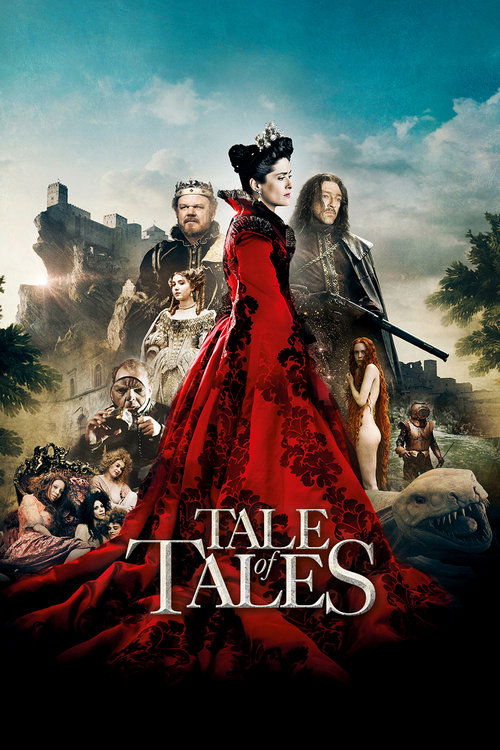
Tale of Tales
The Queen of Selvascura risks everything to be a mother; the King of Roccaforte falls in love with the voice of a mysterious girl; the King of Altomonte becomes obsessed with a flea and neglects his daughter.
The film box office disappointment against its tight budget of $12.0M, earning $5.5M globally (-54% loss). While initial box office returns were modest, the film has gained appreciation for its bold vision within the romance genre.
21 wins & 15 nominations


Plot Structure
Story beats plotted across runtime


Narrative Arc
Emotional journey through the story's key moments
Story Circle
Blueprint 15-beat structure
Arcplot Score Breakdown
Weighted: Precision (70%) + Arc (15%) + Theme (15%)
Tale of Tales (2015) demonstrates precise dramatic framework, characteristic of Matteo Garrone's storytelling approach. This structural analysis examines how the film's 15-point plot structure maps to proven narrative frameworks across 2 hours and 14 minutes. With an Arcplot score of 6.8, the film balances conventional beats with creative variation.
Characters
Cast & narrative archetypes

Queen of Longtrellis
King of Longtrellis
Elias
Jonah
King of Strongcliff
Dora
Imma
King of Highhills
Princess Violet
The Ogre
Main Cast & Characters
Queen of Longtrellis
Played by Salma Hayek
An obsessed queen who desires a child above all else, leading her to dark magic and tragic consequences.
King of Longtrellis
Played by John C. Reilly
A devoted husband who sacrifices himself to fulfill his wife's desperate wish for a child.
Elias
Played by Christian Lees
The prince of Longtrellis, born from dark magic, who forms an unusual bond with his albino twin brother.
Jonah
Played by Jonah Lees
The albino peasant boy, twin to Elias through magical circumstances, torn between two worlds.
King of Strongcliff
Played by Vincent Cassel
A lustful, hedonistic king obsessed with a mysterious singing voice, blind to what's before him.
Dora
Played by Hayley Carmichael
An elderly woman who uses trickery and magic to seduce the king, desperate for youth and love.
Imma
Played by Stacy Martin
Dora's younger sister who becomes the king's bride after magical transformation, living with guilt.
King of Highhills
Played by Toby Jones
An irresponsible, whimsical king who gambles away his daughter's future on a trivial wager.
Princess Violet
Played by Bebe Cave
A brave, resourceful princess forced to marry an ogre, who refuses to accept her fate passively.
The Ogre
Played by Guillaume Delaunay
A fearsome but lonely creature who wins the princess through the king's bet, capable of tenderness.
Structural Analysis
The Status Quo at 1 minutes (1% through the runtime) establishes Three kingdoms exist in uneasy peace. The Queen of Longtrellis watches performers with her husband, her face betraying profound sadness at her childlessness. The King of Strongcliff lounges in decadent isolation. The King of Highhills tends to his beloved flea. Each ruler harbors an obsessive desire that defines their existence.. The analysis reveals that this early placement immediately immerses viewers in the story world.
The inciting incident occurs at 16 minutes when The Queen witnesses a sea dragon being killed and receives the necromancer's instructions: she must eat its heart, cooked by a virgin, and she will conceive. The King of Strongcliff hears Dora's beautiful singing voice through a crack in a door and becomes obsessed. The King of Highhills' flea begins to grow. Each obsession takes root.. At 12% through the film, this Disruption aligns precisely with traditional story structure. This beat shifts the emotional landscape, launching the protagonist into the central conflict.
The First Threshold at 34 minutes marks the transition into Act II, occurring at 25% of the runtime. This reveals the protagonist's commitment to The Queen has the sea dragon's heart cooked and consumes it, knowing the cost will be her husband's life. Dora agrees to visit the king's bed in darkness, deceiving him about her identity. The King of Highhills' flea has grown to monstrous size, and he chooses to keep nurturing it. Each character crosses into irreversible territory., moving from reaction to action.
At 67 minutes, the Midpoint arrives at 50% of the runtime—precisely centered, creating perfect narrative symmetry. The analysis reveals that this crucial beat False victories collapse into revelation. The Queen's husband dies as prophesied; she has her son but at terrible cost. The King of Strongcliff discovers Dora's true aged appearance and has her thrown from the castle. The giant flea dies, and the king announces whoever identifies its hide can marry Violet—a twisted lottery., fundamentally raising what's at risk. The emotional intensity shifts, dividing the narrative into clear before-and-after phases.
The Collapse moment at 101 minutes (75% through) represents the emotional nadir. Here, Death pervades all storylines. Imma, granted youth by the witch, ages rapidly when pricked by a thorn—the gift was conditional. Violet exists in brutal captivity with the ogre. The Queen, in her obsession, wounds Jonah to drive him away from Elias. The obsessive desires of the rulers have produced only suffering., reveals the protagonist at their lowest point. This beat's placement in the final quarter sets up the climactic reversal.
The Second Threshold at 107 minutes initiates the final act resolution at 80% of the runtime. Transformation through action. Violet slays the ogre and his family, emerging bloodied but free—reborn through violence. Elias defies his mother and reunites with Jonah, choosing authentic connection over possessive love. Dora, now permanently young, walks past aged Imma's corpse without recognition—fully transformed but hollowed., demonstrating the transformation achieved throughout the journey.
Emotional Journey
Tale of Tales's emotional architecture traces a deliberate progression across 15 carefully calibrated beats.
Narrative Framework
This structural analysis employs systematic plot point analysis that identifies crucial turning points. By mapping Tale of Tales against these established plot points, we can identify how Matteo Garrone utilizes or subverts traditional narrative conventions. The plot point approach reveals not only adherence to structural principles but also creative choices that distinguish Tale of Tales within the romance genre.
Matteo Garrone's Structural Approach
Among the 3 Matteo Garrone films analyzed on Arcplot, the average structural score is 7.1, reflecting strong command of classical structure. Tale of Tales takes a more unconventional approach compared to the director's typical style. For comparative analysis, explore the complete Matteo Garrone filmography.
Comparative Analysis
Additional romance films include South Pacific, Dirty Dancing: Havana Nights and The Evening Star. For more Matteo Garrone analyses, see Pinocchio, Dogman.
Plot Points by Act
Act I
SetupStatus Quo
Three kingdoms exist in uneasy peace. The Queen of Longtrellis watches performers with her husband, her face betraying profound sadness at her childlessness. The King of Strongcliff lounges in decadent isolation. The King of Highhills tends to his beloved flea. Each ruler harbors an obsessive desire that defines their existence.
Theme
The necromancer warns the Queen: "If you want the impossible, you must be prepared to pay an impossible price." This statement encapsulates the film's central theme—that obsessive desires exact terrible costs, and the fulfillment of wishes often brings consequences far worse than the original longing.
Worldbuilding
The three kingdoms and their rulers are established. Queen of Longtrellis desperately wants a child. King of Strongcliff pursues sensual pleasures. King of Highhills discovers a tiny flea and becomes fascinated. The old sisters Dora and Imma live in poverty, their youth long faded. Princess Violet longs for freedom from her father's castle.
Disruption
The Queen witnesses a sea dragon being killed and receives the necromancer's instructions: she must eat its heart, cooked by a virgin, and she will conceive. The King of Strongcliff hears Dora's beautiful singing voice through a crack in a door and becomes obsessed. The King of Highhills' flea begins to grow. Each obsession takes root.
Resistance
The Queen debates whether to sacrifice the king for her desire for a child. Dora and Imma debate how to exploit the king's obsession without revealing their aged appearance. The King of Highhills feeds and nurtures his growing flea obsessively, neglecting his daughter Violet. Each protagonist moves toward irreversible choices.
Act II
ConfrontationFirst Threshold
The Queen has the sea dragon's heart cooked and consumes it, knowing the cost will be her husband's life. Dora agrees to visit the king's bed in darkness, deceiving him about her identity. The King of Highhills' flea has grown to monstrous size, and he chooses to keep nurturing it. Each character crosses into irreversible territory.
Mirror World
The virgin servant who cooked the heart also becomes pregnant, giving birth to Jonah—a mirror twin to Prince Elias. Their friendship represents pure, uncorrupted connection, contrasting with the adults' obsessive desires. Princess Violet's growing desire for the world beyond mirrors her father's unhealthy attachment.
Premise
The dark fairy tale logic unfolds. Elias and Jonah grow as inseparable twins despite different stations. The king continues his nighttime visits with Dora, believing her young. The flea grows enormous while the king ignores Violet. Princess Violet meets a young suitor but her father remains fixated on his flea.
Midpoint
False victories collapse into revelation. The Queen's husband dies as prophesied; she has her son but at terrible cost. The King of Strongcliff discovers Dora's true aged appearance and has her thrown from the castle. The giant flea dies, and the king announces whoever identifies its hide can marry Violet—a twisted lottery.
Opposition
Consequences compound. The Queen becomes obsessively possessive of Elias, forbidding his friendship with Jonah. Dora, transformed by a witch into youth, lives in the castle while aged Imma begs for the same magic. An ogre correctly identifies the flea hide and claims Violet, dragging her to his mountain cave.
Collapse
Death pervades all storylines. Imma, granted youth by the witch, ages rapidly when pricked by a thorn—the gift was conditional. Violet exists in brutal captivity with the ogre. The Queen, in her obsession, wounds Jonah to drive him away from Elias. The obsessive desires of the rulers have produced only suffering.
Crisis
Each storyline reaches its darkest moment. Violet is trapped with the ogre, seemingly without hope. Elias grieves the loss of Jonah and resents his mother. Imma dies, her artificial youth stripped away. The cost of obsession is laid bare across all three kingdoms.
Act III
ResolutionSecond Threshold
Transformation through action. Violet slays the ogre and his family, emerging bloodied but free—reborn through violence. Elias defies his mother and reunites with Jonah, choosing authentic connection over possessive love. Dora, now permanently young, walks past aged Imma's corpse without recognition—fully transformed but hollowed.
Synthesis
The final confrontations. Violet returns to Highhills, carrying the ogre's head as proof of her survival and transformation. The Queen confronts the consequences of her obsession as Elias pulls away. Dora continues her life at court, beautiful but spiritually dead. The circus performers gather for a finale.
Transformation
Violet is crowned queen in her father's place, having earned her throne through suffering and self-reliance. The Queen of Longtrellis watches Elias and Jonah together, finally releasing her grip. The tightrope walker performs, balancing precariously—like all the characters, walking between desire and destruction. The cycle continues.