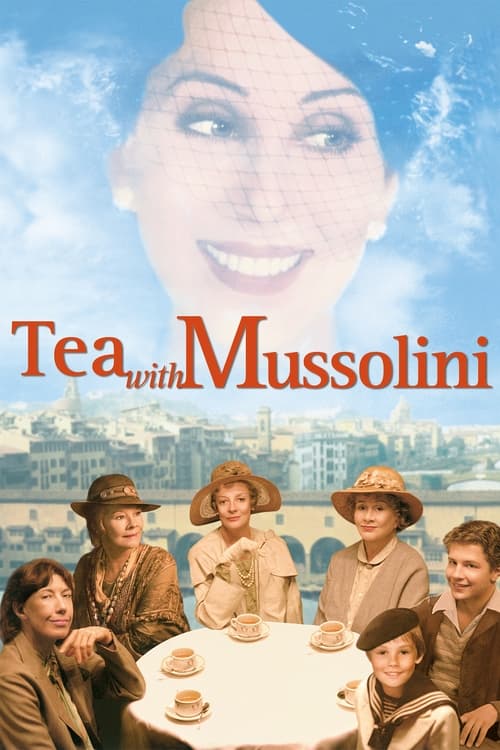
Tea with Mussolini
In 1930s fascist Italy, adolescent Luca just lost his mother. His father, a callous businessman, sends him to be taken care of by British expatriate Mary Wallace. Mary and her cultured friends - including artist Arabella, young widow Elsa, and archaeologist Georgie - keep a watchful eye over the boy. But the women's cultivated lives take a dramatic turn when Allied forces declare war on Mussolini.
Working with a modest budget of $12.0M, the film achieved a steady performer with $21.0M in global revenue (+75% profit margin).
1 BAFTA Award5 wins & 3 nominations

Plot Structure
Story beats plotted across runtime


Narrative Arc
Emotional journey through the story's key moments
Story Circle
Blueprint 15-beat structure
Arcplot Score Breakdown
Weighted: Precision (70%) + Arc (15%) + Theme (15%)
Tea with Mussolini (1999) exhibits carefully calibrated story structure, characteristic of Franco Zeffirelli's storytelling approach. This structural analysis examines how the film's 15-point plot structure maps to proven narrative frameworks across 1 hour and 57 minutes. With an Arcplot score of 6.8, the film balances conventional beats with creative variation.
Characters
Cast & narrative archetypes

Luca
Mary Wallace
Lady Hester Random
Elsa Strauss-Armfeldt
Arabella
Georgie Rockwell
Connie Raynor
Main Cast & Characters
Luca
Played by Charlie Lucas / Baird Wallace
A young Italian boy raised by British expatriates in Florence who dreams of becoming an artist and must navigate the complexities of fascist Italy.
Mary Wallace
Played by Joan Plowright
A prim, proper secretary to a British diplomat who becomes Luca's surrogate mother and protector, fiercely devoted to English propriety.
Lady Hester Random
Played by Maggie Smith
An eccentric, wealthy British aristocrat living in Florence who uses her social connections and wit to navigate dangerous political waters.
Elsa Strauss-Armfeldt
Played by Cher
A glamorous Austrian-Jewish art collector who befriends Mussolini and uses her influence to protect herself and others until reality catches up.
Arabella
Played by Judi Dench
A flamboyant, artistic British expatriate who supports the arts and lives life with bohemian flair and romantic idealism.
Georgie Rockwell
Played by Lily Tomlin
An adventurous American archaeologist who brings a pragmatic, no-nonsense perspective to the group of expatriates.
Connie Raynor
Played by Tessa Pritchard
A flirtatious, wealthy British woman who initially supports Mussolini and struggles to recognize the danger around her.
Structural Analysis
The Status Quo at 1 minutes (1% through the runtime) establishes Young Luca lives in 1930s Florence as an illegitimate child, unwanted by his wealthy father Paolo and unknown to proper society, establishing his lonely outsider status.. Notably, this early placement immediately immerses viewers in the story world.
The inciting incident occurs at 14 minutes when Luca's mother dies and his father Paolo refuses to acknowledge him, attempting to send him away to an orphanage, disrupting his fragile existence.. At 12% through the film, this Disruption aligns precisely with traditional story structure. This beat shifts the emotional landscape, launching the protagonist into the central conflict.
The First Threshold at 29 minutes marks the transition into Act II, occurring at 25% of the runtime. This shows the protagonist's commitment to Mary Wallace and the Scorpioni officially take Luca under their wing, defying Paolo. Luca chooses to embrace this unconventional family, entering a new world of art, culture, and eccentric English society., moving from reaction to action.
At 59 minutes, the Midpoint arrives at 50% of the runtime—precisely centered, creating perfect narrative symmetry. Significantly, this crucial beat Lady Hester's infamous "tea with Mussolini" - her naive belief that she can charm the dictator and secure protection for British citizens proves to be a false victory, as political tensions escalate and war approaches., fundamentally raising what's at risk. The emotional intensity shifts, dividing the narrative into clear before-and-after phases.
The Collapse moment at 88 minutes (75% through) represents the emotional nadir. Here, The Nazis occupy Italy and begin deportations. Arabella is threatened with deportation to a concentration camp due to her Jewish heritage. The women face the real possibility of death, and all their British privilege means nothing., demonstrates the protagonist at their lowest point. This beat's placement in the final quarter sets up the climactic reversal.
The Second Threshold at 94 minutes initiates the final act resolution at 80% of the runtime. Elsa devises a bold plan to hide Arabella and protect the other women. Luca fully commits to risking his life for his chosen family, synthesizing his Italian heritage with the values the Scorpioni taught him., demonstrating the transformation achieved throughout the journey.
Emotional Journey
Tea with Mussolini's emotional architecture traces a deliberate progression across 15 carefully calibrated beats.
Narrative Framework
This structural analysis employs systematic plot point analysis that identifies crucial turning points. By mapping Tea with Mussolini against these established plot points, we can identify how Franco Zeffirelli utilizes or subverts traditional narrative conventions. The plot point approach reveals not only adherence to structural principles but also creative choices that distinguish Tea with Mussolini within the comedy genre.
Franco Zeffirelli's Structural Approach
Among the 6 Franco Zeffirelli films analyzed on Arcplot, the average structural score is 6.7, demonstrating varied approaches to story architecture. Tea with Mussolini represents one of the director's most structurally precise works. For comparative analysis, explore the complete Franco Zeffirelli filmography.
Comparative Analysis
Additional comedy films include The Bad Guys, Ella Enchanted and The Evening Star. For more Franco Zeffirelli analyses, see Jane Eyre, Hamlet and Romeo and Juliet.
Plot Points by Act
Act I
SetupStatus Quo
Young Luca lives in 1930s Florence as an illegitimate child, unwanted by his wealthy father Paolo and unknown to proper society, establishing his lonely outsider status.
Theme
Mary Wallace tells Luca that true family is not about blood but about who takes you in and loves you, foreshadowing the Scorpioni's role as his chosen family.
Worldbuilding
We meet the colorful community of English expatriates in Florence - the "Scorpioni" - including Lady Hester, Arabella, Mary, and the flamboyant American Elsa, as well as the political climate of Mussolini's Italy.
Disruption
Luca's mother dies and his father Paolo refuses to acknowledge him, attempting to send him away to an orphanage, disrupting his fragile existence.
Resistance
Mary Wallace debates taking responsibility for Luca while navigating Paolo's resistance. The Scorpioni women discuss whether they can protect and raise this orphaned boy in increasingly unstable Italy.
Act II
ConfrontationFirst Threshold
Mary Wallace and the Scorpioni officially take Luca under their wing, defying Paolo. Luca chooses to embrace this unconventional family, entering a new world of art, culture, and eccentric English society.
Mirror World
Elsa Morganthal Strauss-Armistan, the brash American art collector, becomes a key figure in Luca's life, representing freedom and rebellion against convention - she will teach him that identity is self-made.
Premise
Luca flourishes under the Scorpioni's care, learning art, culture, and languages. The women enjoy their privileged expatriate life, attending galleries, hosting tea parties, and believing British prestige protects them from fascism.
Midpoint
Lady Hester's infamous "tea with Mussolini" - her naive belief that she can charm the dictator and secure protection for British citizens proves to be a false victory, as political tensions escalate and war approaches.
Opposition
World War II erupts. The British women are interned as enemy aliens in San Gimignano. Luca, now a young man, struggles to help them while Italy descends into chaos. Elsa uses her American status to smuggle art and assist the women.
Collapse
The Nazis occupy Italy and begin deportations. Arabella is threatened with deportation to a concentration camp due to her Jewish heritage. The women face the real possibility of death, and all their British privilege means nothing.
Crisis
The Scorpioni face their darkest hour as Nazi persecution intensifies. Luca must confront whether he can save the women who saved him, while they reckon with their mortality and the destruction of their idyllic expatriate dream.
Act III
ResolutionSecond Threshold
Elsa devises a bold plan to hide Arabella and protect the other women. Luca fully commits to risking his life for his chosen family, synthesizing his Italian heritage with the values the Scorpioni taught him.
Synthesis
The group works together to survive the Nazi occupation. Elsa's art smuggling helps fund resistance efforts. As Allied forces approach Florence, the women and Luca fight to protect both human lives and irreplaceable art treasures.
Transformation
Florence is liberated. Luca, now a grown man transformed by his experiences, stands with his surviving Scorpioni family. The illegitimate orphan has become a man of culture and courage, forever shaped by these extraordinary women who chose him.