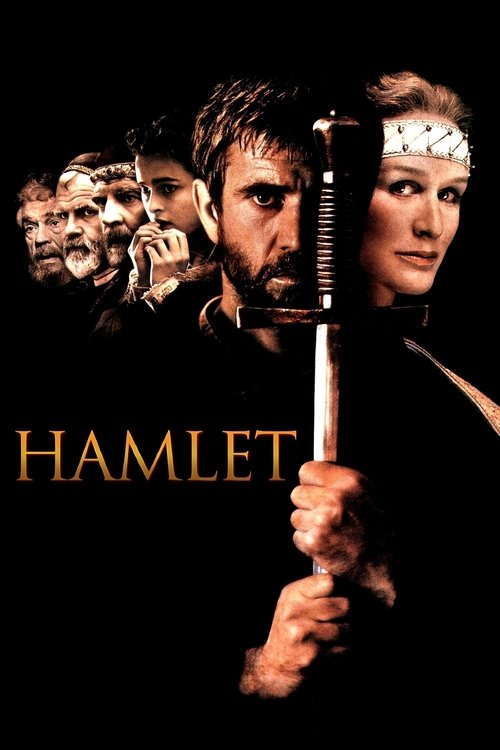
Hamlet
Hamlet, Prince of Denmark, finds out that his uncle Claudius killed his father to obtain the throne, and plans revenge.
Working with a limited budget of $13.5M, the film achieved a modest success with $20.7M in global revenue (+53% profit margin).
Nominated for 2 Oscars. 3 wins & 7 nominations


Plot Structure
Story beats plotted across runtime


Narrative Arc
Emotional journey through the story's key moments
Story Circle
Blueprint 15-beat structure
Arcplot Score Breakdown
Weighted: Precision (70%) + Arc (15%) + Theme (15%)
Hamlet (1990) exhibits meticulously timed narrative design, characteristic of Franco Zeffirelli's storytelling approach. This structural analysis examines how the film's 15-point plot structure maps to proven narrative frameworks across 2 hours and 10 minutes. With an Arcplot score of 7.0, the film balances conventional beats with creative variation.
Structural Analysis
The Status Quo at 2 minutes (1% through the runtime) establishes The funeral of King Hamlet. The court of Denmark mourns while Claudius has already married Gertrude, establishing a world of corruption and hasty transitions that troubles young Hamlet.. Significantly, this early placement immediately immerses viewers in the story world.
The inciting incident occurs at 16 minutes when Hamlet encounters the Ghost of his father on the battlements. The Ghost reveals he was murdered by Claudius and demands revenge, transforming Hamlet's melancholy into a mission of vengeance.. At 13% through the film, this Disruption is delayed, allowing extended setup of the story world. This beat shifts the emotional landscape, launching the protagonist into the central conflict.
The First Threshold at 33 minutes marks the transition into Act II, occurring at 25% of the runtime. This demonstrates the protagonist's commitment to Hamlet devises "The Mousetrap" play to test Claudius's guilt, making an active choice to seek proof rather than act rashly. This commits him to a path of strategic investigation rather than immediate revenge., moving from reaction to action.
At 65 minutes, the Midpoint arrives at 50% of the runtime—precisely centered, creating perfect narrative symmetry. Significantly, this crucial beat The Mousetrap play confirms Claudius's guilt when the king storms out. False victory: Hamlet has his proof, but his moment of triumph immediately complicates when he finds Claudius praying and cannot bring himself to kill him, revealing his fatal hesitation., fundamentally raising what's at risk. The emotional intensity shifts, dividing the narrative into clear before-and-after phases.
The Collapse moment at 98 minutes (75% through) represents the emotional nadir. Here, Ophelia's funeral. Hamlet witnesses the burial of the woman he loved, destroyed by the consequences of his actions. The "whiff of death" is literal—her suicide represents the death of innocence and love, and the full human cost of revenge., indicates the protagonist at their lowest point. This beat's placement in the final quarter sets up the climactic reversal.
The Second Threshold at 104 minutes initiates the final act resolution at 80% of the runtime. Hamlet accepts Laertes's challenge to a fencing match, knowing it may be a trap but surrendering to fate. He synthesizes his philosophical journey with action, no longer paralyzed by overthinking but accepting that "there's a divinity that shapes our ends."., demonstrating the transformation achieved throughout the journey.
Emotional Journey
Hamlet's emotional architecture traces a deliberate progression across 15 carefully calibrated beats.
Narrative Framework
This structural analysis employs proven narrative structure principles that track dramatic progression. By mapping Hamlet against these established plot points, we can identify how Franco Zeffirelli utilizes or subverts traditional narrative conventions. The plot point approach reveals not only adherence to structural principles but also creative choices that distinguish Hamlet within the drama genre.
Franco Zeffirelli's Structural Approach
Among the 6 Franco Zeffirelli films analyzed on Arcplot, the average structural score is 6.7, demonstrating varied approaches to story architecture. Hamlet represents one of the director's most structurally precise works. For comparative analysis, explore the complete Franco Zeffirelli filmography.
Comparative Analysis
Additional drama films include After Thomas, South Pacific and Dirty Dancing: Havana Nights. For more Franco Zeffirelli analyses, see Jane Eyre, Tea with Mussolini and Romeo and Juliet.
Plot Points by Act
Act I
SetupStatus Quo
The funeral of King Hamlet. The court of Denmark mourns while Claudius has already married Gertrude, establishing a world of corruption and hasty transitions that troubles young Hamlet.
Theme
Claudius advises Hamlet that mourning his father excessively is "unmanly grief" and he must accept death as natural. This introduces the theme of appearance versus reality, and what constitutes true loyalty and honor.
Worldbuilding
Establishment of the Danish court under Claudius's rule, Hamlet's melancholy and disgust at his mother's hasty remarriage, Laertes departing for France, and Ophelia's relationship with Hamlet under her father Polonius's watchful eye.
Disruption
Hamlet encounters the Ghost of his father on the battlements. The Ghost reveals he was murdered by Claudius and demands revenge, transforming Hamlet's melancholy into a mission of vengeance.
Resistance
Hamlet swears to avenge his father but debates how to proceed. He assumes an "antic disposition" (feigned madness) to mask his intentions while wrestling with doubt about the Ghost's truthfulness and the moral weight of murder.
Act II
ConfrontationFirst Threshold
Hamlet devises "The Mousetrap" play to test Claudius's guilt, making an active choice to seek proof rather than act rashly. This commits him to a path of strategic investigation rather than immediate revenge.
Mirror World
Hamlet's confrontation with Ophelia ("Get thee to a nunnery"), where his relationship with her becomes collateral damage to his mission. She represents the innocent love and life he must sacrifice, embodying the human cost of revenge.
Premise
Hamlet navigates the court while feigning madness, philosophical exploration through soliloquies ("To be or not to be"), staging the play-within-a-play, and the escalating tension as he probes for truth while others grow suspicious of his behavior.
Midpoint
The Mousetrap play confirms Claudius's guilt when the king storms out. False victory: Hamlet has his proof, but his moment of triumph immediately complicates when he finds Claudius praying and cannot bring himself to kill him, revealing his fatal hesitation.
Opposition
Hamlet kills Polonius by mistake, thinking him Claudius. The court turns against him; Claudius plots to send Hamlet to England for execution. Ophelia descends into madness and drowns. Laertes returns seeking vengeance. The forces of opposition consolidate.
Collapse
Ophelia's funeral. Hamlet witnesses the burial of the woman he loved, destroyed by the consequences of his actions. The "whiff of death" is literal—her suicide represents the death of innocence and love, and the full human cost of revenge.
Crisis
Hamlet confronts his grief and guilt at Ophelia's grave, fighting with Laertes. He reflects on mortality and fate, processing the darkness of what his quest for revenge has wrought, yet finding a strange acceptance of providence ("the readiness is all").
Act III
ResolutionSecond Threshold
Hamlet accepts Laertes's challenge to a fencing match, knowing it may be a trap but surrendering to fate. He synthesizes his philosophical journey with action, no longer paralyzed by overthinking but accepting that "there's a divinity that shapes our ends."
Synthesis
The duel unfolds as Claudius and Laertes's plot. All principals die: Gertrude drinks poisoned wine, Laertes and Hamlet wound each other with the poisoned blade, and Hamlet finally kills Claudius. The corrupted court destroys itself, completing the cycle of revenge.
Transformation
Hamlet dies in Horatio's arms, asking him to tell his story and endorsing Fortinbras as the next king. The transformation is tragic: from paralyzed thinker to decisive actor, but at the cost of everyone he loved, proving that revenge corrupts all it touches.