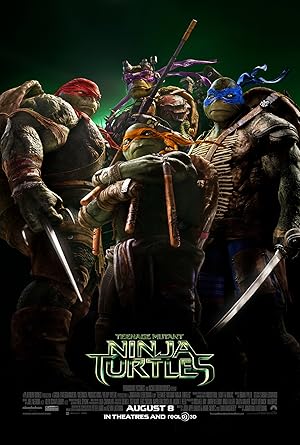
Teenage Mutant Ninja Turtles
Darkness has settled over New York City as Shredder and his evil Foot Clan have an iron grip on everything from the police to the politicians. The future is grim until four unlikely outcast brothers rise from the sewers and discover their destiny as Teenage Mutant Ninja Turtles. The Turtles must work with fearless reporter April O'Neil and her cameraman Vern Fenwick to save the city and unravel Shredder's diabolical plan.
Despite a significant budget of $125.0M, Teenage Mutant Ninja Turtles became a financial success, earning $485.0M worldwide—a 288% return.
1 win & 11 nominations


Plot Structure
Story beats plotted across runtime


Narrative Arc
Emotional journey through the story's key moments
Story Circle
Blueprint 15-beat structure
Arcplot Score Breakdown
Weighted: Precision (70%) + Arc (15%) + Theme (15%)
Teenage Mutant Ninja Turtles (2014) demonstrates strategically placed story structure, characteristic of Jonathan Liebesman's storytelling approach. This structural analysis examines how the film's 15-point plot structure maps to proven narrative frameworks across 1 hour and 41 minutes. With an Arcplot score of 7.3, the film balances conventional beats with creative variation.
Characters
Cast & narrative archetypes

Leonardo
Raphael
Donatello
Michelangelo
April O'Neil
Splinter
Shredder
Eric Sacks
Main Cast & Characters
Leonardo
Played by Johnny Knoxville
The disciplined leader of the Turtles who wields twin katanas and strives to prove himself worthy of leading his brothers.
Raphael
Played by Alan Ritchson
The hot-headed, aggressive Turtle who wields twin sai and struggles with authority while being fiercely protective of his family.
Donatello
Played by Jeremy Howard
The tech-savvy genius of the group who wields a bo staff and creates gadgets and solutions for the team.
Michelangelo
Played by Noel Fisher
The fun-loving, pizza-obsessed youngest Turtle who wields nunchucks and provides comic relief while dreaming of acceptance.
April O'Neil
Played by Megan Fox
An ambitious television reporter who discovers the Turtles and has a deeper connection to their origin than she realizes.
Splinter
Played by Tony Shalhoub
The mutated rat sensei who raised and trained the four Turtles in ninjutsu while keeping them hidden from the world.
Shredder
Played by Tohoru Masamune
The ruthless armored villain and leader of the Foot Clan who seeks to unleash a deadly toxin on New York City.
Eric Sacks
Played by William Fichtner
A wealthy scientist and April's former mentor who harbors dark secrets about his connection to the Turtles and Shredder.
Structural Analysis
The Status Quo at 1 minutes (1% through the runtime) establishes April O'Neil films a report on the Foot Clan terrorizing New York City. She's a struggling journalist desperate to be taken seriously, relegated to fluff pieces about trampolines while the city descends into chaos.. Of particular interest, this early placement immediately immerses viewers in the story world.
The inciting incident occurs at 13 minutes when April witnesses the Turtles fighting the Foot Clan on a dock. She gets her first glimpse of these mysterious vigilantes and captures them on camera—proof that heroes exist. Her investigation now has real stakes.. At 13% through the film, this Disruption is delayed, allowing extended setup of the story world. This beat shifts the emotional landscape, launching the protagonist into the central conflict.
The First Threshold at 25 minutes marks the transition into Act II, occurring at 25% of the runtime. This reveals the protagonist's commitment to The Turtles bring April to their lair to meet Splinter. April chooses to fully commit to helping them, crossing into their world. Both sides accept they need each other—April to be taken seriously, the Turtles to stop the Foot Clan., moving from reaction to action.
At 51 minutes, the Midpoint arrives at 50% of the runtime—precisely centered, creating perfect narrative symmetry. Of particular interest, this crucial beat The Turtles confront Eric Sacks and discover he's working with the Shredder. In a mountain chase, the Turtles are defeated by Shredder and captured. What seemed like a victory (finding the villain) becomes a devastating defeat. The stakes are raised—Shredder has their blood for his plan., fundamentally raising what's at risk. The emotional intensity shifts, dividing the narrative into clear before-and-after phases.
The Collapse moment at 76 minutes (75% through) represents the emotional nadir. Here, The toxin is released on New York City. The Turtles are weak from being drained. Splinter appears dead or dying. All hope seems lost—the villain has won, the city is doomed, and our heroes are broken. This is their darkest moment., demonstrates the protagonist at their lowest point. This beat's placement in the final quarter sets up the climactic reversal.
The Second Threshold at 81 minutes initiates the final act resolution at 80% of the runtime. The Turtles realize they must stop Sacks from distributing the "cure" and expose his plan. They choose to emerge from the shadows and face Shredder publicly on the rooftop. They're no longer hiding—they're embracing their role as heroes., demonstrating the transformation achieved throughout the journey.
Emotional Journey
Teenage Mutant Ninja Turtles's emotional architecture traces a deliberate progression across 15 carefully calibrated beats.
Narrative Framework
This structural analysis employs structural analysis methodology used to understand storytelling architecture. By mapping Teenage Mutant Ninja Turtles against these established plot points, we can identify how Jonathan Liebesman utilizes or subverts traditional narrative conventions. The plot point approach reveals not only adherence to structural principles but also creative choices that distinguish Teenage Mutant Ninja Turtles within the action genre.
Jonathan Liebesman's Structural Approach
Among the 4 Jonathan Liebesman films analyzed on Arcplot, the average structural score is 7.3, reflecting strong command of classical structure. Teenage Mutant Ninja Turtles represents one of the director's most structurally precise works. For comparative analysis, explore the complete Jonathan Liebesman filmography.
Comparative Analysis
Additional action films include The Bad Guys, Puss in Boots and Venom: The Last Dance. For more Jonathan Liebesman analyses, see Wrath of the Titans, Battle: Los Angeles and The Texas Chainsaw Massacre: The Beginning.
Plot Points by Act
Act I
SetupStatus Quo
April O'Neil films a report on the Foot Clan terrorizing New York City. She's a struggling journalist desperate to be taken seriously, relegated to fluff pieces about trampolines while the city descends into chaos.
Theme
April's boss tells her, "You're not a reporter, you're a celebrity." The theme of proving yourself and discovering your true identity is established—both for April and the Turtles who must emerge from the shadows.
Worldbuilding
New York is under siege by the Foot Clan. April investigates vigilantes fighting back. We learn about her father's scientific work and her connection to Eric Sacks. The city is in fear, police are helpless, and someone is fighting back in the shadows.
Disruption
April witnesses the Turtles fighting the Foot Clan on a dock. She gets her first glimpse of these mysterious vigilantes and captures them on camera—proof that heroes exist. Her investigation now has real stakes.
Resistance
April tries to convince others about what she saw but no one believes her. She pursues the story, leading to a rooftop encounter where she finally meets the Turtles face-to-face. She discovers they're the same turtles she rescued as a child from her father's lab.
Act II
ConfrontationFirst Threshold
The Turtles bring April to their lair to meet Splinter. April chooses to fully commit to helping them, crossing into their world. Both sides accept they need each other—April to be taken seriously, the Turtles to stop the Foot Clan.
Mirror World
April bonds with the Turtles, particularly forming a connection with them as their "rescuer." This relationship mirrors the theme—she helped them become who they are, and now they'll help her become who she's meant to be: a real hero, not just a reporter.
Premise
The fun of Turtles being Turtles—pizza, skateboarding, banter, and fighting together. April and the Turtles investigate Sacks and the Foot Clan. They discover the plan to release a toxin on the city. The team works together, showcasing each Turtle's personality.
Midpoint
The Turtles confront Eric Sacks and discover he's working with the Shredder. In a mountain chase, the Turtles are defeated by Shredder and captured. What seemed like a victory (finding the villain) becomes a devastating defeat. The stakes are raised—Shredder has their blood for his plan.
Opposition
The Turtles are held captive and drained of blood to create Sacks' mutagen cure. April and Vernon must rescue them. The bad guys are executing their plan—releasing the toxin on the city so Sacks can be the hero with the cure. Time is running out.
Collapse
The toxin is released on New York City. The Turtles are weak from being drained. Splinter appears dead or dying. All hope seems lost—the villain has won, the city is doomed, and our heroes are broken. This is their darkest moment.
Crisis
The Turtles are weak and defeated. April rallies them with the reminder of what they are—heroes who have always protected her and the city. They find new resolve despite their physical weakness. The brothers recommit to each other and their purpose.
Act III
ResolutionSecond Threshold
The Turtles realize they must stop Sacks from distributing the "cure" and expose his plan. They choose to emerge from the shadows and face Shredder publicly on the rooftop. They're no longer hiding—they're embracing their role as heroes.
Synthesis
The Turtles battle Shredder on the rooftop while April and Vernon work to stop the toxin distribution. Epic final fight where the brothers work together, using everything Splinter taught them. April destroys the mutagen, stopping Sacks' plan. The Turtles defeat Shredder.
Transformation
April is now a respected journalist with a real story. The Turtles watch over the city as accepted heroes. Mirroring the opening, April does another rooftop report—but now she's confident, legitimate, and connected to real heroes. Both she and the Turtles have emerged from the shadows.