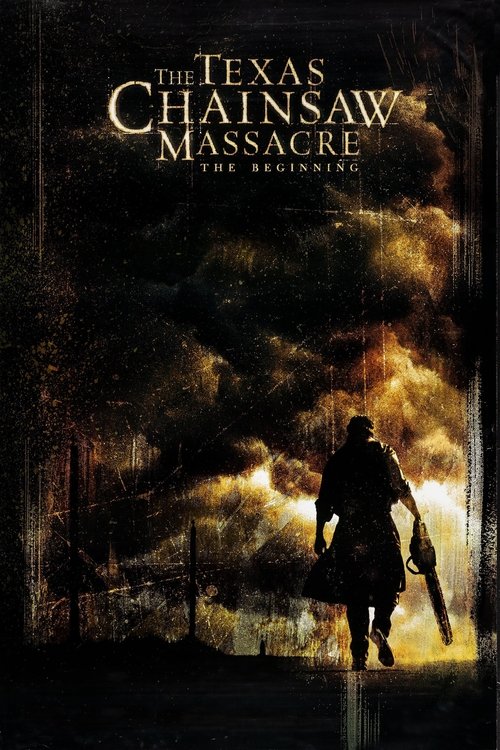
The Texas Chainsaw Massacre: The Beginning
Chrissie and her friends set out on a road trip for a final fling before one is shipped off to Vietnam. Along the way, bikers harass the foursome and cause an accident that throws Chrissie from the vehicle. The lawman who arrives on the scene kills one of the bikers and brings Chrissie's friends to the Hewitt homestead, where young Leatherface is learning the tools of terror.
Despite a moderate budget of $16.0M, The Texas Chainsaw Massacre: The Beginning became a box office success, earning $50.5M worldwide—a 216% return.


Plot Structure
Story beats plotted across runtime


Narrative Arc
Emotional journey through the story's key moments
Story Circle
Blueprint 15-beat structure
Arcplot Score Breakdown
Weighted: Precision (70%) + Arc (15%) + Theme (15%)
The Texas Chainsaw Massacre: The Beginning (2006) demonstrates deliberately positioned narrative design, characteristic of Jonathan Liebesman's storytelling approach. This structural analysis examines how the film's 15-point plot structure maps to proven narrative frameworks across 1 hour and 31 minutes. With an Arcplot score of 7.5, the film showcases strong structural fundamentals.
Characters
Cast & narrative archetypes

Erin Hardesty
Thomas Hewitt (Leatherface)
Sheriff Hoyt (Charlie Hewitt)
Kemper
Morgan
Bailey
Chrissie
Luda Mae Hewitt
Main Cast & Characters
Erin Hardesty
Played by Jordana Brewster
A young woman traveling with her boyfriend and friends who becomes the sole survivor fighting against the Hewitt family.
Thomas Hewitt (Leatherface)
Played by Andrew Bryniarski
A mentally disabled, disfigured man who becomes the family's chainsaw-wielding killer after being fired from the slaughterhouse.
Sheriff Hoyt (Charlie Hewitt)
Played by R. Lee Ermey
A sadistic impostor sheriff who terrorizes victims and leads the Hewitt family's cannibalistic activities.
Kemper
Played by Eric Balfour
Erin's boyfriend who is one of the first to be captured and killed by the Hewitt family.
Morgan
Played by Matt Bomer
A young man drafted to Vietnam who becomes increasingly paranoid and is eventually captured by the Hewitts.
Bailey
Played by Diora Baird
Morgan's girlfriend who is killed by Sheriff Hoyt after witnessing his brutality.
Chrissie
Played by Emmanuelle Vaugier
A young biker woman who escapes a crash and attempts to rescue her boyfriend from the Hewitts but is ultimately killed.
Luda Mae Hewitt
Played by Lew Temple
The matriarch of the Hewitt family who enables and protects her family's murderous activities.
Structural Analysis
The Status Quo at 1 minutes (1% through the runtime) establishes August 1939: Thomas Hewitt is born with a skin disease in a slaughterhouse, establishing the origin of violence and brutality in a decaying Texas meat-packing town.. Notably, this early placement immediately immerses viewers in the story world.
The inciting incident occurs at 10 minutes when The group encounters a severely traumatized young woman on the road who pulls a gun and kills herself in their van, splattering blood everywhere and forcing them to seek help.. At 11% through the film, this Disruption aligns precisely with traditional story structure. This beat shifts the emotional landscape, launching the protagonist into the central conflict.
The First Threshold at 22 minutes marks the transition into Act II, occurring at 24% of the runtime. This shows the protagonist's commitment to The group arrives at the Hewitt house seeking the sheriff. By entering the property and engaging with the family, they cross into the world of no return - the killing ground., moving from reaction to action.
At 46 minutes, the Midpoint arrives at 50% of the runtime—precisely centered, creating perfect narrative symmetry. Significantly, this crucial beat Eric is captured and chained in the basement. The stakes are raised as all four victims are now in the Hewitt family's control, shifting from chase to captivity. The false hope of escape is crushed., fundamentally raising what's at risk. The emotional intensity shifts, dividing the narrative into clear before-and-after phases.
The Collapse moment at 67 minutes (74% through) represents the emotional nadir. Here, Bailey is killed on Leatherface's table, and Eric is butchered and has his face cut off to make Leatherface's first true mask. The whiff of death is literal - the protagonist's companions are dead, hope is extinguished., demonstrates the protagonist at their lowest point. This beat's placement in the final quarter sets up the climactic reversal.
The Second Threshold at 72 minutes initiates the final act resolution at 80% of the runtime. Chrissie realizes she must fight back to survive. She finds a weapon and chooses active resistance over hiding, entering the final confrontation with survival instinct overriding fear., demonstrating the transformation achieved throughout the journey.
Emotional Journey
The Texas Chainsaw Massacre: The Beginning's emotional architecture traces a deliberate progression across 15 carefully calibrated beats.
Narrative Framework
This structural analysis employs a 15-point narrative structure framework that maps key story moments. By mapping The Texas Chainsaw Massacre: The Beginning against these established plot points, we can identify how Jonathan Liebesman utilizes or subverts traditional narrative conventions. The plot point approach reveals not only adherence to structural principles but also creative choices that distinguish The Texas Chainsaw Massacre: The Beginning within the horror genre.
Jonathan Liebesman's Structural Approach
Among the 4 Jonathan Liebesman films analyzed on Arcplot, the average structural score is 7.3, reflecting strong command of classical structure. The Texas Chainsaw Massacre: The Beginning represents one of the director's most structurally precise works. For comparative analysis, explore the complete Jonathan Liebesman filmography.
Comparative Analysis
Additional horror films include Thinner, A Nightmare on Elm Street and Mary Reilly. For more Jonathan Liebesman analyses, see Wrath of the Titans, Battle: Los Angeles and Teenage Mutant Ninja Turtles.
Plot Points by Act
Act I
SetupStatus Quo
August 1939: Thomas Hewitt is born with a skin disease in a slaughterhouse, establishing the origin of violence and brutality in a decaying Texas meat-packing town.
Theme
The slaughterhouse foreman tells workers the plant is closing, stating "Nothing lasts forever" - the theme of inevitable decay, the end of an era, and what people become when their world collapses.
Worldbuilding
July 1969: Four young people - brothers Eric and Dean, and their girlfriends Bailey and Chrissie - are introduced driving through Texas. Dean has been drafted to Vietnam and they are heading to enlist together. The group's dynamics, Dean's reluctance about the war, and the deteriorating Texas landscape are established.
Disruption
The group encounters a severely traumatized young woman on the road who pulls a gun and kills herself in their van, splattering blood everywhere and forcing them to seek help.
Resistance
The group debates what to do with the body, decides to seek authorities in the nearby town of Travis County. They stop at a roadside store, encounter the sinister locals, and are directed to find the sheriff. Tension builds as they realize something is wrong with this town.
Act II
ConfrontationFirst Threshold
The group arrives at the Hewitt house seeking the sheriff. By entering the property and engaging with the family, they cross into the world of no return - the killing ground.
Mirror World
Sheriff Hoyt (Uncle Charlie) reveals his true brutal nature, representing the twisted mirror of authority and family values - what happens when societal structures collapse into savagery.
Premise
The promised premise of survival horror unfolds: the group is separated, captured, and subjected to the Hewitt family's sadistic tortures. Each character faces increasingly horrific situations as Leatherface and his family hunt and terrorize them.
Midpoint
Eric is captured and chained in the basement. The stakes are raised as all four victims are now in the Hewitt family's control, shifting from chase to captivity. The false hope of escape is crushed.
Opposition
The Hewitt family's violence intensifies. Torture scenes escalate, characters are mutilated and killed. Chrissie remains hidden but witnesses the horror. The family's power seems absolute and escape impossible.
Collapse
Bailey is killed on Leatherface's table, and Eric is butchered and has his face cut off to make Leatherface's first true mask. The whiff of death is literal - the protagonist's companions are dead, hope is extinguished.
Crisis
Chrissie, the last survivor, processes the complete loss of her friends and boyfriend. She faces the dark reality that she is alone against an entire family of killers with no help coming.
Act III
ResolutionSecond Threshold
Chrissie realizes she must fight back to survive. She finds a weapon and chooses active resistance over hiding, entering the final confrontation with survival instinct overriding fear.
Synthesis
Chrissie fights through the house, confronts family members, and attempts escape. A brutal final chase ensues with Leatherface. She uses everything she's learned to evade and fight, but is ultimately overpowered and captured.
Transformation
Chrissie is dragged away screaming into the darkness of the slaughterhouse. The final image mirrors the opening - a cycle of violence continues, transformation is corruption, innocence consumed by decay. The family wins.