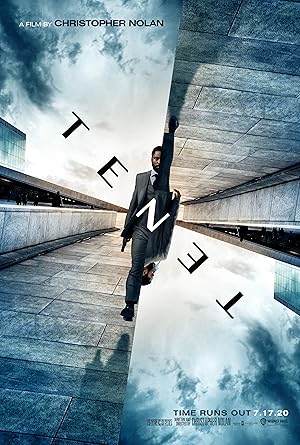
Tenet
In a twilight world of international espionage, an unnamed CIA operative, known as The Protagonist, is recruited by a mysterious organization called Tenet to participate in a global assignment that unfolds beyond real time. The mission: prevent Andrei Sator, a renegade Russian oligarch with precognition abilities, from starting World War III. The Protagonist will soon master the art of "time inversion" as a way of countering the threat that is to come.
Working with a enormous budget of $205.0M, the film achieved a modest success with $365.3M in global revenue (+78% profit margin).
1 Oscar. 49 wins & 134 nominations
Brian Tallerico
"Nolan has created a film that challenges our perceptions of how we experience cinema, even if it sometimes feels more like an intellectual exercise than an emotional journey."Read Full Review


Plot Structure
Story beats plotted across runtime


Narrative Arc
Emotional journey through the story's key moments
Story Circle
Blueprint 15-beat structure
Arcplot Score Breakdown
Weighted: Precision (70%) + Arc (15%) + Theme (15%)
Tenet (2020) exhibits deliberately positioned dramatic framework, characteristic of Christopher Nolan's storytelling approach. This structural analysis examines how the film's 15-point plot structure maps to proven narrative frameworks across 2 hours and 30 minutes. With an Arcplot score of 7.5, the film showcases strong structural fundamentals.
Characters
Cast & narrative archetypes

The Protagonist
Neil
Andrei Sator
Kat Barton
Barbara
Priya Singh
Sir Michael Crosby
Ives
Main Cast & Characters
The Protagonist
Played by John David Washington
A CIA operative recruited into a secret organization to prevent World War III through time inversion.
Neil
Played by Robert Pattinson
A mysterious British intelligence officer who becomes The Protagonist's partner and guide through temporal warfare.
Andrei Sator
Played by Kenneth Branagh
A Russian oligarch arms dealer communicating with the future to assemble an Algorithm that could destroy the past.
Kat Barton
Played by Elizabeth Debicki
Sator's estranged wife, an art appraiser trapped in an abusive marriage who becomes key to the mission.
Barbara
Played by Clémence Poésy
A scientist who explains the principles of time inversion and equips Tenet operatives with inverted weapons.
Priya Singh
Played by Dimple Kapadia
An Indian arms dealer and member of Tenet who provides intelligence and coordinates operations.
Sir Michael Crosby
Played by Michael Caine
A British intelligence officer who recruits The Protagonist and provides access to Sator through Kat.
Ives
Played by Aaron Taylor-Johnson
The commanding officer of the Tenet tactical team who leads the final temporal pincer movement.
Structural Analysis
The Status Quo at 1 minutes (1% through the runtime) establishes The Protagonist operates undercover at the Kyiv Opera House siege, establishing him as a skilled CIA operative in a world of high-stakes espionage where time moves only forward.. The analysis reveals that this early placement immediately immerses viewers in the story world.
The inciting incident occurs at 16 minutes when The Protagonist is introduced to inverted bullets at the research facility. A scientist demonstrates entropy reversal, shattering his understanding of physics and revealing a threat from the future.. At 11% through the film, this Disruption aligns precisely with traditional story structure. This beat shifts the emotional landscape, launching the protagonist into the central conflict.
The First Threshold at 34 minutes marks the transition into Act II, occurring at 23% of the runtime. This shows the protagonist's commitment to The Protagonist makes the active choice to pursue Sator through Kat, committing to the mission by planning the elaborate art heist at the Oslo Freeport to gain access to the Goya forgery., moving from reaction to action.
At 68 minutes, the Midpoint arrives at 45% of the runtime—arriving early, accelerating into Act IIb complications. The analysis reveals that this crucial beat False defeat: The Tallinn heist goes wrong. The Protagonist is captured by Sator, who shoots Kat with an inverted bullet. The stakes become personal and the Algorithm pieces are revealed to be the true threat., fundamentally raising what's at risk. The emotional intensity shifts, dividing the narrative into clear before-and-after phases.
The Collapse moment at 101 minutes (68% through) represents the emotional nadir. Here, Whiff of death: The Protagonist learns Sator is dying of cancer and has nothing to lose. Sator plans to die in Vietnam at his happiest moment, triggering the Algorithm and taking the entire world with him., demonstrates the protagonist at their lowest point. This beat's placement in the final quarter sets up the climactic reversal.
The Second Threshold at 108 minutes initiates the final act resolution at 72% of the runtime. The Protagonist synthesizes his understanding: they will execute a temporal pincer movement at Stalsk-12 while Kat keeps Sator alive in Vietnam. He embraces operating on faith rather than knowledge., demonstrating the transformation achieved throughout the journey.
Emotional Journey
Tenet's emotional architecture traces a deliberate progression across 15 carefully calibrated beats.
Narrative Framework
This structural analysis employs proven narrative structure principles that track dramatic progression. By mapping Tenet against these established plot points, we can identify how Christopher Nolan utilizes or subverts traditional narrative conventions. The plot point approach reveals not only adherence to structural principles but also creative choices that distinguish Tenet within the action genre.
Christopher Nolan's Structural Approach
Among the 11 Christopher Nolan films analyzed on Arcplot, the average structural score is 7.3, reflecting strong command of classical structure. Tenet represents one of the director's most structurally precise works. For comparative analysis, explore the complete Christopher Nolan filmography.
Comparative Analysis
Additional action films include The Bad Guys, Puss in Boots and Venom: The Last Dance. For more Christopher Nolan analyses, see Oppenheimer, Interstellar and Dunkirk.
Plot Points by Act
Act I
SetupStatus Quo
The Protagonist operates undercover at the Kyiv Opera House siege, establishing him as a skilled CIA operative in a world of high-stakes espionage where time moves only forward.
Theme
During the opera siege aftermath, the concept of sacrifice and ignorance as ammunition emerges: "Not knowing is exactly what kept you alive." The theme of faith in an unseen future is planted.
Worldbuilding
The Protagonist's world as a CIA operative is established. He survives torture, takes the cyanide pill, and awakens to learn he's been recruited by a secret organization fighting a new kind of war.
Disruption
The Protagonist is introduced to inverted bullets at the research facility. A scientist demonstrates entropy reversal, shattering his understanding of physics and revealing a threat from the future.
Resistance
The Protagonist traces the inverted ammunition to arms dealer Priya Singh in Mumbai, who becomes his guide. He learns of Andrei Sator and that Kat is the key to reaching him.
Act II
ConfrontationFirst Threshold
The Protagonist makes the active choice to pursue Sator through Kat, committing to the mission by planning the elaborate art heist at the Oslo Freeport to gain access to the Goya forgery.
Mirror World
Neil is fully revealed as the Protagonist's partner and thematic mirror. Their relationship embodies the film's core paradox of trust and fate—Neil already knows their ending while the Protagonist is just beginning.
Premise
The promise of the premise unfolds: the Oslo Freeport heist with the crashing 747, the Protagonist ingratiating himself with Sator through Kat, and the Tallinn highway chase showcasing inverted action.
Midpoint
False defeat: The Tallinn heist goes wrong. The Protagonist is captured by Sator, who shoots Kat with an inverted bullet. The stakes become personal and the Algorithm pieces are revealed to be the true threat.
Opposition
Sator's full plan emerges—he intends to trigger the Algorithm and end all life. The Protagonist inverts himself to save Kat and experiences time backwards, fighting his past self at the Freeport and Oslo.
Collapse
Whiff of death: The Protagonist learns Sator is dying of cancer and has nothing to lose. Sator plans to die in Vietnam at his happiest moment, triggering the Algorithm and taking the entire world with him.
Crisis
Dark night of the soul as the team grapples with the impossibility of their mission. How do you stop a dead man's switch held by someone who wants to die? The temporal logistics seem insurmountable.
Act III
ResolutionSecond Threshold
The Protagonist synthesizes his understanding: they will execute a temporal pincer movement at Stalsk-12 while Kat keeps Sator alive in Vietnam. He embraces operating on faith rather than knowledge.
Synthesis
The climactic temporal pincer battle at Stalsk-12 unfolds with red and blue teams moving through time in opposite directions. Kat kills Sator, Neil sacrifices himself, and the Algorithm is secured.
Transformation
The Protagonist realizes he is the founder of Tenet—he will recruit Neil in the past, and their friendship exists across inverted time. He embraces his role as the architect of his own destiny.