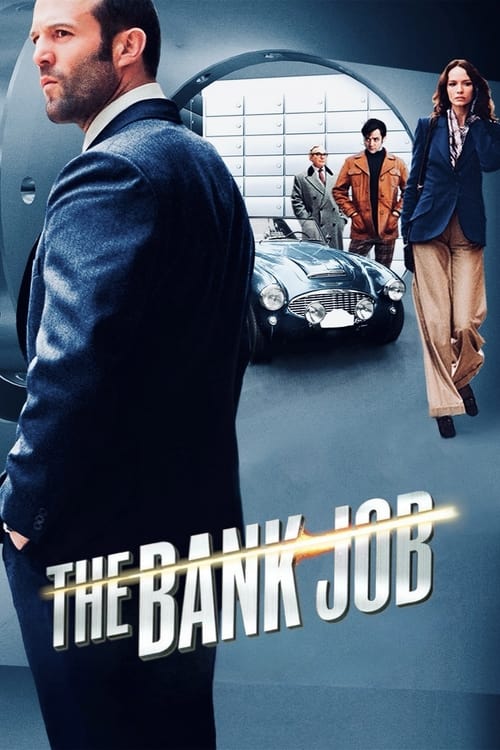
The Bank Job
Terry is a small-time car dealer trying to leave his shady past behind and start a family. Martine is a beautiful model from Terry's old neighbourhood who knows that Terry is no angel. When Martine proposes a foolproof plan to rob a bank, Terry recognises the danger but realises this may be the opportunity of a lifetime.
Despite a respectable budget of $20.0M, The Bank Job became a box office success, earning $64.8M worldwide—a 224% return.


Plot Structure
Story beats plotted across runtime


Narrative Arc
Emotional journey through the story's key moments
Story Circle
Blueprint 15-beat structure
Arcplot Score Breakdown
Weighted: Precision (70%) + Arc (15%) + Theme (15%)
The Bank Job (2008) exhibits carefully calibrated narrative architecture, characteristic of Roger Donaldson's storytelling approach. This structural analysis examines how the film's 15-point plot structure maps to proven narrative frameworks across 1 hour and 52 minutes. With an Arcplot score of 6.5, the film balances conventional beats with creative variation.
Characters
Cast & narrative archetypes

Terry Leather
Martine Love
Eddie Burton
Dave Shilling
Kevin Swain
Bambas
Michael X
Lew Vogel
Tim Everett
Main Cast & Characters
Terry Leather
Played by Jason Statham
A small-time car dealer who leads the Baker Street bank robbery, drawn into a dangerous conspiracy involving government secrets.
Martine Love
Played by Saffron Burrows
A former model and Terry's ex-girlfriend who recruits him for the heist, secretly working for MI5 to retrieve compromising photos.
Eddie Burton
Played by Michael Jibson
Terry's loyal friend and crew member, a skilled safecracker who helps execute the robbery.
Dave Shilling
Played by Daniel Mays
A member of Terry's crew, practical and cautious about the risks involved in the heist.
Kevin Swain
Played by Stephen Campbell Moore
One of Terry's crew members who participates in the bank robbery and tunneling operation.
Bambas
Played by Alki David
A gregarious crew member with connections to the Greek community, helps with the heist logistics.
Michael X
Played by Peter De Jersey
A Black Power activist and criminal whose compromising photos of royalty are stored in the bank vault.
Lew Vogel
Played by David Suchet
A ruthless pornographer and criminal whose safe deposit box is robbed, triggering violent retaliation.
Tim Everett
Played by Richard Lintern
An MI5 officer who manipulates Martine and orchestrates the heist to retrieve sensitive photographs.
Structural Analysis
The Status Quo at 1 minutes (1% through the runtime) establishes Terry Leather runs a struggling used car dealership in East London, living paycheck to paycheck with his wife and kids, hounded by loan sharks - a man trapped in mediocrity seeking a way out.. Structural examination shows that this early placement immediately immerses viewers in the story world.
The inciting incident occurs at 13 minutes when Martine approaches Terry with a can't-miss bank robbery opportunity - the alarm system will be down for maintenance. She offers him a way out of his dead-end life, reigniting old feelings and dangerous ambitions.. At 12% through the film, this Disruption aligns precisely with traditional story structure. This beat shifts the emotional landscape, launching the protagonist into the central conflict.
The First Threshold at 28 minutes marks the transition into Act II, occurring at 25% of the runtime. This illustrates the protagonist's commitment to Terry commits his crew to the heist and they begin digging the tunnel from the leather goods shop to the bank vault. There's no turning back - they've invested everything and crossed into criminal enterprise., moving from reaction to action.
At 56 minutes, the Midpoint arrives at 50% of the runtime—precisely centered, creating perfect narrative symmetry. Structural examination shows that this crucial beat The crew successfully escapes with millions in cash and valuables - a false victory. They celebrate, unaware they've stolen from porn king Lew Vogel, corrupt police, and possess leverage against the Crown itself., fundamentally raising what's at risk. The emotional intensity shifts, dividing the narrative into clear before-and-after phases.
The Collapse moment at 84 minutes (75% through) represents the emotional nadir. Here, Crew member Eddie is captured and tortured to death by Vogel's men. The threat becomes horrifyingly real - this isn't just about money anymore, it's survival. Terry realizes his friends are being hunted and killed., illustrates the protagonist at their lowest point. This beat's placement in the final quarter sets up the climactic reversal.
The Second Threshold at 90 minutes initiates the final act resolution at 80% of the runtime. Terry realizes the compromising photos give him leverage - he can negotiate with MI5 for protection by threatening to expose the royal scandal. He transforms from hunted thief to strategic player with government-level bargaining chips., demonstrating the transformation achieved throughout the journey.
Emotional Journey
The Bank Job's emotional architecture traces a deliberate progression across 15 carefully calibrated beats.
Narrative Framework
This structural analysis employs a 15-point narrative structure framework that maps key story moments. By mapping The Bank Job against these established plot points, we can identify how Roger Donaldson utilizes or subverts traditional narrative conventions. The plot point approach reveals not only adherence to structural principles but also creative choices that distinguish The Bank Job within the thriller genre.
Roger Donaldson's Structural Approach
Among the 13 Roger Donaldson films analyzed on Arcplot, the average structural score is 7.2, reflecting strong command of classical structure. The Bank Job takes a more unconventional approach compared to the director's typical style. For comparative analysis, explore the complete Roger Donaldson filmography.
Comparative Analysis
Additional thriller films include The Warriors, Thunderball and Rustom. For more Roger Donaldson analyses, see Species, Dante's Peak and Seeking Justice.
Plot Points by Act
Act I
SetupStatus Quo
Terry Leather runs a struggling used car dealership in East London, living paycheck to paycheck with his wife and kids, hounded by loan sharks - a man trapped in mediocrity seeking a way out.
Theme
Martine tells Terry that everyone has secrets worth protecting - foreshadowing the film's exploration of how hidden information becomes currency and power, and how the establishment protects its own.
Worldbuilding
The 1971 London underworld is established: Michael X's black militant movement, compromising photos of Princess Margaret, corrupt police on the take, MI5's covert operations, and Terry's working-class crew of petty criminals.
Disruption
Martine approaches Terry with a can't-miss bank robbery opportunity - the alarm system will be down for maintenance. She offers him a way out of his dead-end life, reigniting old feelings and dangerous ambitions.
Resistance
Terry debates the risk with his wife and assembles his crew - Kevin, Dave, Bambas, and Guy. They scout the location, lease the shop for tunneling, and plan their approach while Terry weighs the danger against the potential reward.
Act II
ConfrontationFirst Threshold
Terry commits his crew to the heist and they begin digging the tunnel from the leather goods shop to the bank vault. There's no turning back - they've invested everything and crossed into criminal enterprise.
Mirror World
The parallel world of secrets is revealed: MI5 handler Tim Everett manages Martine, using the robbery to retrieve compromising royal photographs without official involvement - showing Terry is a pawn in a larger game he doesn't understand.
Premise
The heist unfolds with classic thriller tension: the crew tunnels for days, breaks through to the vault, and systematically empties safety deposit boxes while a ham radio operator accidentally intercepts their walkie-talkie communications.
Midpoint
The crew successfully escapes with millions in cash and valuables - a false victory. They celebrate, unaware they've stolen from porn king Lew Vogel, corrupt police, and possess leverage against the Crown itself.
Opposition
Multiple forces close in: Lew Vogel's thugs hunt for their stolen blackmail photos, corrupt Detective Sayers desperately seeks his ledger of bribes, MI5 scrambles to contain the situation, and the crew realizes they've become targets from all sides.
Collapse
Crew member Eddie is captured and tortured to death by Vogel's men. The threat becomes horrifyingly real - this isn't just about money anymore, it's survival. Terry realizes his friends are being hunted and killed.
Crisis
Terry grapples with guilt over Eddie's death and the danger to his family and remaining crew. The walls close in as both criminals and authorities tighten the noose, leaving seemingly no way out.
Act III
ResolutionSecond Threshold
Terry realizes the compromising photos give him leverage - he can negotiate with MI5 for protection by threatening to expose the royal scandal. He transforms from hunted thief to strategic player with government-level bargaining chips.
Synthesis
Terry executes his counterstrike: he negotiates immunity with MI5, exposes the corrupt police, and orchestrates Vogel's downfall. Using the very secrets that made him a target, he turns the tables on every threat.
Transformation
Terry returns to his car dealership and family, but transformed - no longer a desperate small-timer but a survivor who beat the system. He keeps some money, his freedom, and most importantly, the knowledge that secrets are the real currency of power.