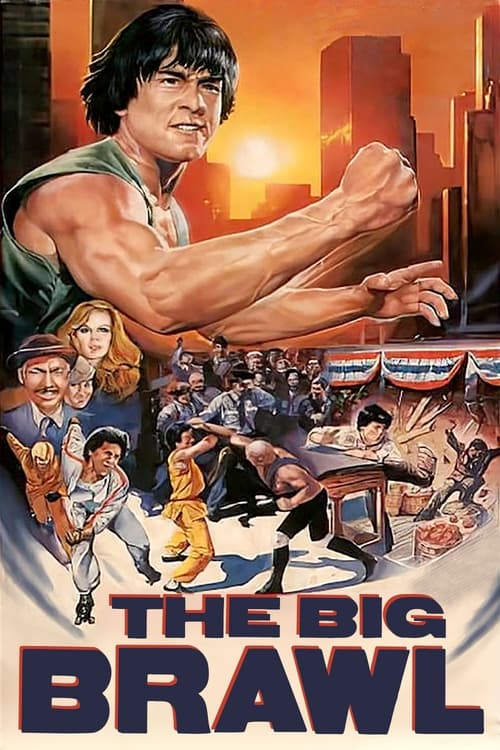
The Big Brawl
A young Asian American martial artist is forced to participate in a brutal formal street-fight competition.
Working with a small-scale budget of $6.0M, the film achieved a steady performer with $8.5M in global revenue (+42% profit margin).


Plot Structure
Story beats plotted across runtime


Narrative Arc
Emotional journey through the story's key moments
Story Circle
Blueprint 15-beat structure
Arcplot Score Breakdown
Weighted: Precision (70%) + Arc (15%) + Theme (15%)
The Big Brawl (1980) showcases meticulously timed narrative architecture, characteristic of Robert Clouse's storytelling approach. This structural analysis examines how the film's 15-point plot structure maps to proven narrative frameworks across 1 hour and 35 minutes. With an Arcplot score of 7.3, the film balances conventional beats with creative variation.
Characters
Cast & narrative archetypes

Jerry Kwan
Nancy
Dominici
Uncle Wong
Herbert
Freddie
Main Cast & Characters
Jerry Kwan
Played by Jackie Chan
A young martial artist in 1930s Chicago who enters a fighting tournament to save his family's restaurant from mobsters
Nancy
Played by Kristine DeBell
Jerry's love interest, a spirited dancer caught up in the dangerous world of organized crime
Dominici
Played by José Ferrer
A ruthless Chicago mob boss who runs illegal fighting tournaments and schemes to control the city
Uncle Wong
Played by Mako
Jerry's wise martial arts teacher who guides him through training and life challenges
Herbert
Played by Ron Max
Dominici's bumbling son who becomes involved in his father's criminal operations
Freddie
Played by David Sheiner
Jerry's friend and ally who helps him navigate the dangers of Depression-era Chicago
Structural Analysis
The Status Quo at 1 minutes (1% through the runtime) establishes Jerry Kwan works peacefully in his family's Chicago restaurant, practicing martial arts in 1930s Chinatown. He's devoted to tradition and avoiding trouble, honoring his father's wish that he use kung fu only for self-defense.. Structural examination shows that this early placement immediately immerses viewers in the story world.
The inciting incident occurs at 11 minutes when Mobster Dominici's goons harass the Kwan family restaurant demanding protection money. When they threaten Jerry's family and Mae, Jerry is forced to defend them, violating his father's wish to stay out of trouble and attracting dangerous attention.. At 12% through the film, this Disruption aligns precisely with traditional story structure. This beat shifts the emotional landscape, launching the protagonist into the central conflict.
The First Threshold at 23 minutes marks the transition into Act II, occurring at 24% of the runtime. This indicates the protagonist's commitment to Jerry makes the active choice to enter the Battle Creek Brawl tournament in Texas, not for money but to protect his family from the mob. He leaves Chicago and his ordinary world behind, committing to the competition., moving from reaction to action.
At 46 minutes, the Midpoint arrives at 49% of the runtime—precisely centered, creating perfect narrative symmetry. Structural examination shows that this crucial beat Jerry wins a major fight and appears on track to win the tournament, earning respect and prize money. False victory: he seems unstoppable, but the mob and their champion fighter are revealed to be manipulating the tournament. Stakes raise as the true conspiracy emerges., fundamentally raising what's at risk. The emotional intensity shifts, dividing the narrative into clear before-and-after phases.
The Collapse moment at 69 minutes (73% through) represents the emotional nadir. Here, Jerry receives word that his family has been seriously threatened or harmed by the mob in Chicago. His brother or father is in danger. All seems lost—winning the tournament appears meaningless if his family is destroyed. Whiff of death: the threat to his loved ones., demonstrates the protagonist at their lowest point. This beat's placement in the final quarter sets up the climactic reversal.
The Second Threshold at 75 minutes initiates the final act resolution at 79% of the runtime. Jerry synthesizes his father's wisdom with his own experience: he will fight not for money or glory, but for family and honor. He discovers new resolve and information about the mob's weak point. He commits to the final confrontation combining his kung fu with his newfound determination., demonstrating the transformation achieved throughout the journey.
Emotional Journey
The Big Brawl's emotional architecture traces a deliberate progression across 15 carefully calibrated beats.
Narrative Framework
This structural analysis employs structural analysis methodology used to understand storytelling architecture. By mapping The Big Brawl against these established plot points, we can identify how Robert Clouse utilizes or subverts traditional narrative conventions. The plot point approach reveals not only adherence to structural principles but also creative choices that distinguish The Big Brawl within the action genre.
Robert Clouse's Structural Approach
Among the 3 Robert Clouse films analyzed on Arcplot, the average structural score is 7.3, reflecting strong command of classical structure. The Big Brawl takes a more unconventional approach compared to the director's typical style. For comparative analysis, explore the complete Robert Clouse filmography.
Comparative Analysis
Additional action films include The Bad Guys, Puss in Boots and Venom: The Last Dance. For more Robert Clouse analyses, see Game of Death, Enter the Dragon.
Plot Points by Act
Act I
SetupStatus Quo
Jerry Kwan works peacefully in his family's Chicago restaurant, practicing martial arts in 1930s Chinatown. He's devoted to tradition and avoiding trouble, honoring his father's wish that he use kung fu only for self-defense.
Theme
Jerry's father tells him: "A man who fights for honor is stronger than one who fights for money." This establishes the central thematic conflict between integrity and corruption.
Worldbuilding
Introduction to 1930s Chicago, the Kwan family restaurant, Jerry's martial arts skills, his relationship with Mae, the local mob presence, and the cultural tensions in Chinatown. Jerry is established as a skilled but reluctant fighter bound by his father's principles.
Disruption
Mobster Dominici's goons harass the Kwan family restaurant demanding protection money. When they threaten Jerry's family and Mae, Jerry is forced to defend them, violating his father's wish to stay out of trouble and attracting dangerous attention.
Resistance
The family debates whether Jerry should enter the underground fight tournament in Texas. Jerry resists, wanting to honor his father's teachings. Mae encourages him. The mob pressure intensifies. His brother is threatened, forcing Jerry to reconsider.
Act II
ConfrontationFirst Threshold
Jerry makes the active choice to enter the Battle Creek Brawl tournament in Texas, not for money but to protect his family from the mob. He leaves Chicago and his ordinary world behind, committing to the competition.
Mirror World
Jerry meets and bonds with other fighters at the tournament, including his romantic interest and allies who teach him about fighting with heart versus fighting with hate. This subplot carries the theme of honor versus corruption.
Premise
The "fun and games" of the tournament. Jerry fights through preliminary rounds using his kung fu skills against Western brawlers. Comic set pieces showcase his unique fighting style. He advances through matches while navigating mob interference and growing closer to his love interest.
Midpoint
Jerry wins a major fight and appears on track to win the tournament, earning respect and prize money. False victory: he seems unstoppable, but the mob and their champion fighter are revealed to be manipulating the tournament. Stakes raise as the true conspiracy emerges.
Opposition
The mob tightens their grip, threatening Jerry's family back in Chicago. The fights become more brutal and dangerous. Jerry faces increasingly dirty tactics and rigged matches. His principles are tested as opponents use underhanded methods.
Collapse
Jerry receives word that his family has been seriously threatened or harmed by the mob in Chicago. His brother or father is in danger. All seems lost—winning the tournament appears meaningless if his family is destroyed. Whiff of death: the threat to his loved ones.
Crisis
Jerry faces his dark night, questioning whether he should withdraw, whether honor matters if everyone he loves suffers. He processes his father's teachings and realizes that true honor means protecting those you love, even if it requires fighting.
Act III
ResolutionSecond Threshold
Jerry synthesizes his father's wisdom with his own experience: he will fight not for money or glory, but for family and honor. He discovers new resolve and information about the mob's weak point. He commits to the final confrontation combining his kung fu with his newfound determination.
Synthesis
The finale sequence. Jerry faces the mob's champion in the climactic brawl, using everything he's learned. Extended fight choreography showcases his growth. He defeats the corrupt fighter, exposes the mob's manipulation, and saves his family. Justice prevails through honor.
Transformation
Jerry returns to the family restaurant in Chicago, but he's transformed. He now understands that his father's teaching about honor wasn't about avoiding conflict, but about fighting for the right reasons. He embraces both his heritage and his strength, having proven himself.