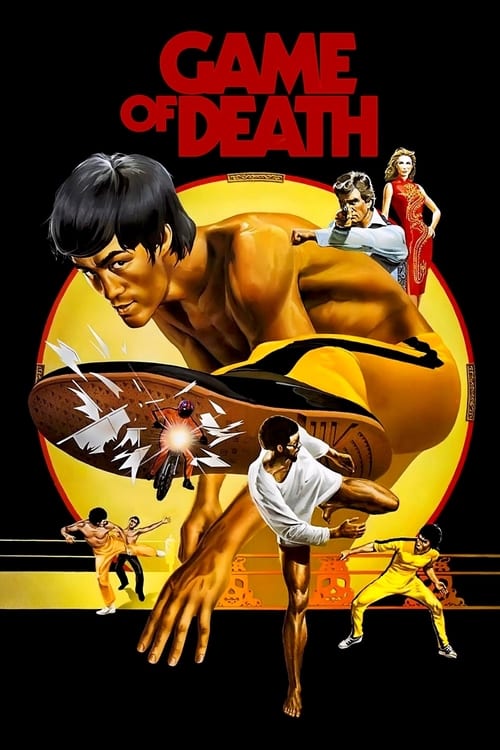
Game of Death
A martial arts movie star must fake his death to find the people who are trying to kill him.
Despite its minimal budget of $850K, Game of Death became a commercial juggernaut, earning $50.0M worldwide—a remarkable 5782% return. The film's fresh perspective found its audience, demonstrating that strong storytelling can transcend budget limitations.


Plot Structure
Story beats plotted across runtime


Narrative Arc
Emotional journey through the story's key moments
Story Circle
Blueprint 15-beat structure
Arcplot Score Breakdown
Weighted: Precision (70%) + Arc (15%) + Theme (15%)
Game of Death (1978) showcases meticulously timed narrative architecture, characteristic of Robert Clouse's storytelling approach. This structural analysis examines how the film's 15-point plot structure maps to proven narrative frameworks across 1 hour and 41 minutes. With an Arcplot score of 7.4, the film balances conventional beats with creative variation.
Characters
Cast & narrative archetypes

Billy Lo
Ann Morris
Dr. Land
Jim Marshall
Steiner
Stick
Pasqual
Hakim
Main Cast & Characters
Billy Lo
Played by Bruce Lee
A martial arts film star who fakes his death to protect himself and his loved ones from the syndicate. Must fight his way to the top of a pagoda to confront the crime boss.
Ann Morris
Played by Colleen Camp
Billy's girlfriend and singing partner, caught in the crossfire of the syndicate's threats. Represents what Billy is fighting to protect.
Dr. Land
Played by Dean Jagger
The crime syndicate boss who orchestrates the attempt on Billy's life. Ruthless businessman who uses violence to control the entertainment industry.
Jim Marshall
Played by Gig Young
Billy's friend and fellow martial artist who helps him navigate the syndicate threat. Loyal ally in the fight against corruption.
Steiner
Played by Hugh O'Brian
Dr. Land's chief enforcer and assassin. Cold and calculating, he leads the attempt on Billy's life.
Stick
Played by Dan Inosanto
A towering guardian on the first level of the pagoda, fighting with escrima sticks. Tests Billy's skill and adaptability.
Pasqual
Played by Ji Han-Jae
An intermediate-level guardian in the pagoda using hapkido techniques. Represents a different martial arts challenge for Billy.
Hakim
Played by Kareem Abdul-Jabbar
The imposing guardian of the penultimate floor, a skilled martial artist who uses powerful kicks and strikes. One of Billy's toughest physical challenges.
Structural Analysis
The Status Quo at 1 minutes (1% through the runtime) establishes Billy Lo is shown as a successful martial arts film star at the peak of his career, filming action scenes and enjoying fame and fortune.. The analysis reveals that this early placement immediately immerses viewers in the story world.
The inciting incident occurs at 12 minutes when Dr. Land and the syndicate approach Billy with a "business proposition" demanding he sign with their organization. Billy refuses, setting the conflict in motion.. At 12% through the film, this Disruption aligns precisely with traditional story structure. This beat shifts the emotional landscape, launching the protagonist into the central conflict.
The First Threshold at 24 minutes marks the transition into Act II, occurring at 24% of the runtime. This indicates the protagonist's commitment to Billy is shot on a film set in what appears to be an assassination attempt. He makes the active choice to fake his own death to escape the syndicate and protect those he loves., moving from reaction to action.
At 49 minutes, the Midpoint arrives at 49% of the runtime—precisely centered, creating perfect narrative symmetry. Of particular interest, this crucial beat The syndicate discovers Billy is still alive. The false victory of his hidden existence collapses. Stakes raise dramatically as they now actively hunt him and threaten his loved ones directly., fundamentally raising what's at risk. The emotional intensity shifts, dividing the narrative into clear before-and-after phases.
The Collapse moment at 74 minutes (73% through) represents the emotional nadir. Here, Billy's brother Bobby is killed by the syndicate. The whiff of death is literal. Billy loses his closest ally and protector, facing his darkest moment of grief and isolation., illustrates the protagonist at their lowest point. This beat's placement in the final quarter sets up the climactic reversal.
The Second Threshold at 79 minutes initiates the final act resolution at 78% of the runtime. Billy discovers the syndicate's headquarters location in the pagoda. Armed with this intelligence and new resolve born from grief, he decides to infiltrate and destroy the organization once and for all., demonstrating the transformation achieved throughout the journey.
Emotional Journey
Game of Death's emotional architecture traces a deliberate progression across 15 carefully calibrated beats.
Narrative Framework
This structural analysis employs structural analysis methodology used to understand storytelling architecture. By mapping Game of Death against these established plot points, we can identify how Robert Clouse utilizes or subverts traditional narrative conventions. The plot point approach reveals not only adherence to structural principles but also creative choices that distinguish Game of Death within the drama genre.
Robert Clouse's Structural Approach
Among the 3 Robert Clouse films analyzed on Arcplot, the average structural score is 7.3, reflecting strong command of classical structure. Game of Death represents one of the director's most structurally precise works. For comparative analysis, explore the complete Robert Clouse filmography.
Comparative Analysis
Additional drama films include After Thomas, South Pacific and Dirty Dancing: Havana Nights. For more Robert Clouse analyses, see Enter the Dragon, The Big Brawl.
Plot Points by Act
Act I
SetupStatus Quo
Billy Lo is shown as a successful martial arts film star at the peak of his career, filming action scenes and enjoying fame and fortune.
Theme
A mentor figure tells Billy that true strength isn't about fighting everyone who challenges you, but knowing when to refuse - foreshadowing his conflict with the syndicate.
Worldbuilding
Introduction to Billy's world: his relationship with singer Ann Morris, his film career, his brother Bobby, and the entertainment industry in Hong Kong. Establishes his success and independence.
Disruption
Dr. Land and the syndicate approach Billy with a "business proposition" demanding he sign with their organization. Billy refuses, setting the conflict in motion.
Resistance
Billy debates how to handle the syndicate's pressure. They escalate with threats and attacks. Billy consults with his brother and Ann, trying to find a way to maintain his independence without direct confrontation.
Act II
ConfrontationFirst Threshold
Billy is shot on a film set in what appears to be an assassination attempt. He makes the active choice to fake his own death to escape the syndicate and protect those he loves.
Mirror World
In hiding and "dead" to the world, Billy works with his brother Bobby in the shadows. Their relationship represents the thematic exploration of identity and sacrifice.
Premise
Billy operates from the shadows while the syndicate continues their operations. Investigation and surveillance sequences as Billy gathers intelligence on the organization, living as a ghost.
Midpoint
The syndicate discovers Billy is still alive. The false victory of his hidden existence collapses. Stakes raise dramatically as they now actively hunt him and threaten his loved ones directly.
Opposition
The syndicate closes in with increasingly violent attacks. Billy's brother is targeted. The pressure intensifies as Billy realizes he cannot hide forever and must confront the organization directly.
Collapse
Billy's brother Bobby is killed by the syndicate. The whiff of death is literal. Billy loses his closest ally and protector, facing his darkest moment of grief and isolation.
Crisis
Billy processes his brother's death and the realization that running and hiding has only brought more death. He must face the syndicate directly or lose everything.
Act III
ResolutionSecond Threshold
Billy discovers the syndicate's headquarters location in the pagoda. Armed with this intelligence and new resolve born from grief, he decides to infiltrate and destroy the organization once and for all.
Synthesis
The famous pagoda sequence: Billy fights his way up multiple floors, facing increasingly skilled martial artists on each level, culminating in the iconic yellow tracksuit battle with Kareem Abdul-Jabbar. He defeats the syndicate.
Transformation
Billy emerges victorious and free. The closing image shows him having reclaimed his life and identity, no longer running or hiding, transformed from performer to warrior to liberated man.