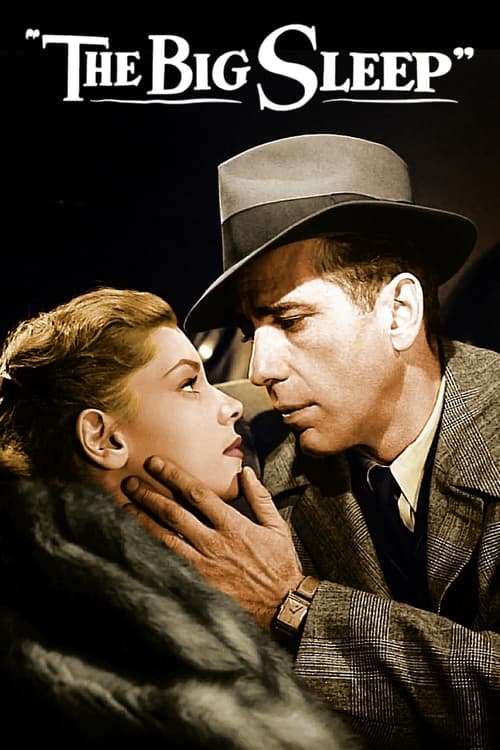
The Big Sleep
Private Investigator Philip Marlowe is hired by wealthy General Sternwood regarding a matter involving his youngest daughter Carmen. Before the complex case is over, Marlowe sees murder, blackmail, deception, and what might be love.
Despite its extremely modest budget of $250K, The Big Sleep became a runaway success, earning $10.7M worldwide—a remarkable 4173% return. The film's distinctive approach found its audience, confirming that strong storytelling can transcend budget limitations.


Plot Structure
Story beats plotted across runtime


Narrative Arc
Emotional journey through the story's key moments
Story Circle
Blueprint 15-beat structure
Arcplot Score Breakdown
Weighted: Precision (70%) + Arc (15%) + Theme (15%)
The Big Sleep (1946) demonstrates precise story structure, characteristic of Howard Hawks's storytelling approach. This structural analysis examines how the film's 15-point plot structure maps to proven narrative frameworks across 1 hour and 54 minutes. With an Arcplot score of 6.6, the film balances conventional beats with creative variation.
Characters
Cast & narrative archetypes

Philip Marlowe
Vivian Sternwood Rutledge
Carmen Sternwood
Eddie Mars
General Sternwood
Main Cast & Characters
Philip Marlowe
Played by Humphrey Bogart
A cynical private detective hired to handle a blackmail case that spirals into murder and corruption.
Vivian Sternwood Rutledge
Played by Lauren Bacall
The sophisticated, flirtatious older daughter of General Sternwood who becomes romantically involved with Marlowe.
Carmen Sternwood
Played by Martha Vickers
The wild, unstable younger daughter whose reckless behavior drives the plot's central conflicts.
Eddie Mars
Played by John Ridgely
A dangerous casino owner and racketeer entangled in the blackmail and murder schemes.
General Sternwood
Played by Charles Waldron
The wealthy, ailing patriarch who hires Marlowe to protect his daughters from scandal.
Structural Analysis
The Status Quo at 1 minutes (1% through the runtime) establishes Philip Marlowe arrives at the Sternwood mansion, a confident private detective entering through ornate gates into a world of old money and hidden secrets. His professional demeanor masks a sharp wit as he prepares to meet a new client.. The analysis reveals that this early placement immediately immerses viewers in the story world.
The inciting incident occurs at 14 minutes when Vivian confronts Marlowe, demanding to know if her father hired him to find Sean Regan rather than handle the blackmail. Her defensiveness reveals deeper complications—the case is not simply about gambling debts but about protecting family secrets at any cost.. At 12% through the film, this Disruption aligns precisely with traditional story structure. This beat shifts the emotional landscape, launching the protagonist into the central conflict.
The First Threshold at 29 minutes marks the transition into Act II, occurring at 25% of the runtime. This reveals the protagonist's commitment to Marlowe makes the fateful choice to protect the Sternwoods by removing Carmen from the murder scene and concealing evidence from the police. He commits himself fully to the case, crossing an ethical line that binds him to whatever darkness lies ahead., moving from reaction to action.
At 57 minutes, the Midpoint arrives at 50% of the runtime—precisely centered, creating perfect narrative symmetry. Structural examination shows that this crucial beat At Eddie Mars' casino, Marlowe confronts the gangster directly while Vivian wins big at roulette—suspiciously big. Mars's missing wife is supposedly the reason Sean Regan disappeared. Marlowe realizes the conspiracy runs deeper than blackmail; he's caught between the Sternwoods and organized crime with no clear allies., fundamentally raising what's at risk. The emotional intensity shifts, dividing the narrative into clear before-and-after phases.
The Collapse moment at 86 minutes (75% through) represents the emotional nadir. Here, Marlowe finds Mona Mars but is captured by Canino and left bound in a remote garage to die. Vivian, complicit in the trap, appears lost to the enemy. Everything Marlowe has worked for seems destroyed—the case unsolved, his life forfeit, and the woman he's fallen for apparently a betrayer., demonstrates the protagonist at their lowest point. This beat's placement in the final quarter sets up the climactic reversal.
The Second Threshold at 91 minutes initiates the final act resolution at 80% of the runtime. Marlowe kills Canino in a shootout, proving he can match violence with violence when necessary. More importantly, Vivian's rescue proves her loyalty. He now understands the full picture: Eddie Mars has been manipulating everyone, and it's time to bring the conspiracy crashing down., demonstrating the transformation achieved throughout the journey.
Emotional Journey
The Big Sleep's emotional architecture traces a deliberate progression across 15 carefully calibrated beats.
Narrative Framework
This structural analysis employs a 15-point narrative structure framework that maps key story moments. By mapping The Big Sleep against these established plot points, we can identify how Howard Hawks utilizes or subverts traditional narrative conventions. The plot point approach reveals not only adherence to structural principles but also creative choices that distinguish The Big Sleep within the mystery genre.
Howard Hawks's Structural Approach
Among the 7 Howard Hawks films analyzed on Arcplot, the average structural score is 7.0, reflecting strong command of classical structure. The Big Sleep takes a more unconventional approach compared to the director's typical style. For comparative analysis, explore the complete Howard Hawks filmography.
Comparative Analysis
Additional mystery films include Lone Star, The Wicker Man and A Soldier's Story. For more Howard Hawks analyses, see Man's Favorite Sport?, Bringing Up Baby and Rio Bravo.
Plot Points by Act
Act I
SetupStatus Quo
Philip Marlowe arrives at the Sternwood mansion, a confident private detective entering through ornate gates into a world of old money and hidden secrets. His professional demeanor masks a sharp wit as he prepares to meet a new client.
Theme
General Sternwood, surrounded by orchids in his sweltering greenhouse, tells Marlowe: "I seem to exist largely on heat, like a newborn spider." His daughter Carmen has gotten mixed up with a blackmailer named Geiger, revealing that beneath wealth lies rot and moral decay that infects everything it touches.
Worldbuilding
Marlowe meets both Sternwood daughters: the wild, flirtatious Carmen and the controlled, suspicious Vivian. The General reveals his former associate Sean Regan has disappeared. Marlowe begins to understand this wealthy family hides dangerous secrets beneath their respectable facade.
Disruption
Vivian confronts Marlowe, demanding to know if her father hired him to find Sean Regan rather than handle the blackmail. Her defensiveness reveals deeper complications—the case is not simply about gambling debts but about protecting family secrets at any cost.
Resistance
Marlowe investigates Arthur Geiger's rare book store, discovering it's a front for a pornography and blackmail operation. He stakes out Geiger's house, hears gunshots, and finds Geiger dead with a drugged Carmen nearby. A crucial photograph has been taken. The case spirals into murder.
Act II
ConfrontationFirst Threshold
Marlowe makes the fateful choice to protect the Sternwoods by removing Carmen from the murder scene and concealing evidence from the police. He commits himself fully to the case, crossing an ethical line that binds him to whatever darkness lies ahead.
Mirror World
Vivian visits Marlowe's office, and their charged verbal sparring reveals mutual attraction beneath mutual suspicion. She represents the moral ambiguity he must navigate—beautiful but potentially dangerous, honest yet hiding secrets. Their relationship becomes his emotional compass through the labyrinth.
Premise
Marlowe navigates the shadowy underworld of 1940s Los Angeles. Bodies pile up: chauffeur Owen Taylor, bookstore clerk Brody. He trades quips with dangerous women, outsmarts thugs, and follows a trail of pornography, gambling, and murder that leads ever closer to crime boss Eddie Mars.
Midpoint
At Eddie Mars' casino, Marlowe confronts the gangster directly while Vivian wins big at roulette—suspiciously big. Mars's missing wife is supposedly the reason Sean Regan disappeared. Marlowe realizes the conspiracy runs deeper than blackmail; he's caught between the Sternwoods and organized crime with no clear allies.
Opposition
Marlowe is beaten, threatened, and manipulated from all sides. Mars's gunman Canino becomes an active threat. Vivian tries to pay Marlowe off, then later saves him from a robbery—but her loyalties remain unclear. Harry Jones is murdered by Canino for helping Marlowe. The noose tightens.
Collapse
Marlowe finds Mona Mars but is captured by Canino and left bound in a remote garage to die. Vivian, complicit in the trap, appears lost to the enemy. Everything Marlowe has worked for seems destroyed—the case unsolved, his life forfeit, and the woman he's fallen for apparently a betrayer.
Crisis
Bound and facing death, Marlowe must reckon with his choices. Vivian returns secretly to free him, revealing she was coerced by Mars. Together in the darkness, they share a moment of genuine connection and trust before Marlowe must face Canino with nothing but his wits and a hidden gun.
Act III
ResolutionSecond Threshold
Marlowe kills Canino in a shootout, proving he can match violence with violence when necessary. More importantly, Vivian's rescue proves her loyalty. He now understands the full picture: Eddie Mars has been manipulating everyone, and it's time to bring the conspiracy crashing down.
Synthesis
Marlowe lures Eddie Mars to Geiger's house for a final confrontation. Through cunning interrogation, he forces Mars to reveal the truth about Sean Regan's death. When Mars tries to escape, his own gunmen cut him down, mistaking him for Marlowe. Justice comes through poetic irony rather than the law.
Transformation
Marlowe and Vivian wait together for the police, bound by shared secrets and genuine affection. The case remains partially unsolved—some mysteries stay buried—but Marlowe has maintained his integrity while finding unexpected love. In a corrupt world, that's as close to victory as anyone gets.