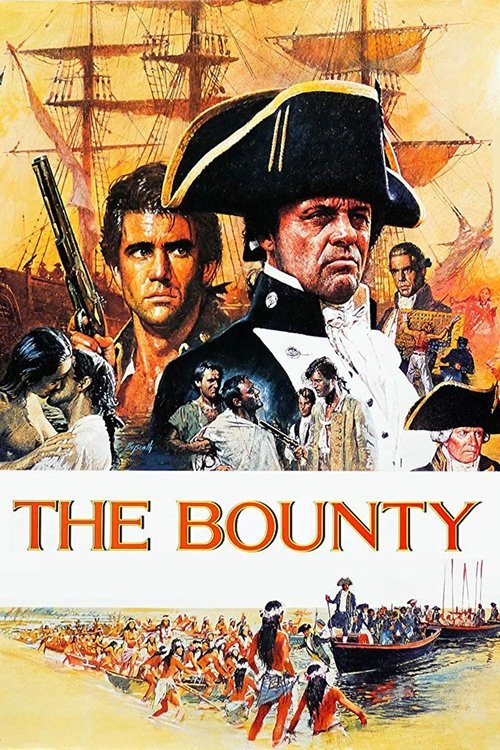
The Bounty
The familiar story of Lieutenant Bligh, whose cruelty leads to a mutiny on his ship. This version follows both the efforts of Fletcher Christian to get his men beyond the reach of British retribution, and the epic voyage of Lieutenant Bligh to get his loyalists safely to East Timor in a tiny lifeboat.
The film box office disappointment against its respectable budget of $25.0M, earning $8.6M globally (-66% loss). While initial box office returns were modest, the film has gained appreciation for its unique voice within the action genre.


Plot Structure
Story beats plotted across runtime


Narrative Arc
Emotional journey through the story's key moments
Story Circle
Blueprint 15-beat structure
Arcplot Score Breakdown
Weighted: Precision (70%) + Arc (15%) + Theme (15%)
The Bounty (1984) demonstrates meticulously timed plot construction, characteristic of Roger Donaldson's storytelling approach. This structural analysis examines how the film's 15-point plot structure maps to proven narrative frameworks across 2 hours and 12 minutes. With an Arcplot score of 6.8, the film balances conventional beats with creative variation.
Characters
Cast & narrative archetypes

Lieutenant William Bligh
Fletcher Christian
Mauatua
John Fryer
Edward Young
John Adams
Charles Churchill
William Cole
Main Cast & Characters
Lieutenant William Bligh
Played by Anthony Hopkins
Ambitious Royal Navy officer commanding HMS Bounty, focused on duty and discipline despite facing mounting opposition from his crew.
Fletcher Christian
Played by Mel Gibson
Master's mate who transforms from loyal officer to mutiny leader, torn between duty and conscience.
Mauatua
Played by Tevaite Vernette
Tahitian woman who becomes Christian's love interest and represents the freedom of island life.
John Fryer
Played by Daniel Day-Lewis
Master of the Bounty who opposes Bligh's methods but refuses to join the mutiny, maintaining his principles.
Edward Young
Played by Liam Neeson
Midshipman who joins Christian's mutiny and provides support during the rebellion.
John Adams
Played by Philip Davis
Able seaman who participates in the mutiny and follows Christian to Pitcairn Island.
Charles Churchill
Played by Simon Chandler
Master-at-arms who joins the mutiny and remains loyal to Christian throughout the rebellion.
William Cole
Played by Bernard Hill
Boatswain who is set adrift with Bligh despite being sympathetic to the crew's grievances.
Structural Analysis
The Status Quo at 2 minutes (2% through the runtime) establishes Bligh arrives at the Admiralty court-martial in a small boat, weathered and determined. The framing device establishes him as a man defending his honor and command decisions before his career and reputation are judged.. Notably, this early placement immediately immerses viewers in the story world.
The inciting incident occurs at 16 minutes when The Bounty's attempt to round Cape Horn fails catastrophically in a violent storm. Bligh is forced to turn back and take the longer route around the Cape of Good Hope, adding months to the journey. This failure intensifies Bligh's demands on the crew and marks the beginning of mounting tensions.. At 12% through the film, this Disruption aligns precisely with traditional story structure. This beat shifts the emotional landscape, launching the protagonist into the central conflict.
The First Threshold at 32 minutes marks the transition into Act II, occurring at 24% of the runtime. This demonstrates the protagonist's commitment to The Bounty arrives at Tahiti. Christian and the crew step into a paradise world completely opposite to the harsh naval environment they've endured. This entry into the "mirror world" of Tahitian freedom represents the point of no return—they will never see their mission the same way again., moving from reaction to action.
At 66 minutes, the Midpoint arrives at 50% of the runtime—precisely centered, creating perfect narrative symmetry. The analysis reveals that this crucial beat The Bounty departs Tahiti. This is a false defeat disguised as duty fulfilled. The crew is devastated to leave their new families and freedom behind. Christian is torn from Mauatua. The paradise is lost, and the return to Bligh's harsh discipline feels unbearable. The stakes shift from endurance to breaking point., fundamentally raising what's at risk. The emotional intensity shifts, dividing the narrative into clear before-and-after phases.
The Collapse moment at 97 minutes (73% through) represents the emotional nadir. Here, Christian's breaking point. After a final humiliation and in despair over being trapped under Bligh's tyranny with no escape, Christian contemplates suicide by jumping overboard. His identity as a loyal officer dies. In this dark moment, he realizes he must act—leading directly to the decision to mutiny., illustrates the protagonist at their lowest point. This beat's placement in the final quarter sets up the climactic reversal.
The Second Threshold at 105 minutes initiates the final act resolution at 80% of the runtime. Christian and the mutineers seize the ship at dawn. Christian confronts Bligh directly, declaring "I am in hell, sir—I am in hell." The synthesis of his naval training and his newfound values allows him to execute the mutiny with discipline but without cruelty. He sets Bligh adrift with loyalists but gives them a chance to survive., demonstrating the transformation achieved throughout the journey.
Emotional Journey
The Bounty's emotional architecture traces a deliberate progression across 15 carefully calibrated beats.
Narrative Framework
This structural analysis employs proven narrative structure principles that track dramatic progression. By mapping The Bounty against these established plot points, we can identify how Roger Donaldson utilizes or subverts traditional narrative conventions. The plot point approach reveals not only adherence to structural principles but also creative choices that distinguish The Bounty within the action genre.
Roger Donaldson's Structural Approach
Among the 13 Roger Donaldson films analyzed on Arcplot, the average structural score is 7.2, reflecting strong command of classical structure. The Bounty takes a more unconventional approach compared to the director's typical style. For comparative analysis, explore the complete Roger Donaldson filmography.
Comparative Analysis
Additional action films include The Bad Guys, Puss in Boots and Venom: The Last Dance. For more Roger Donaldson analyses, see Species, Dante's Peak and Seeking Justice.
Plot Points by Act
Act I
SetupStatus Quo
Bligh arrives at the Admiralty court-martial in a small boat, weathered and determined. The framing device establishes him as a man defending his honor and command decisions before his career and reputation are judged.
Theme
During court proceedings, an officer states that "discipline and loyalty are the backbone of the service." This encapsulates the film's thematic question: where is the line between necessary discipline and tyranny, between loyalty and blind obedience?
Worldbuilding
Flashback to Portsmouth as HMS Bounty prepares to depart. We meet the crew, see Bligh's exacting standards and Christian's role as master's mate. The ship's mission to Tahiti for breadfruit is established, along with the harsh realities of 18th-century naval life and the class dynamics between officers and crew.
Disruption
The Bounty's attempt to round Cape Horn fails catastrophically in a violent storm. Bligh is forced to turn back and take the longer route around the Cape of Good Hope, adding months to the journey. This failure intensifies Bligh's demands on the crew and marks the beginning of mounting tensions.
Resistance
The grueling voyage around Africa tests the crew. Bligh's increasingly harsh discipline creates resentment. Christian navigates between loyalty to his captain and sympathy for the crew. Punishments escalate, men die, and the question emerges: will Christian challenge Bligh's authority or remain the dutiful officer?
Act II
ConfrontationFirst Threshold
The Bounty arrives at Tahiti. Christian and the crew step into a paradise world completely opposite to the harsh naval environment they've endured. This entry into the "mirror world" of Tahitian freedom represents the point of no return—they will never see their mission the same way again.
Mirror World
Christian meets Mauatua, a Tahitian woman, and begins a deep romantic relationship. She represents everything absent from naval life: freedom, sensuality, acceptance, and humanity without rigid hierarchy. This relationship embodies the thematic counterpoint to Bligh's world of discipline and control.
Premise
The crew enjoys five months in Tahiti, forming bonds with the islanders and experiencing a radically different way of life. The "fun and games" of paradise life—the promise of the premise—shows what freedom looks like. Meanwhile, the breadfruit plants grow. Bligh remains somewhat isolated, and the inevitable departure looms.
Midpoint
The Bounty departs Tahiti. This is a false defeat disguised as duty fulfilled. The crew is devastated to leave their new families and freedom behind. Christian is torn from Mauatua. The paradise is lost, and the return to Bligh's harsh discipline feels unbearable. The stakes shift from endurance to breaking point.
Opposition
Tensions explode after leaving Tahiti. Bligh's discipline becomes more severe, punishing men for minor infractions. Christian, changed by Tahiti, can no longer tolerate the captain's methods. Bligh accuses Christian of theft and publicly humiliates him. The crew's resentment reaches a boiling point as Bligh tightens his grip.
Collapse
Christian's breaking point. After a final humiliation and in despair over being trapped under Bligh's tyranny with no escape, Christian contemplates suicide by jumping overboard. His identity as a loyal officer dies. In this dark moment, he realizes he must act—leading directly to the decision to mutiny.
Crisis
Christian wrestles with the magnitude of mutiny—an act of treason punishable by death. He gathers allies among the crew and plans the takeover. This is the dark night before action, where Christian transforms from conflicted officer to revolutionary leader, accepting that he can never return to England.
Act III
ResolutionSecond Threshold
Christian and the mutineers seize the ship at dawn. Christian confronts Bligh directly, declaring "I am in hell, sir—I am in hell." The synthesis of his naval training and his newfound values allows him to execute the mutiny with discipline but without cruelty. He sets Bligh adrift with loyalists but gives them a chance to survive.
Synthesis
The mutineers return to Tahiti, and Christian reunites with Mauatua. Meanwhile, Bligh's incredible open-boat navigation to safety is shown. Back in the courtroom frame, Bligh recounts the mutiny and his survival. The Admiralty must weigh his leadership against the crew's rebellion, examining the cost of tyrannical discipline.
Transformation
The court-martial concludes with Bligh's acquittal and restoration to command, but the verdict is ambiguous. The final image shows Bligh alone, vindicated by law but isolated, while Christian remains free in paradise but exiled forever. Both men are transformed: neither fully won nor lost—both paying the price for their choices.