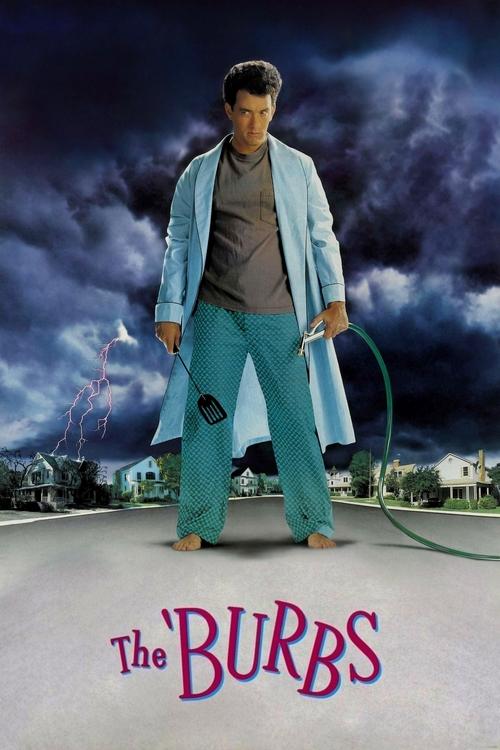
The 'Burbs
When secretive new neighbors move in next door, suburbanite Ray Peterson and his friends let their paranoia get the best of them as they start to suspect the newcomers of evildoings and commence an investigation. But it's hardly how Ray, who much prefers drinking beer, reading his newspaper and watching a ball game on the tube expected to spend his vacation.
Despite a respectable budget of $18.0M, The 'Burbs became a financial success, earning $49.1M worldwide—a 173% return.


Plot Structure
Story beats plotted across runtime


Narrative Arc
Emotional journey through the story's key moments
Story Circle
Blueprint 15-beat structure
Arcplot Score Breakdown
Weighted: Precision (70%) + Arc (15%) + Theme (15%)
The 'Burbs (1989) exhibits precise story structure, characteristic of Joe Dante's storytelling approach. This structural analysis examines how the film's 15-point plot structure maps to proven narrative frameworks across 1 hour and 42 minutes. With an Arcplot score of 7.5, the film showcases strong structural fundamentals.
Characters
Cast & narrative archetypes

Ray Peterson
Mark Rumsfield
Art Weingartner
Carol Peterson
Hans Klopek
Dr. Werner Klopek
Ricky Butler
Main Cast & Characters
Ray Peterson
Played by Tom Hanks
A stressed suburbanite on vacation who becomes obsessed with his mysterious new neighbors, the Klopeks.
Mark Rumsfield
Played by Bruce Dern
A gung-ho ex-military man who eagerly joins Ray's investigation with military precision and paranoia.
Art Weingartner
Played by Rick Ducommun
An enthusiastic, slightly dim-witted neighbor who turns the investigation into entertainment.
Carol Peterson
Played by Carrie Fisher
Ray's level-headed wife who tries to keep him grounded and questions his paranoid theories.
Hans Klopek
Played by Courtney Gains
The youngest and most normal-seeming member of the Klopek family, trying to fit into suburban life.
Dr. Werner Klopek
Played by Henry Gibson
The eccentric patriarch of the Klopek family with strange habits and a mysterious past.
Ricky Butler
Played by Corey Feldman
A laid-back teenager who observes the chaos from his front yard with detached amusement.
Structural Analysis
The Status Quo at 1 minutes (1% through the runtime) establishes Ray Peterson begins his week-long vacation on Mayfield Place, a peaceful suburban cul-de-sac where neighbors know each other and life is predictable. He's looking forward to doing nothing but relaxing at home.. Significantly, this early placement immediately immerses viewers in the story world.
The inciting incident occurs at 11 minutes when Walter Seznick, the elderly neighbor, mysteriously disappears overnight. No one sees him leave, his dog is running loose, and the Klopeks were seen in his yard late at night with shovels, sparking suspicion.. At 11% through the film, this Disruption aligns precisely with traditional story structure. This beat shifts the emotional landscape, launching the protagonist into the central conflict.
The First Threshold at 25 minutes marks the transition into Act II, occurring at 24% of the runtime. This demonstrates the protagonist's commitment to Ray makes the active choice to spy on the Klopeks despite Carol's objections. He joins Art and Rumsfield in surveillance of the mysterious neighbors, fully committing to the investigation instead of his peaceful vacation., moving from reaction to action.
At 50 minutes, the Midpoint arrives at 49% of the runtime—precisely centered, creating perfect narrative symmetry. Of particular interest, this crucial beat False defeat: Ray and Art break into the Klopeks' basement while the family is away and discover what appears to be evidence of murder - strange bones, occult artifacts. The stakes raise dramatically as they believe they've confirmed their worst fears., fundamentally raising what's at risk. The emotional intensity shifts, dividing the narrative into clear before-and-after phases.
The Collapse moment at 77 minutes (76% through) represents the emotional nadir. Here, Carol leaves Ray, disgusted by his paranoid behavior. Police find Walter alive at a relative's house, completely discrediting Ray's theory. Ray is humiliated in front of the entire neighborhood - his marriage is destroyed and he's been proven a paranoid fool., indicates the protagonist at their lowest point. This beat's placement in the final quarter sets up the climactic reversal.
The Second Threshold at 82 minutes initiates the final act resolution at 80% of the runtime. Ray discovers Walter's toupee in the Klopeks' trash - proof that Walter never left and the Klopeks are lying. This concrete evidence synthesizes his paranoia with actual fact, giving him new purpose for a final confrontation., demonstrating the transformation achieved throughout the journey.
Emotional Journey
The 'Burbs's emotional architecture traces a deliberate progression across 15 carefully calibrated beats.
Narrative Framework
This structural analysis employs a 15-point narrative structure framework that maps key story moments. By mapping The 'Burbs against these established plot points, we can identify how Joe Dante utilizes or subverts traditional narrative conventions. The plot point approach reveals not only adherence to structural principles but also creative choices that distinguish The 'Burbs within the comedy genre.
Joe Dante's Structural Approach
Among the 10 Joe Dante films analyzed on Arcplot, the average structural score is 7.0, reflecting strong command of classical structure. The 'Burbs represents one of the director's most structurally precise works. For comparative analysis, explore the complete Joe Dante filmography.
Comparative Analysis
Additional comedy films include The Bad Guys, Ella Enchanted and The Evening Star. For more Joe Dante analyses, see The Howling, Explorers and Small Soldiers.
Plot Points by Act
Act I
SetupStatus Quo
Ray Peterson begins his week-long vacation on Mayfield Place, a peaceful suburban cul-de-sac where neighbors know each other and life is predictable. He's looking forward to doing nothing but relaxing at home.
Theme
Art Weingartner mentions that the new neighbors, the Klopeks, "keep to themselves" and remarks on judging people without knowing them - establishing the theme of suburban paranoia versus giving people the benefit of the doubt.
Worldbuilding
Introduction to the suburban neighborhood characters: Ray and Carol Peterson, busybody Art Weingartner, military-obsessed Lt. Mark Rumsfield and his wife Bonnie, teenage Ricky Butler who watches everything. The Klopeks' mysterious house stands out as dark and unkempt.
Disruption
Walter Seznick, the elderly neighbor, mysteriously disappears overnight. No one sees him leave, his dog is running loose, and the Klopeks were seen in his yard late at night with shovels, sparking suspicion.
Resistance
Ray debates whether to investigate or enjoy his vacation. Carol urges him to relax and not get involved. Rumsfield and Art fuel Ray's paranoia with theories about the Klopeks. Ray resists but grows increasingly curious and concerned.
Act II
ConfrontationFirst Threshold
Ray makes the active choice to spy on the Klopeks despite Carol's objections. He joins Art and Rumsfield in surveillance of the mysterious neighbors, fully committing to the investigation instead of his peaceful vacation.
Mirror World
Ray's relationship with Carol becomes the thematic counterpoint - she represents rational thought and trust versus his growing paranoia. She warns him about judging neighbors and ruining his vacation, embodying the theme.
Premise
The "fun and games" of suburban paranoia: Ray, Art, and Rumsfield conduct increasingly invasive surveillance on the Klopeks. They spy with binoculars, sneak around the property, investigate strange sounds, and develop wild theories about satanic cults and murder.
Midpoint
False defeat: Ray and Art break into the Klopeks' basement while the family is away and discover what appears to be evidence of murder - strange bones, occult artifacts. The stakes raise dramatically as they believe they've confirmed their worst fears.
Opposition
The Klopeks fight back by inviting themselves to dinner at the Petersons, creating extreme tension. Ray's obsession intensifies, his marriage suffers, and Carol threatens to leave him. The neighbors' actions become more reckless and dangerous.
Collapse
Carol leaves Ray, disgusted by his paranoid behavior. Police find Walter alive at a relative's house, completely discrediting Ray's theory. Ray is humiliated in front of the entire neighborhood - his marriage is destroyed and he's been proven a paranoid fool.
Crisis
Ray sits in darkness processing his total defeat. He faces the reality that his paranoia destroyed his vacation, his marriage, and his standing in the neighborhood. He contemplates what his obsession has cost him.
Act III
ResolutionSecond Threshold
Ray discovers Walter's toupee in the Klopeks' trash - proof that Walter never left and the Klopeks are lying. This concrete evidence synthesizes his paranoia with actual fact, giving him new purpose for a final confrontation.
Synthesis
Ray confronts the Klopeks alone and discovers they are indeed murderers with bodies in the basement. The house explodes, Ray is hospitalized, and police arrest the Klopeks, finding Walter's remains and evidence of other victims.
Transformation
Ray, bandaged in an ambulance, reconciles with Carol. He reflects that he'll never leave his neighborhood because "it's the people" - transformed from wanting a peaceful vacation away from neighbors to embracing community vigilance.