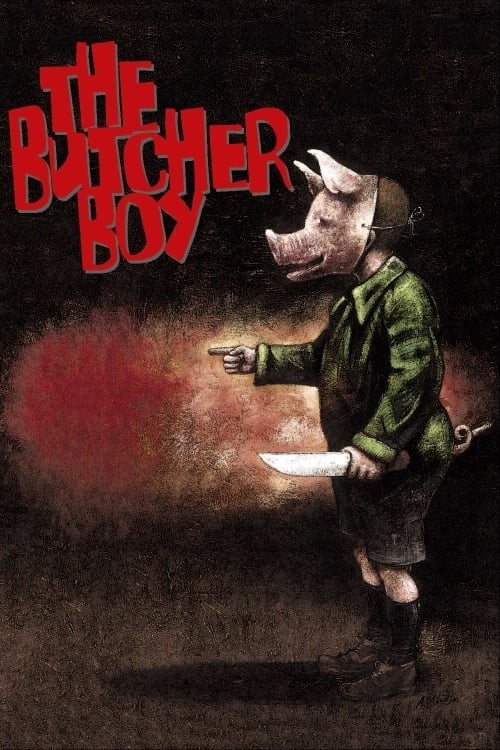
The Butcher Boy
Francie and Joe live the usual playful, fantasy filled childhoods of normal boys. However, with a violent, alcoholic father and a manic depressive, suicidal mother the pressure on Francie to grow up are immense. When Francie's world turns to madness, he tries to counter it with further insanity, with dire consequences.
The film earned $5.0M at the global box office.


Plot Structure
Story beats plotted across runtime


Narrative Arc
Emotional journey through the story's key moments
Story Circle
Blueprint 15-beat structure
Arcplot Score Breakdown
Weighted: Precision (70%) + Arc (15%) + Theme (15%)
The Butcher Boy (1998) demonstrates meticulously timed narrative architecture, characteristic of Neil Jordan's storytelling approach. This structural analysis examines how the film's 15-point plot structure maps to proven narrative frameworks across 1 hour and 50 minutes. With an Arcplot score of 7.3, the film balances conventional beats with creative variation.
Characters
Cast & narrative archetypes

Francie Brady
Mrs. Nugent
Da Brady
Ma Brady
Joe Purcell
Father Sullivan
Our Lady
Philip Nugent
Main Cast & Characters
Francie Brady
Played by Eamonn Owens
A troubled boy in 1960s Ireland who descends into madness after family tragedy and social ostracism
Mrs. Nugent
Played by Fiona Shaw
The judgmental neighbor who becomes the focus of Francie's obsessive hatred
Da Brady
Played by Stephen Rea
Francie's alcoholic father, a failed musician haunted by past glories
Ma Brady
Played by Aisling O'Sullivan
Francie's depressed mother who struggles with mental illness
Joe Purcell
Played by Alan Boyle
Francie's loyal best friend who eventually distances himself as Francie spirals
Father Sullivan
Played by Milo O'Shea
The local priest who tries to guide Francie but fails to reach him
Our Lady
Played by Sinéad O'Connor
A hallucinatory vision of the Virgin Mary who appears to Francie
Philip Nugent
Played by Andrew Fullerton
Mrs. Nugent's son and Joe's new friend, symbol of everything Francie is not
Structural Analysis
The Status Quo at 1 minutes (1% through the runtime) establishes Francie Brady and Joe Purcell play together as best friends in their small Irish town, living carefree lives filled with imagination and adventure despite Francie's troubled home with his alcoholic father and mentally unstable mother.. The analysis reveals that this early placement immediately immerses viewers in the story world.
The inciting incident occurs at 13 minutes when Francie's mother is taken away to a mental institution after a breakdown, removing the one stabilizing force in his chaotic home life and leaving him alone with his increasingly unreliable alcoholic father.. At 12% through the film, this Disruption aligns precisely with traditional story structure. This beat shifts the emotional landscape, launching the protagonist into the central conflict.
The First Threshold at 28 minutes marks the transition into Act II, occurring at 25% of the runtime. This illustrates the protagonist's commitment to After his mother returns from the institution and immediately commits suicide, Francie crosses into a darker psychological state, choosing to retreat further into his fantasy world and beginning his descent into violence and disconnection from reality., moving from reaction to action.
At 55 minutes, the Midpoint arrives at 50% of the runtime—precisely centered, creating perfect narrative symmetry. Of particular interest, this crucial beat Francie returns home to find his father has died alone and been partially eaten by rats. This false defeat destroys his last connection to family and any remaining hope of returning to his old life, pushing him further into psychological isolation., fundamentally raising what's at risk. The emotional intensity shifts, dividing the narrative into clear before-and-after phases.
The Collapse moment at 83 minutes (75% through) represents the emotional nadir. Here, Joe definitively ends their friendship, telling Francie he doesn't want to see him anymore and choosing his new life over their bond. This final rejection destroys the last thread connecting Francie to humanity and love, representing the death of his last hope for redemption., demonstrates the protagonist at their lowest point. This beat's placement in the final quarter sets up the climactic reversal.
The Second Threshold at 88 minutes initiates the final act resolution at 80% of the runtime. Francie has a vision/hallucination of the Virgin Mary who, instead of offering redemption, seems to validate his rage. He synthesizes all his trauma, abuse, and rejection into a single clear purpose: to make Mrs. Nugent pay for calling his family pigs, choosing murder as his final act., demonstrating the transformation achieved throughout the journey.
Emotional Journey
The Butcher Boy's emotional architecture traces a deliberate progression across 15 carefully calibrated beats.
Narrative Framework
This structural analysis employs systematic plot point analysis that identifies crucial turning points. By mapping The Butcher Boy against these established plot points, we can identify how Neil Jordan utilizes or subverts traditional narrative conventions. The plot point approach reveals not only adherence to structural principles but also creative choices that distinguish The Butcher Boy within the comedy genre.
Neil Jordan's Structural Approach
Among the 10 Neil Jordan films analyzed on Arcplot, the average structural score is 7.2, reflecting strong command of classical structure. The Butcher Boy represents one of the director's most structurally precise works. For comparative analysis, explore the complete Neil Jordan filmography.
Comparative Analysis
Additional comedy films include The Bad Guys, Ella Enchanted and The Evening Star. For more Neil Jordan analyses, see The End of the Affair, The Brave One and Interview with the Vampire.
Plot Points by Act
Act I
SetupStatus Quo
Francie Brady and Joe Purcell play together as best friends in their small Irish town, living carefree lives filled with imagination and adventure despite Francie's troubled home with his alcoholic father and mentally unstable mother.
Theme
Mrs. Nugent tells Francie that he comes from a family of "pigs," establishing the central theme of class prejudice, social exclusion, and how being labeled and ostracized can destroy a person's sense of self-worth.
Worldbuilding
Establishment of 1960s small-town Ireland during Cold War paranoia, Francie's dysfunctional family dynamics, his deep friendship with Joe, his father's drinking and mother's mental deterioration, and the class tension with the affluent Nugent family who look down on the Bradys.
Disruption
Francie's mother is taken away to a mental institution after a breakdown, removing the one stabilizing force in his chaotic home life and leaving him alone with his increasingly unreliable alcoholic father.
Resistance
Francie struggles to maintain normalcy through his friendship with Joe and his comic book fantasies while his home life crumbles further. His father tries to care for him but fails, drinking more heavily. Francie begins acting out, breaking into the Nugent house, and facing the reality that his old life is falling apart.
Act II
ConfrontationFirst Threshold
After his mother returns from the institution and immediately commits suicide, Francie crosses into a darker psychological state, choosing to retreat further into his fantasy world and beginning his descent into violence and disconnection from reality.
Mirror World
Father Sullivan and later Father Bubbles at the reform school represent the religious/moral mirror world that promises salvation and redemption, but this world ultimately fails Francie as Father Bubbles sexually abuses him, corrupting even this potential path to healing.
Premise
Francie is sent to reform school where he experiences institutional brutality and abuse. He tries to find acceptance through religion but is molested by Father Bubbles. His relationship with Joe becomes strained as Joe's family tries to distance him from Francie. Francie's grip on reality weakens as his fantasies intensify and his obsession with Mrs. Nugent grows.
Midpoint
Francie returns home to find his father has died alone and been partially eaten by rats. This false defeat destroys his last connection to family and any remaining hope of returning to his old life, pushing him further into psychological isolation.
Opposition
Francie becomes increasingly unhinged, squatting in abandoned houses and living on the margins. Joe distances himself further, forming a new life that excludes Francie. Mrs. Nugent's rejection and judgment intensifies. Francie's violent fantasies about pigs and butchery merge with his reality as he works in a slaughterhouse, and his fixation on destroying Mrs. Nugent becomes his sole focus.
Collapse
Joe definitively ends their friendship, telling Francie he doesn't want to see him anymore and choosing his new life over their bond. This final rejection destroys the last thread connecting Francie to humanity and love, representing the death of his last hope for redemption.
Crisis
Francie sinks into complete darkness, his fantasies of nuclear apocalypse and violence consuming him. He wanders the town as a ghost, completely disconnected from society, processing the total loss of everything he once valued—his family, his friend, his innocence, his sanity.
Act III
ResolutionSecond Threshold
Francie has a vision/hallucination of the Virgin Mary who, instead of offering redemption, seems to validate his rage. He synthesizes all his trauma, abuse, and rejection into a single clear purpose: to make Mrs. Nugent pay for calling his family pigs, choosing murder as his final act.
Synthesis
Francie breaks into the Nugent home and brutally murders Mrs. Nugent, dismembering her body in an act that fuses his butcher work with his pig obsession. He calmly leaves the scene covered in blood. He is arrested and institutionalized, where he finally finds a strange peace in the asylum, accepting his fate.
Transformation
Adult Francie narrates from the asylum, having found an odd contentment in institutional life. He encounters Joe one last time, showing that while Francie has been destroyed and transformed into something broken, he has achieved a form of peace through complete surrender to his fate.