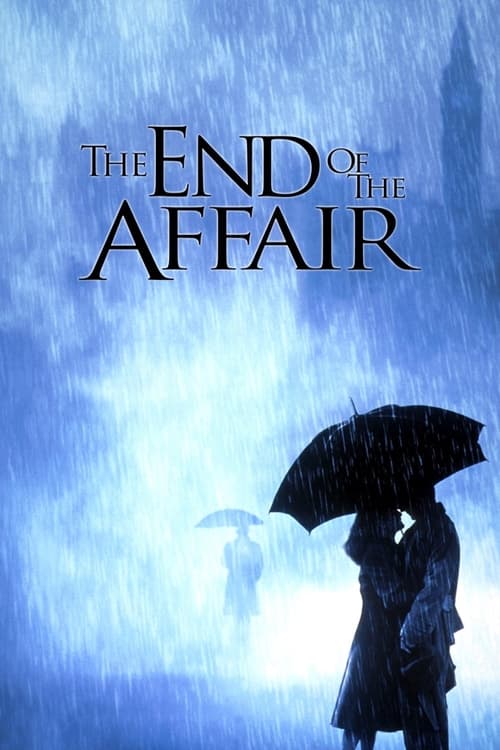
The End of the Affair
On a rainy London night in 1946, novelist Maurice Bendrix has a chance meeting with Henry Miles, husband of his ex-mistress Sarah, who abruptly ended their affair two years before. Bendrix's obsession with Sarah is rekindled; he succumbs to his own jealousy and arranges to have her followed.
The film commercial failure against its respectable budget of $23.0M, earning $10.8M globally (-53% loss). While initial box office returns were modest, the film has gained appreciation for its distinctive approach within the romance genre.
Nominated for 2 Oscars. 2 wins & 29 nominations


Plot Structure
Story beats plotted across runtime


Narrative Arc
Emotional journey through the story's key moments
Story Circle
Blueprint 15-beat structure
Arcplot Score Breakdown
Weighted: Precision (70%) + Arc (15%) + Theme (15%)
The End of the Affair (1999) demonstrates carefully calibrated story structure, characteristic of Neil Jordan's storytelling approach. This structural analysis examines how the film's 15-point plot structure maps to proven narrative frameworks across 1 hour and 42 minutes. With an Arcplot score of 7.3, the film balances conventional beats with creative variation.
Characters
Cast & narrative archetypes

Maurice Bendrix
Sarah Miles
Henry Miles
Mr. Parkis
Father Crompton
Main Cast & Characters
Maurice Bendrix
Played by Ralph Fiennes
A bitter novelist consumed by jealousy and obsession over his former lover Sarah, narrating the story of their affair and its aftermath.
Sarah Miles
Played by Julianne Moore
A passionate married woman torn between duty to her husband and her intense love affair with Maurice, making a life-altering promise to God.
Henry Miles
Played by Stephen Rea
Sarah's kind, emotionally distant civil servant husband who remains largely unaware of his wife's affair and inner turmoil.
Mr. Parkis
Played by Ian Hart
A private detective hired by Maurice to follow Sarah, providing comic relief while uncovering the truth of her activities.
Father Crompton
Played by Jason Isaacs
A compassionate priest who counsels Sarah in her spiritual crisis and represents her growing connection to faith.
Structural Analysis
The Status Quo at 1 minutes (1% through the runtime) establishes Maurice Bendrix narrates in bitter voice-over, sitting alone in rain-soaked 1946 London, consumed by hatred and jealousy. Establishes his emotional isolation and obsessive nature.. Of particular interest, this early placement immediately immerses viewers in the story world.
The inciting incident occurs at 12 minutes when Maurice and Sarah share their first kiss in the rain after he walks her home. The attraction ignites, disrupting both their ordered lives and pulling them toward the affair.. At 12% through the film, this Disruption aligns precisely with traditional story structure. This beat shifts the emotional landscape, launching the protagonist into the central conflict.
The First Threshold at 25 minutes marks the transition into Act II, occurring at 24% of the runtime. This reveals the protagonist's commitment to Maurice and Sarah fully consummate their relationship and commit to the affair. Maurice chooses to love her despite knowing she's married, crossing into a new world of passion and moral compromise., moving from reaction to action.
At 50 minutes, the Midpoint arrives at 49% of the runtime—precisely centered, creating perfect narrative symmetry. Structural examination shows that this crucial beat The V-1 rocket explosion during Maurice and Sarah's lovemaking. Maurice is buried under debris, apparently dead. Sarah believes she has lost him - the false defeat that changes everything and sets up her bargain with God., fundamentally raising what's at risk. The emotional intensity shifts, dividing the narrative into clear before-and-after phases.
The Collapse moment at 75 minutes (74% through) represents the emotional nadir. Here, Sarah collapses in the rain after a final meeting with Maurice. Her literal physical collapse embodies the death of possibility - she cannot choose between God and Maurice, and her body is failing. The whiff of death is explicit., reveals the protagonist at their lowest point. This beat's placement in the final quarter sets up the climactic reversal.
The Second Threshold at 82 minutes initiates the final act resolution at 81% of the runtime. Sarah dies. Maurice reads her final diary entry expressing her continued love and her faith. He begins to understand that her choice wasn't a rejection of him but an act of impossible devotion to something larger. New information transforms his understanding., demonstrating the transformation achieved throughout the journey.
Emotional Journey
The End of the Affair's emotional architecture traces a deliberate progression across 15 carefully calibrated beats.
Narrative Framework
This structural analysis employs structural analysis methodology used to understand storytelling architecture. By mapping The End of the Affair against these established plot points, we can identify how Neil Jordan utilizes or subverts traditional narrative conventions. The plot point approach reveals not only adherence to structural principles but also creative choices that distinguish The End of the Affair within the romance genre.
Neil Jordan's Structural Approach
Among the 10 Neil Jordan films analyzed on Arcplot, the average structural score is 7.2, reflecting strong command of classical structure. The End of the Affair represents one of the director's most structurally precise works. For comparative analysis, explore the complete Neil Jordan filmography.
Comparative Analysis
Additional romance films include South Pacific, Dirty Dancing: Havana Nights and The Evening Star. For more Neil Jordan analyses, see The Brave One, Interview with the Vampire and Marlowe.
Plot Points by Act
Act I
SetupStatus Quo
Maurice Bendrix narrates in bitter voice-over, sitting alone in rain-soaked 1946 London, consumed by hatred and jealousy. Establishes his emotional isolation and obsessive nature.
Theme
Henry Miles discusses the nature of love and trust in marriage, unknowingly speaking to his wife's former lover. "The problem with being a rationalist is you never know when to stop being reasonable."
Worldbuilding
Establishes 1946 frame: Maurice encounters Henry Miles on the Common, learns Sarah may be having another affair. Flashback begins to 1939, showing how Maurice first met Sarah and Henry. Sets up the triangle and wartime London atmosphere.
Disruption
Maurice and Sarah share their first kiss in the rain after he walks her home. The attraction ignites, disrupting both their ordered lives and pulling them toward the affair.
Resistance
The early affair unfolds in flashback: stolen meetings, passionate encounters, the dance of desire and guilt. Maurice debates whether to fully commit emotionally while Sarah navigates her divided loyalties between husband and lover.
Act II
ConfrontationFirst Threshold
Maurice and Sarah fully consummate their relationship and commit to the affair. Maurice chooses to love her despite knowing she's married, crossing into a new world of passion and moral compromise.
Mirror World
Parkis, the private detective hired by Maurice in 1946, introduces his son as his assistant. This father-son relationship mirrors the themes of devotion and sacrifice, showing innocent love contrasted with Maurice's obsessive jealousy.
Premise
The affair at its height, intercut with the 1946 investigation. Maurice and Sarah's wartime passion explored in all its intensity. Parkis investigates Sarah's movements. The "fun" of both the romance and the detective story play out.
Midpoint
The V-1 rocket explosion during Maurice and Sarah's lovemaking. Maurice is buried under debris, apparently dead. Sarah believes she has lost him - the false defeat that changes everything and sets up her bargain with God.
Opposition
Sarah's vow to God revealed through stolen diary pages: she promised to end the affair if Maurice lived. Maurice's investigation uncovers this "other man" is God himself. Pressure intensifies as Maurice confronts the impossibility of competing with faith. Sarah's health deteriorates.
Collapse
Sarah collapses in the rain after a final meeting with Maurice. Her literal physical collapse embodies the death of possibility - she cannot choose between God and Maurice, and her body is failing. The whiff of death is explicit.
Crisis
Maurice sits with Sarah's dying body and processes the magnitude of loss. He rages against God, against her faith, against the senselessness of her sacrifice. His dark night is literal - vigil at her deathbed.
Act III
ResolutionSecond Threshold
Sarah dies. Maurice reads her final diary entry expressing her continued love and her faith. He begins to understand that her choice wasn't a rejection of him but an act of impossible devotion to something larger. New information transforms his understanding.
Synthesis
Maurice attends Sarah's funeral, witnesses apparent miracles (Parkis's son's birthmark healed, the rationalist Smythe's conversion). He confronts the mystery of faith while trying to maintain his atheism. The finale synthesizes love and loss.
Transformation
Maurice kneels alone and speaks to the God he doesn't believe in: "Leave me alone forever." He remains unchanged yet transformed - still bitter, still jealous, but now his jealousy extends even to the divine. The closing mirrors the opening's isolation but with deeper spiritual weight.