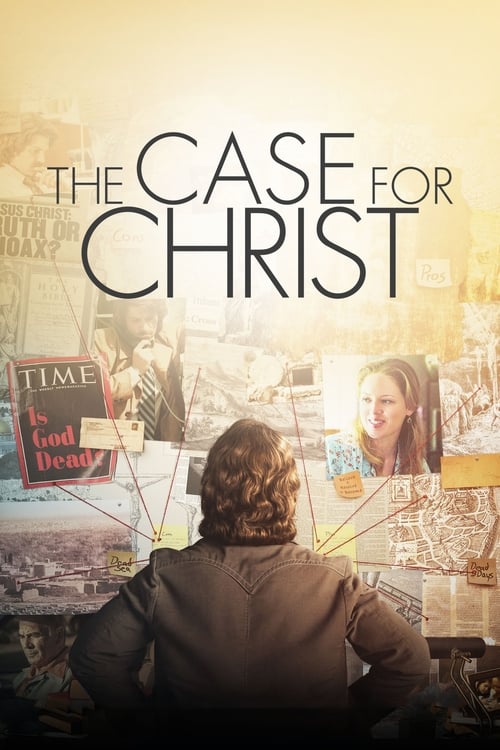
The Case for Christ
Based on the true story of an award-winning investigative journalist -- and avowed atheist -- who applies his well-honed journalistic and legal skills to disprove the newfound Christian faith of his wife... with unexpected, life-altering results.
Despite its modest budget of $3.0M, The Case for Christ became a box office phenomenon, earning $18.2M worldwide—a remarkable 507% return. The film's unique voice attracted moviegoers, demonstrating that strong storytelling can transcend budget limitations.


Plot Structure
Story beats plotted across runtime


Narrative Arc
Emotional journey through the story's key moments
Story Circle
Blueprint 15-beat structure
Arcplot Score Breakdown
Weighted: Precision (70%) + Arc (15%) + Theme (15%)
The Case for Christ (2017) showcases deliberately positioned narrative design, characteristic of Jon Gunn's storytelling approach. This structural analysis examines how the film's 15-point plot structure maps to proven narrative frameworks across 1 hour and 52 minutes. With an Arcplot score of 7.6, the film showcases strong structural fundamentals.
Characters
Cast & narrative archetypes

Lee Strobel
Leslie Strobel
Alfie Davis
Dr. Gary Habermas
Dr. Roberta Waters
Father Jose
Kenny London
Main Cast & Characters
Lee Strobel
Played by Mike Vogel
Award-winning investigative journalist and staunch atheist who sets out to disprove Christianity after his wife's conversion.
Leslie Strobel
Played by Erika Christensen
Lee's wife who converts to Christianity, becoming the catalyst for his investigative journey.
Alfie Davis
Played by Mike Pniewski
Lee's friend and fellow journalist who provides grounded perspective and challenges Lee's obsession.
Dr. Gary Habermas
Played by L. Scott Caldwell
Resurrection expert and theologian who presents historical evidence for Christ's resurrection.
Dr. Roberta Waters
Played by Faye Dunaway
Medical examiner who provides forensic analysis of crucifixion and resurrection claims.
Father Jose
Played by Miguel Perez
Catholic priest who engages Lee in theological discussions and challenges his assumptions.
Kenny London
Played by Renell Gibbs
Criminal whose legal case intersects with Lee's investigation, raising questions about truth and evidence.
Structural Analysis
The Status Quo at 1 minutes (1% through the runtime) establishes Lee Strobel celebrates a career victory as an award-winning investigative journalist at the Chicago Tribune, embodying his identity as a rational, atheist truth-seeker with a happy marriage and young daughter.. Significantly, this early placement immediately immerses viewers in the story world.
The inciting incident occurs at 13 minutes when Leslie announces she has become a Christian after attending church with Alfie, the nurse who saved their daughter. Lee feels betrayed and fears losing his wife to what he considers irrational superstition.. At 11% through the film, this Disruption aligns precisely with traditional story structure. This beat shifts the emotional landscape, launching the protagonist into the central conflict.
The First Threshold at 27 minutes marks the transition into Act II, occurring at 24% of the runtime. This shows the protagonist's commitment to Lee makes the active decision to use his investigative journalism skills to systematically disprove Christianity and the resurrection, believing he can save his marriage by destroying his wife's faith with facts., moving from reaction to action.
At 55 minutes, the Midpoint arrives at 50% of the runtime—precisely centered, creating perfect narrative symmetry. Notably, this crucial beat Lee discovers that the medical evidence confirms crucifixion victims cannot survive, and the psychology of the disciples shows they genuinely believed they saw Jesus resurrected. His case against Christianity is crumbling, but he doubles down rather than concede., fundamentally raising what's at risk. The emotional intensity shifts, dividing the narrative into clear before-and-after phases.
The Collapse moment at 84 minutes (75% through) represents the emotional nadir. Here, Leslie reaches her breaking point and prepares to leave Lee, taking their daughter. Lee faces the death of his marriage and must confront that his intellectual pride has cost him everything he truly values., demonstrates the protagonist at their lowest point. This beat's placement in the final quarter sets up the climactic reversal.
The Second Threshold at 89 minutes initiates the final act resolution at 79% of the runtime. Lee experiences a breakthrough, recognizing that following the evidence where it leads—his core principle as a journalist—requires him to accept Christ. He surrenders his pride and embraces faith based on the evidence he uncovered., demonstrating the transformation achieved throughout the journey.
Emotional Journey
The Case for Christ's emotional architecture traces a deliberate progression across 15 carefully calibrated beats.
Narrative Framework
This structural analysis employs systematic plot point analysis that identifies crucial turning points. By mapping The Case for Christ against these established plot points, we can identify how Jon Gunn utilizes or subverts traditional narrative conventions. The plot point approach reveals not only adherence to structural principles but also creative choices that distinguish The Case for Christ within the drama genre.
Jon Gunn's Structural Approach
Among the 3 Jon Gunn films analyzed on Arcplot, the average structural score is 7.3, reflecting strong command of classical structure. The Case for Christ represents one of the director's most structurally precise works. For comparative analysis, explore the complete Jon Gunn filmography.
Comparative Analysis
Additional drama films include After Thomas, South Pacific and Dirty Dancing: Havana Nights. For more Jon Gunn analyses, see Ordinary Angels, Do You Believe?.
Plot Points by Act
Act I
SetupStatus Quo
Lee Strobel celebrates a career victory as an award-winning investigative journalist at the Chicago Tribune, embodying his identity as a rational, atheist truth-seeker with a happy marriage and young daughter.
Theme
A colleague or dinner guest casually mentions that "faith and reason aren't enemies" during a social gathering, planting the thematic question Lee will have to confront.
Worldbuilding
Establishment of the Strobel family dynamic, Lee's atheist worldview, his close relationship with wife Leslie, and the near-tragedy when their daughter Alison chokes at a restaurant but is saved by a nurse named Alfie.
Disruption
Leslie announces she has become a Christian after attending church with Alfie, the nurse who saved their daughter. Lee feels betrayed and fears losing his wife to what he considers irrational superstition.
Resistance
Lee resists Leslie's newfound faith, creating tension in their marriage. He debates whether to accept this change or fight it. His editor suggests he could investigate Christianity to disprove it, planting the seed for his quest.
Act II
ConfrontationFirst Threshold
Lee makes the active decision to use his investigative journalism skills to systematically disprove Christianity and the resurrection, believing he can save his marriage by destroying his wife's faith with facts.
Mirror World
Lee interviews Pastor David at Leslie's church, who becomes a thematic foil—representing faith grounded in evidence. Their relationship will challenge Lee's assumption that faith and reason are incompatible.
Premise
Lee pursues his investigation with journalistic rigor, interviewing experts in textual criticism, archaeology, psychology, and medical pathology. Each expert provides evidence supporting the resurrection's historicity, frustrating Lee's attempts to debunk it.
Midpoint
Lee discovers that the medical evidence confirms crucifixion victims cannot survive, and the psychology of the disciples shows they genuinely believed they saw Jesus resurrected. His case against Christianity is crumbling, but he doubles down rather than concede.
Opposition
Lee's marriage deteriorates as he becomes obsessed with his investigation. His pride and need to be right drive him deeper into research while pushing Leslie away. A parallel case at work involving corruption mirrors his own internal dishonesty.
Collapse
Leslie reaches her breaking point and prepares to leave Lee, taking their daughter. Lee faces the death of his marriage and must confront that his intellectual pride has cost him everything he truly values.
Crisis
Lee sits alone in his devastation, forced to examine his motives. He reviews all his evidence and realizes his investigation proved the opposite of what he intended—the resurrection is historically credible, and his resistance is about pride, not truth.
Act III
ResolutionSecond Threshold
Lee experiences a breakthrough, recognizing that following the evidence where it leads—his core principle as a journalist—requires him to accept Christ. He surrenders his pride and embraces faith based on the evidence he uncovered.
Synthesis
Lee reconciles with Leslie, confessing both his pride and his newfound faith. He resolves his work case with integrity. He publicly acknowledges his conversion and begins to rebuild his marriage on a foundation of shared faith.
Transformation
Lee and Leslie attend church together as a united family. Lee, once a hostile skeptic, now sits peacefully in worship, transformed from a man who valued being right into one who values truth and relationship—mirroring the opening but fundamentally changed.