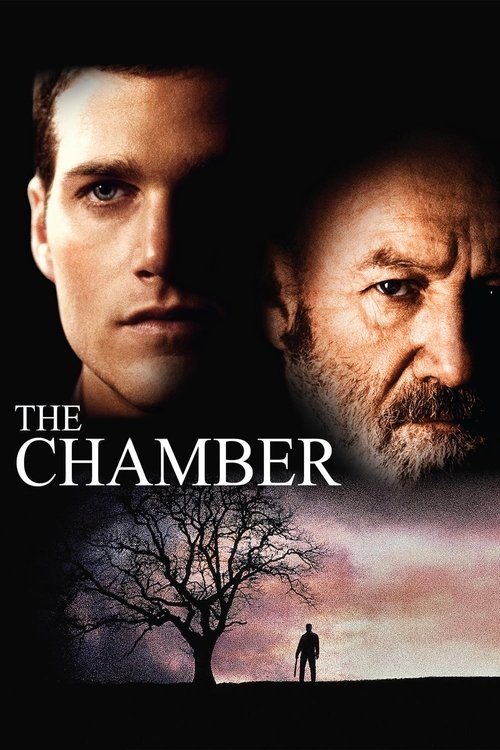
The Chamber
Idealistic young attorney Adam Hall takes on the death row clemency case of his racist grandfather, Sam Cayhall, a former Ku Klux Klan member he has never met.
The film commercial failure against its moderate budget of $50.0M, earning $22.5M globally (-55% loss). While initial box office returns were modest, the film has gained appreciation for its fresh perspective within the crime genre.


Plot Structure
Story beats plotted across runtime


Narrative Arc
Emotional journey through the story's key moments
Story Circle
Blueprint 15-beat structure
Arcplot Score Breakdown
Weighted: Precision (70%) + Arc (15%) + Theme (15%)
The Chamber (1996) exemplifies meticulously timed plot construction, characteristic of James Foley's storytelling approach. This structural analysis examines how the film's 15-point plot structure maps to proven narrative frameworks across 1 hour and 53 minutes. With an Arcplot score of 6.9, the film balances conventional beats with creative variation.
Characters
Cast & narrative archetypes

Adam Hall
Sam Cayhall
Lee Cayhall Bowen
Rollie Wedge
Governor David McAllister
Nora Stark
Main Cast & Characters
Adam Hall
Played by Chris O'Donnell
Young, idealistic lawyer who takes on defending his racist grandfather on death row to understand his family's dark past.
Sam Cayhall
Played by Gene Hackman
Unrepentant racist and former KKK member on death row for a bombing that killed two children, confronting his legacy.
Lee Cayhall Bowen
Played by Faye Dunaway
Sam's daughter and Adam's aunt, struggling with alcoholism and the shame of her father's crimes.
Rollie Wedge
Played by Raymond J. Barry
Mysterious former KKK associate who may hold the key to proving Sam had an accomplice in the bombing.
Governor David McAllister
Played by David Marshall Grant
Ambitious politician who built his career prosecuting Sam Cayhall and now faces pressure regarding clemency.
Nora Stark
Played by Lela Rochon
Adam's colleague and love interest who supports his difficult case.
Structural Analysis
The Status Quo at 1 minutes (1% through the runtime) establishes The 1967 Greenville bombing that killed two Jewish children establishes the horrific crime at the heart of the story, introducing the violent legacy that will haunt the Cayhall family.. Of particular interest, this early placement immediately immerses viewers in the story world.
The inciting incident occurs at 14 minutes when Adam reveals his true identity and requests assignment to his grandfather's death row appeal, disrupting his carefully constructed life and forcing confrontation with his buried past.. At 12% through the film, this Disruption aligns precisely with traditional story structure. This beat shifts the emotional landscape, launching the protagonist into the central conflict.
The First Threshold at 28 minutes marks the transition into Act II, occurring at 25% of the runtime. This shows the protagonist's commitment to Adam commits fully to Sam's defense despite Sam's hostility and the firm's reluctance. He chooses to confront his heritage directly by entering Parchman Farm as Sam's lawyer., moving from reaction to action.
At 57 minutes, the Midpoint arrives at 50% of the runtime—precisely centered, creating perfect narrative symmetry. Of particular interest, this crucial beat Adam discovers Rollie Wedge was the true bomb maker, providing potential grounds for appeal. This false victory suggests Sam might be saved through new evidence of his diminished culpability., fundamentally raising what's at risk. The emotional intensity shifts, dividing the narrative into clear before-and-after phases.
The Collapse moment at 85 minutes (75% through) represents the emotional nadir. Here, The final appeal is denied and the governor refuses clemency. Sam will die. Adam has failed to save his grandfather, and the weight of the family's legacy of death feels inescapable., indicates the protagonist at their lowest point. This beat's placement in the final quarter sets up the climactic reversal.
The Second Threshold at 90 minutes initiates the final act resolution at 80% of the runtime. Adam realizes the case was never just about saving Sam's life but about understanding his family and breaking the cycle of hatred. He chooses connection over judgment in Sam's final hours., demonstrating the transformation achieved throughout the journey.
Emotional Journey
The Chamber's emotional architecture traces a deliberate progression across 15 carefully calibrated beats.
Narrative Framework
This structural analysis employs systematic plot point analysis that identifies crucial turning points. By mapping The Chamber against these established plot points, we can identify how James Foley utilizes or subverts traditional narrative conventions. The plot point approach reveals not only adherence to structural principles but also creative choices that distinguish The Chamber within the crime genre.
James Foley's Structural Approach
Among the 8 James Foley films analyzed on Arcplot, the average structural score is 7.0, reflecting strong command of classical structure. The Chamber takes a more unconventional approach compared to the director's typical style. For comparative analysis, explore the complete James Foley filmography.
Comparative Analysis
Additional crime films include The Bad Guys, Rustom and The Whole Ten Yards. For more James Foley analyses, see The Corruptor, Fifty Shades Freed and Confidence.
Plot Points by Act
Act I
SetupStatus Quo
The 1967 Greenville bombing that killed two Jewish children establishes the horrific crime at the heart of the story, introducing the violent legacy that will haunt the Cayhall family.
Theme
The theme of inherited sin and whether children must pay for their fathers' crimes is introduced as we learn Adam Hall has hidden his connection to Sam Cayhall, the convicted bomber.
Worldbuilding
We see Adam's successful Chicago law career contrasted with his shameful family secret. His father's suicide, his grandmother's denial, and the weight of the Cayhall name are established.
Disruption
Adam reveals his true identity and requests assignment to his grandfather's death row appeal, disrupting his carefully constructed life and forcing confrontation with his buried past.
Resistance
Adam faces resistance from his law firm, his family, and Sam himself who refuses his help. He must debate whether to pursue this painful case that will expose family secrets.
Act II
ConfrontationFirst Threshold
Adam commits fully to Sam's defense despite Sam's hostility and the firm's reluctance. He chooses to confront his heritage directly by entering Parchman Farm as Sam's lawyer.
Mirror World
Adam connects with his aunt Lee Cayhall, his father's sister, who embodies the family's emotional damage. Their relationship will teach Adam about forgiveness and the complexity of loving flawed people.
Premise
Adam investigates the original bombing, interviewing witnesses and discovering the Klan conspiracy. He finds evidence of Rollie Wedge, a third accomplice who may have actually built the bomb.
Midpoint
Adam discovers Rollie Wedge was the true bomb maker, providing potential grounds for appeal. This false victory suggests Sam might be saved through new evidence of his diminished culpability.
Opposition
Legal appeals systematically fail. The courts reject new evidence claims. Sam's racism and stubbornness create friction. Lee's alcoholism spirals. The execution date looms as every avenue closes.
Collapse
The final appeal is denied and the governor refuses clemency. Sam will die. Adam has failed to save his grandfather, and the weight of the family's legacy of death feels inescapable.
Crisis
Adam confronts his despair and anger. Lee collapses under the strain. The family must face that legal salvation is impossible and grapple with what redemption might still be achievable.
Act III
ResolutionSecond Threshold
Adam realizes the case was never just about saving Sam's life but about understanding his family and breaking the cycle of hatred. He chooses connection over judgment in Sam's final hours.
Synthesis
Adam spends Sam's final hours with him, achieving genuine connection. Sam expresses remorse and love. The family gathers. Adam helps Sam die with dignity and some measure of peace.
Transformation
After Sam's execution, Adam emerges transformed. He has confronted his family's darkest legacy and found a way forward through understanding rather than shame. The cycle of hatred can end with him.