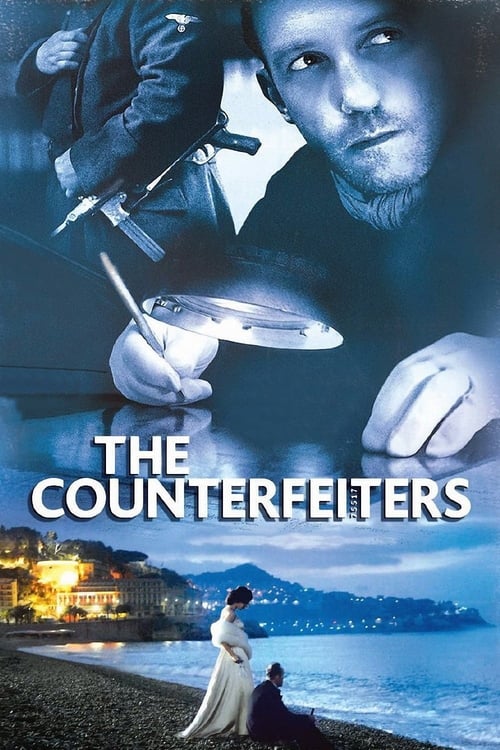
The Counterfeiters
The story of Jewish counterfeiter Salomon Sorowitsch, who was coerced into assisting the Nazi operation of the Sachsenhausen concentration camp during World War II.
Despite its tight budget of $6.3M, The Counterfeiters became a financial success, earning $20.2M worldwide—a 223% return. The film's unique voice resonated with audiences, showing that strong storytelling can transcend budget limitations.
1 Oscar. 7 wins & 10 nominations


Plot Structure
Story beats plotted across runtime


Narrative Arc
Emotional journey through the story's key moments
Story Circle
Blueprint 15-beat structure
Arcplot Score Breakdown
Weighted: Precision (70%) + Arc (15%) + Theme (15%)
The Counterfeiters (2007) demonstrates deliberately positioned story structure, characteristic of Stefan Ruzowitzky's storytelling approach. This structural analysis examines how the film's 15-point plot structure maps to proven narrative frameworks across 1 hour and 38 minutes. With an Arcplot score of 7.0, the film balances conventional beats with creative variation.
Characters
Cast & narrative archetypes

Salomon Sorowitsch
Adolf Burger
Friedrich Herzog
Kolya Karloff
Holst
Zilinski
Main Cast & Characters
Salomon Sorowitsch
Played by Karl Markovics
Master counterfeiter forced to forge British pounds and US dollars for the Nazis in Sachsenhausen concentration camp.
Adolf Burger
Played by August Diehl
Communist printer and saboteur who resists the counterfeiting operation on moral grounds.
Friedrich Herzog
Played by Devid Striesow
SS officer in charge of Operation Bernhard, pragmatic and relatively restrained in his cruelty.
Kolya Karloff
Played by Sebastian Urzendowsky
Fellow counterfeiter and former nightclub owner, becomes Salomon's closest ally in the camp.
Holst
Played by Martin Brambach
Brutal SS guard who represents the constant threat of violence in the camp.
Zilinski
Played by Veit Stübner
Polish Jew and former director of the Bank of Poland, provides technical expertise in counterfeiting.
Structural Analysis
The Status Quo at 1 minutes (1% through the runtime) establishes Post-war Monte Carlo: Sally gambles at a casino, a hollow survivor surrounded by wealth. The flash-forward establishes a man who has survived but seems disconnected from life, hinting at the moral weight he carries.. Of particular interest, this early placement immediately immerses viewers in the story world.
The inciting incident occurs at 12 minutes when Sally is arrested by Herzog and sent to Mauthausen concentration camp. His comfortable criminal life is shattered as he becomes just another Jewish prisoner, stripped of identity and facing brutal camp conditions.. At 13% through the film, this Disruption is delayed, allowing extended setup of the story world. This beat shifts the emotional landscape, launching the protagonist into the central conflict.
The First Threshold at 25 minutes marks the transition into Act II, occurring at 25% of the runtime. This reveals the protagonist's commitment to Sally is transferred to Sachsenhausen and recruited into Operation Bernhard by Herzog, now an SS officer. He accepts the role as lead counterfeiter, choosing collaboration over certain death - crossing into a morally ambiguous new world., moving from reaction to action.
At 50 minutes, the Midpoint arrives at 51% of the runtime—precisely centered, creating perfect narrative symmetry. Notably, this crucial beat The team successfully counterfeits the British pound - a false victory. Herzog celebrates and demands they now forge the American dollar. Success means extending the war; failure means death. The stakes crystallize and the moral trap tightens., fundamentally raising what's at risk. The emotional intensity shifts, dividing the narrative into clear before-and-after phases.
The Collapse moment at 73 minutes (75% through) represents the emotional nadir. Here, Kolya, a young team member Sally has protected like a son, dies of tuberculosis. His death represents the "whiff of death" and the ultimate failure of Sally's survival-at-all-costs philosophy - he couldn't save everyone despite his compromises., indicates the protagonist at their lowest point. This beat's placement in the final quarter sets up the climactic reversal.
The Second Threshold at 78 minutes initiates the final act resolution at 80% of the runtime. Sally makes a choice: he destroys the dollar printing plates rather than complete the project. He finally takes a moral stand, synthesizing Burger's idealism with his survival instincts - sabotaging from within rather than passive collaboration., demonstrating the transformation achieved throughout the journey.
Emotional Journey
The Counterfeiters's emotional architecture traces a deliberate progression across 15 carefully calibrated beats.
Narrative Framework
This structural analysis employs a 15-point narrative structure framework that maps key story moments. By mapping The Counterfeiters against these established plot points, we can identify how Stefan Ruzowitzky utilizes or subverts traditional narrative conventions. The plot point approach reveals not only adherence to structural principles but also creative choices that distinguish The Counterfeiters within the drama genre.
Comparative Analysis
Additional drama films include After Thomas, South Pacific and Dirty Dancing: Havana Nights.
Plot Points by Act
Act I
SetupStatus Quo
Post-war Monte Carlo: Sally gambles at a casino, a hollow survivor surrounded by wealth. The flash-forward establishes a man who has survived but seems disconnected from life, hinting at the moral weight he carries.
Theme
In flashback to 1936 Berlin, a colleague tells Sally that his counterfeiting skills could be used for something greater than personal profit - foreshadowing the moral question of what one's talents are worth when survival is at stake.
Worldbuilding
We see Sally's pre-war life as Berlin's king of counterfeiters - charming, amoral, living lavishly. His arrest by Inspector Herzog establishes the antagonist relationship. The world of criminal artistry and Nazi persecution is established.
Disruption
Sally is arrested by Herzog and sent to Mauthausen concentration camp. His comfortable criminal life is shattered as he becomes just another Jewish prisoner, stripped of identity and facing brutal camp conditions.
Resistance
Sally survives years in Mauthausen by using his artistic skills to paint portraits for Nazi officers. He learns to navigate the camp system, trading his talents for survival - establishing his moral flexibility that will be tested later.
Act II
ConfrontationFirst Threshold
Sally is transferred to Sachsenhausen and recruited into Operation Bernhard by Herzog, now an SS officer. He accepts the role as lead counterfeiter, choosing collaboration over certain death - crossing into a morally ambiguous new world.
Mirror World
Sally meets Adolf Burger, a idealistic Jewish printer who represents the moral counterpoint. While Sally focuses on survival at any cost, Burger believes they should sabotage the operation to hurt the Nazi war effort, even if it means death.
Premise
The counterfeiters work in relative luxury - beds, food, music - while hearing executions outside. Sally perfects the British pound, earning praise and privileges. The team functions as a bizarre family, navigating the strange bubble of Block 19.
Midpoint
The team successfully counterfeits the British pound - a false victory. Herzog celebrates and demands they now forge the American dollar. Success means extending the war; failure means death. The stakes crystallize and the moral trap tightens.
Opposition
Pressure mounts as the dollar proves difficult. Burger secretly sabotages the work while Sally covers for him. Team members fall ill with tuberculosis. Herzog grows threatening as deadlines pass. The moral tension between Sally and Burger intensifies.
Collapse
Kolya, a young team member Sally has protected like a son, dies of tuberculosis. His death represents the "whiff of death" and the ultimate failure of Sally's survival-at-all-costs philosophy - he couldn't save everyone despite his compromises.
Crisis
Sally confronts the hollowness of mere survival. Kolya's death and Burger's moral clarity force him to reckon with what he's become. The sounds of camp atrocities penetrate their bubble as the war's end approaches.
Act III
ResolutionSecond Threshold
Sally makes a choice: he destroys the dollar printing plates rather than complete the project. He finally takes a moral stand, synthesizing Burger's idealism with his survival instincts - sabotaging from within rather than passive collaboration.
Synthesis
The camp collapses as Allied forces approach. Herzog flees. Sally has a chance to kill him but chooses not to. The survivors are liberated, emerging into freedom. Sally keeps counterfeit money as the team disperses into the post-war world.
Transformation
Return to Monte Carlo: Sally gambles away the counterfeit money and dances with a woman. Unlike the hollow opening, he now embraces life. His transformation is complete - from amoral survivor to someone who found meaning through moral choice.