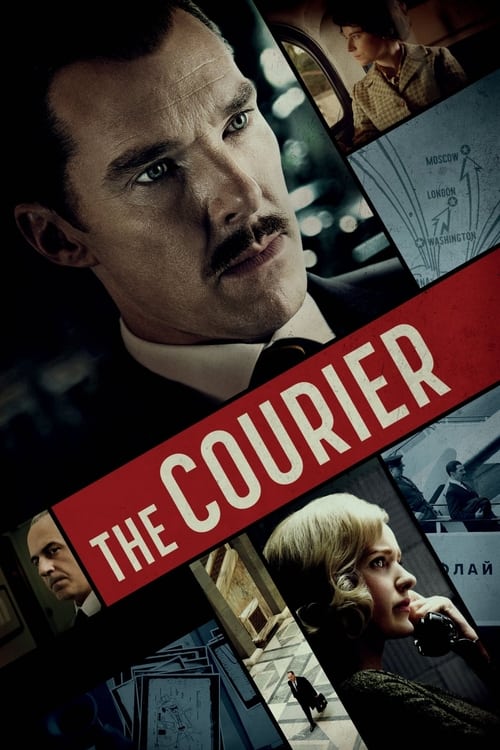
The Courier
Cold War spy Greville Wynne and his Russian source try to put an end to the Cuban Missile Crisis.
The film earned $26.0M at the global box office.


Plot Structure
Story beats plotted across runtime


Narrative Arc
Emotional journey through the story's key moments
Story Circle
Blueprint 15-beat structure
Arcplot Score Breakdown
Weighted: Precision (70%) + Arc (15%) + Theme (15%)
The Courier (2020) exemplifies meticulously timed story structure, characteristic of Dominic Cooke's storytelling approach. This structural analysis examines how the film's 15-point plot structure maps to proven narrative frameworks across 1 hour and 52 minutes. With an Arcplot score of 6.3, the film takes an unconventional approach to traditional narrative frameworks.
Characters
Cast & narrative archetypes

Greville Wynne
Oleg Penkovsky
Dickie Franks
Emily Donovan
Sheila Wynne
Main Cast & Characters
Greville Wynne
Played by Benedict Cumberbatch
British businessman recruited by MI6 and CIA to courier intelligence from Soviet officer Oleg Penkovsky during the Cold War.
Oleg Penkovsky
Played by Merab Ninidze
Soviet GRU colonel who risks his life to provide crucial intelligence to the West during the Cuban Missile Crisis.
Dickie Franks
Played by Angus Wright
MI6 officer who recruits and handles Wynne, coordinating the intelligence operation with the CIA.
Emily Donovan
Played by Rachel Brosnahan
CIA officer who initiates contact with Penkovsky and works closely with MI6 to manage the operation.
Sheila Wynne
Played by Jessie Buckley
Greville's wife who struggles with her husband's increasingly frequent absences and suspicious behavior.
Structural Analysis
The Status Quo at 1 minutes (1% through the runtime) establishes Greville Wynne is introduced as an ordinary British businessman living a comfortable, predictable life with his wife Sheila and son Andrew in London. His world is defined by sales meetings and domestic routine, unaware of the geopolitical storms brewing.. Significantly, this early placement immediately immerses viewers in the story world.
The inciting incident occurs at 13 minutes when MI6 agent Dickie Franks and CIA officer Emily Donovan approach Greville at a trade event, revealing they want to recruit him for intelligence work behind the Iron Curtain. His ordinary life is suddenly disrupted by forces far beyond his control.. At 12% through the film, this Disruption aligns precisely with traditional story structure. This beat shifts the emotional landscape, launching the protagonist into the central conflict.
The First Threshold at 28 minutes marks the transition into Act II, occurring at 25% of the runtime. This demonstrates the protagonist's commitment to Greville accepts the mission and boards a plane to Moscow for his first meeting with Oleg Penkovsky, presented as a legitimate business trip. He actively chooses to cross into this dangerous new world, leaving behind the safety of his ordinary life., moving from reaction to action.
At 56 minutes, the Midpoint arrives at 50% of the runtime—precisely centered, creating perfect narrative symmetry. Significantly, this crucial beat The intelligence Oleg provides proves crucial during the Cuban Missile Crisis, helping Kennedy understand Khrushchev's position. This is a false victory—their work appears to have helped avert nuclear war, but the increased activity has drawn KGB attention and the noose is tightening., fundamentally raising what's at risk. The emotional intensity shifts, dividing the narrative into clear before-and-after phases.
The Collapse moment at 83 minutes (74% through) represents the emotional nadir. Here, Greville is arrested by the KGB in Moscow. He is thrown into Lubyanka Prison and subjected to brutal interrogation. The whiff of death is literal—he faces execution as a spy. His entire world collapses as he is beaten, starved, and isolated in a Soviet prison cell., demonstrates the protagonist at their lowest point. This beat's placement in the final quarter sets up the climactic reversal.
The Second Threshold at 90 minutes initiates the final act resolution at 80% of the runtime. Greville sees Oleg briefly during their trial. Despite his broken state, Greville finds renewed purpose in their shared sacrifice. He realizes his suffering has meaning—they both chose to act against tyranny. This synthesis of friendship and duty gives him strength to endure., demonstrating the transformation achieved throughout the journey.
Emotional Journey
The Courier's emotional architecture traces a deliberate progression across 15 carefully calibrated beats.
Narrative Framework
This structural analysis employs structural analysis methodology used to understand storytelling architecture. By mapping The Courier against these established plot points, we can identify how Dominic Cooke utilizes or subverts traditional narrative conventions. The plot point approach reveals not only adherence to structural principles but also creative choices that distinguish The Courier within the thriller genre.
Comparative Analysis
Additional thriller films include The Warriors, Thunderball and Rustom.
Plot Points by Act
Act I
SetupStatus Quo
Greville Wynne is introduced as an ordinary British businessman living a comfortable, predictable life with his wife Sheila and son Andrew in London. His world is defined by sales meetings and domestic routine, unaware of the geopolitical storms brewing.
Theme
Oleg Penkovsky tells a Western contact that ordinary people must sometimes do extraordinary things when governments fail. This establishes the film's central theme: the moral duty of individuals to act against tyranny, even at great personal cost.
Worldbuilding
The dual worlds are established: Greville's comfortable British domestic life contrasts with the paranoid surveillance state of 1960s Moscow where Oleg operates. MI6 and CIA officers Emily Donovan and Dickie Franks are introduced as they identify Wynne as their perfect civilian courier.
Disruption
MI6 agent Dickie Franks and CIA officer Emily Donovan approach Greville at a trade event, revealing they want to recruit him for intelligence work behind the Iron Curtain. His ordinary life is suddenly disrupted by forces far beyond his control.
Resistance
Greville debates the proposition with Dickie and Emily. He resists, citing his family and lack of qualifications. Emily guides him through the reasoning: his ordinariness is his cover. The stakes are explained—Soviet nuclear capabilities and the possibility of preventing war.
Act II
ConfrontationFirst Threshold
Greville accepts the mission and boards a plane to Moscow for his first meeting with Oleg Penkovsky, presented as a legitimate business trip. He actively chooses to cross into this dangerous new world, leaving behind the safety of his ordinary life.
Mirror World
Greville meets Oleg Penkovsky in Moscow. Their first genuine conversation reveals Oleg's humanity and his own family motivations. A deep friendship begins to form between these two unlikely allies from opposite sides of the Cold War, embodying the theme of human connection transcending political barriers.
Premise
The spy operation unfolds with Greville making multiple trips to Moscow. He and Oleg develop their friendship over vodka and conversation while passing vital intelligence. The tradecraft of dead drops and coded messages creates tension, but the missions succeed and their bond deepens.
Midpoint
The intelligence Oleg provides proves crucial during the Cuban Missile Crisis, helping Kennedy understand Khrushchev's position. This is a false victory—their work appears to have helped avert nuclear war, but the increased activity has drawn KGB attention and the noose is tightening.
Opposition
The KGB closes in on Oleg. Greville's marriage strains as Sheila suspects an affair due to his secretive behavior. MI6 and CIA consider extracting both men but hesitate. Each trip to Moscow becomes more dangerous as surveillance intensifies and Oleg's handlers grow suspicious.
Collapse
Greville is arrested by the KGB in Moscow. He is thrown into Lubyanka Prison and subjected to brutal interrogation. The whiff of death is literal—he faces execution as a spy. His entire world collapses as he is beaten, starved, and isolated in a Soviet prison cell.
Crisis
Greville endures horrific conditions in prison. He is psychologically and physically broken down, losing weight dramatically. He refuses to betray Oleg despite the torture. Meanwhile, Sheila learns the truth about his activities and must process this revelation about her husband.
Act III
ResolutionSecond Threshold
Greville sees Oleg briefly during their trial. Despite his broken state, Greville finds renewed purpose in their shared sacrifice. He realizes his suffering has meaning—they both chose to act against tyranny. This synthesis of friendship and duty gives him strength to endure.
Synthesis
Both men are convicted in a show trial. Oleg is sentenced to death while Greville receives eight years. The British and Americans negotiate a prisoner exchange. After months of imprisonment, Greville is finally exchanged for a Soviet spy at the Berlin border, returning home gaunt but unbroken.
Transformation
Greville reunites with Sheila, who now understands and respects the man her husband truly is. The ordinary salesman has been transformed through sacrifice into someone extraordinary. Title cards reveal Oleg was executed but his intelligence helped end the Cold War—the theme fulfilled through ultimate sacrifice.