The Croods
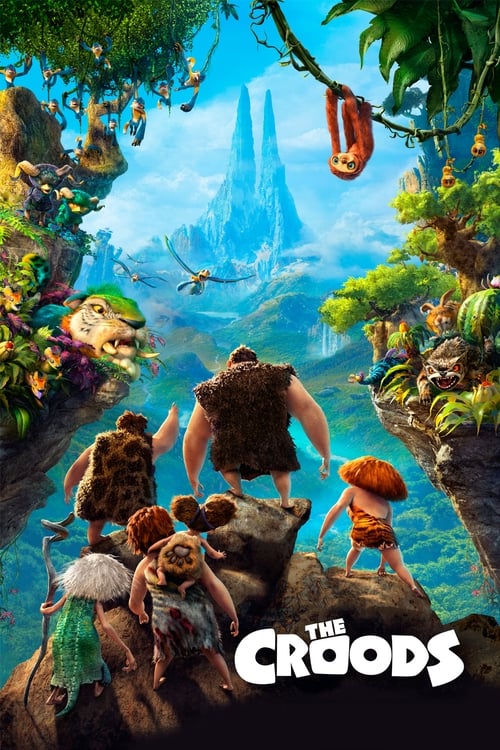
In the primeval era, Grug and his family risk the dangers of their surroundings to find a new dwelling place. Along the way, they meet a modern boy who woos them with his adventurous ways.
Despite a substantial budget of $135.0M, The Croods became a solid performer, earning $587.2M worldwide—a 335% return.
Nominated for 1 Oscar. 5 wins & 46 nominations


Plot Structure
Story beats plotted across runtime


Narrative Arc
Emotional journey through the story's key moments
Story Circle
Blueprint 15-beat structure
Characters
Cast & narrative archetypes

Eep Crood
Guy
Grug Crood
Ugga Crood
Gran
Thunk Crood
Sandy Crood
Main Cast & Characters
Eep Crood
Played by Emma Stone
Teenage cavewoman who yearns to explore beyond her family's cave and discovers a new world of possibilities.
Guy
Played by Ryan Reynolds
Inventive and forward-thinking young man who introduces the Croods to fire, shoes, and new ideas.
Grug Crood
Played by Nicolas Cage
Overprotective patriarch who rules through fear and tradition to keep his family safe in the cave.
Ugga Crood
Played by Catherine Keener
Supportive matriarch and mother who balances Grug's caution with understanding of her family's needs.
Gran
Played by Cloris Leachman
Ugga's tough, sarcastic mother who delights in antagonizing Grug and surviving against all odds.
Thunk Crood
Played by Clark Duke
Simple-minded but sweet son who lacks survival instincts but has a good heart.
Sandy Crood
Played by Randy Thom
Feral youngest daughter who is incredibly strong and savage despite her small size.
Structural Analysis
The Status Quo at 1 minutes (1% through the runtime) establishes The Croods family huddles in their dark cave as Eep's voiceover introduces their fear-based survival rules: "Never not be afraid." The family's isolated, primitive existence is established.. Of particular interest, this early placement immediately immerses viewers in the story world.
The inciting incident occurs at 12 minutes when Eep sneaks out at night following a mysterious light and discovers Guy, a young man with fire—something the Croods have never seen. He warns her that the world is ending and she must flee.. At 12% through the film, this Disruption aligns precisely with traditional story structure. This beat shifts the emotional landscape, launching the protagonist into the central conflict.
The First Threshold at 24 minutes marks the transition into Act II, occurring at 24% of the runtime. This demonstrates the protagonist's commitment to With their cave destroyed and nowhere to go, Grug reluctantly agrees to follow Guy toward "Tomorrow"—the mountain destination where Guy promises safety. The family commits to journeying through the unknown world together., moving from reaction to action.
At 49 minutes, the Midpoint arrives at 49% of the runtime—precisely centered, creating perfect narrative symmetry. Notably, this crucial beat The family experiences pure joy together, playing and bonding in a lush paradise. Guy tells a story with a happy ending about a tiger named Chunky. For a moment, fear is forgotten and they feel like a true family—a false victory before danger returns., fundamentally raising what's at risk. The emotional intensity shifts, dividing the narrative into clear before-and-after phases.
The Collapse moment at 74 minutes (75% through) represents the emotional nadir. Here, Grug and Eep have a devastating confrontation. Grug traps Guy in a hollow log out of jealousy. The ground splits, separating the family from safety. Grug sacrifices himself by throwing each family member across the chasm, staying behind to face certain death., indicates the protagonist at their lowest point. This beat's placement in the final quarter sets up the climactic reversal.
The Second Threshold at 78 minutes initiates the final act resolution at 79% of the runtime. Alone in the cave, Grug sees cave paintings and has an epiphany. He paints his family on the wall and realizes that ideas—not hiding—are the answer. He creates his own invention: a flying machine made of a giant skeleton and tar., demonstrating the transformation achieved throughout the journey.
Emotional Journey
The Croods's emotional architecture traces a deliberate progression across 15 carefully calibrated beats.
Narrative Framework
This structural analysis employs a 15-point narrative structure framework that maps key story moments. By mapping The Croods against these established plot points, we can identify how Chris Sanders utilizes or subverts traditional narrative conventions. The plot point approach reveals not only adherence to structural principles but also creative choices that distinguish The Croods within the animation genre.
Chris Sanders's Structural Approach
Among the 4 Chris Sanders films analyzed on Arcplot, the average structural score is 6.0, showcasing experimental approaches to narrative form. The Croods exemplifies the director's characteristic narrative technique. For comparative analysis, explore the complete Chris Sanders filmography.
Comparative Analysis
Additional animation films include The Bad Guys, Puss in Boots and Violet Evergarden: Eternity and the Auto Memory Doll. For more Chris Sanders analyses, see The Call of the Wild, Lilo & Stitch and The Wild Robot.
Plot Points by Act
Act I
SetupStatus Quo
The Croods family huddles in their dark cave as Eep's voiceover introduces their fear-based survival rules: "Never not be afraid." The family's isolated, primitive existence is established.
Theme
Grug tells his cautionary bedtime story about a family who tried something new and died. Gran comments "Same ending as always," while Eep yearns for stories with different endings—establishing the thematic tension between fear and curiosity.
Worldbuilding
The Croods' daily survival routine is shown: hunting eggs as a family unit, avoiding predators, strict cave-dwelling rules. Eep's restless spirit and desire to explore beyond the cave conflicts with Grug's protective paranoia.
Disruption
Eep sneaks out at night following a mysterious light and discovers Guy, a young man with fire—something the Croods have never seen. He warns her that the world is ending and she must flee.
Resistance
Eep returns to the cave conflicted. An earthquake destroys their home, forcing the family into the open world. They encounter Guy again. Grug distrusts him, but the family needs guidance through this dangerous new landscape.
Act II
ConfrontationFirst Threshold
With their cave destroyed and nowhere to go, Grug reluctantly agrees to follow Guy toward "Tomorrow"—the mountain destination where Guy promises safety. The family commits to journeying through the unknown world together.
Mirror World
Guy introduces the family to fire and demonstrates inventive thinking. Eep and Guy's connection deepens as he shows her his shell horn and shares his philosophy: ideas are what separate survival from truly living.
Premise
The family traverses a vibrant, dangerous prehistoric landscape full of fantastical creatures. Guy introduces innovations—shoes, umbrellas, fire. Eep embraces the adventure while Grug struggles with his diminishing role as leader and protector.
Midpoint
The family experiences pure joy together, playing and bonding in a lush paradise. Guy tells a story with a happy ending about a tiger named Chunky. For a moment, fear is forgotten and they feel like a true family—a false victory before danger returns.
Opposition
The tectonic destruction accelerates, pursuing them relentlessly. Grug's resentment of Guy grows as the family embraces Guy's ideas over his. Grug feels useless and fears losing his family. Father-daughter tension between Grug and Eep intensifies.
Collapse
Grug and Eep have a devastating confrontation. Grug traps Guy in a hollow log out of jealousy. The ground splits, separating the family from safety. Grug sacrifices himself by throwing each family member across the chasm, staying behind to face certain death.
Crisis
The family reaches the other side but Grug is stranded alone as the world collapses around him. Eep screams for her father. Grug retreats to a cave, seemingly accepting his fate—returning to darkness and isolation.
Act III
ResolutionSecond Threshold
Alone in the cave, Grug sees cave paintings and has an epiphany. He paints his family on the wall and realizes that ideas—not hiding—are the answer. He creates his own invention: a flying machine made of a giant skeleton and tar.
Synthesis
Grug launches himself across the chasm on his invention, reuniting with his family in a triumphant moment. Together they outrun the final destruction and emerge into a beautiful new land—"Tomorrow." Grug fully embraces change and Guy becomes part of the family.
Transformation
The Croods stand together on the beach of their new home, no longer hiding in darkness but living in the light. Grug's new family motto: "Never be afraid." Eep's narration mirrors the opening, but now celebrates curiosity and togetherness.