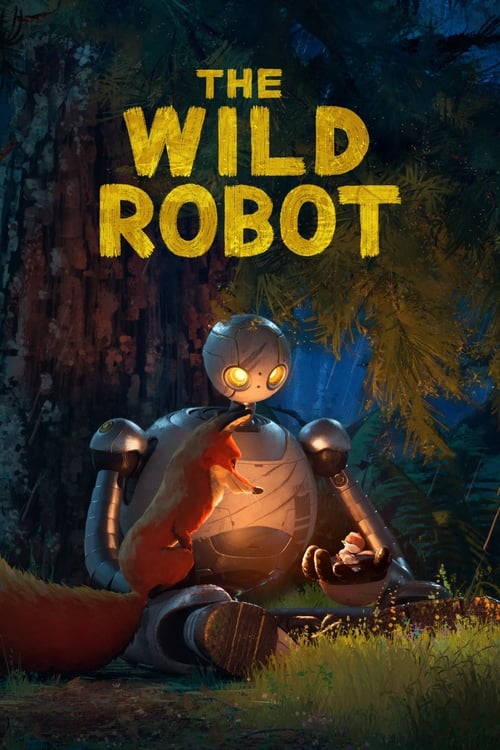
The Wild Robot
After a shipwreck, an intelligent robot called Roz is stranded on an uninhabited island. To survive the harsh environment, Roz bonds with the island's animals and cares for an orphaned baby goose.
Despite a significant budget of $78.0M, The Wild Robot became a financial success, earning $332.0M worldwide—a 326% return.
Nominated for 3 Oscars. 93 wins & 106 nominations


Plot Structure
Story beats plotted across runtime


Narrative Arc
Emotional journey through the story's key moments
Story Circle
Blueprint 15-beat structure
Arcplot Score Breakdown
Weighted: Precision (70%) + Arc (15%) + Theme (15%)
The Wild Robot (2024) showcases carefully calibrated narrative architecture, characteristic of Chris Sanders's storytelling approach. This structural analysis examines how the film's 15-point plot structure maps to proven narrative frameworks across 1 hour and 40 minutes. With an Arcplot score of 3.4, the film takes an unconventional approach to traditional narrative frameworks.
Characters
Cast & narrative archetypes

Roz
Brightbill
Fink
Pinktail
Longneck
Thunderbolt
Vontra
Main Cast & Characters
Roz
Played by Lupita Nyong'o
A robot shipwrecked on an uninhabited island who must learn to adapt to the wilderness and becomes the adoptive parent of an orphaned gosling.
Brightbill
Played by Kit Connor
An orphaned runt gosling raised by Roz who struggles with identity and belonging as he learns to fly and migrate.
Fink
Played by Pedro Pascal
A cunning fox who initially sees Roz as a threat but becomes her loyal friend and guide to surviving the wilderness.
Pinktail
Played by Catherine O'Hara
Brightbill's biological mother who dies in a storm, leaving her egg for Roz to care for.
Longneck
Played by Bill Nighy
A wise and experienced goose who teaches Brightbill the skills needed to migrate and survive.
Thunderbolt
Played by Ving Rhames
A fierce peregrine falcon and territorial predator of the island who initially opposes Roz.
Vontra
Played by Boone Storm
A retrieval robot sent to bring Roz back to civilization, representing her past and original programming.
Structural Analysis
The Status Quo at 1 minutes (1% through the runtime) establishes Robot wakes up alone on deserted island; mysterious and curious surroundings.. Of particular interest, this early placement immediately immerses viewers in the story world.
The inciting incident occurs at 20 minutes when Storm or danger threatens new life; first test of robot's abilities.. At 20% through the film, this Disruption is delayed, allowing extended setup of the story world. This beat shifts the emotional state to -2, launching the protagonist into the central conflict.
The First Threshold at 32 minutes marks the transition into Act II, occurring at 32% of the runtime. This reveals the protagonist's commitment to Robot begins helping animals, building shelter, engaging with environment actively., moving from reaction to action.
At 57 minutes, the Midpoint arrives at 57% of the runtime—slightly delayed, extending Act IIa tension. The analysis reveals that this crucial beat Major threat to island or robot; first real victory or loss; stakes heightened., fundamentally raising what's at risk. The emotional state shifts to 9, dividing the narrative into clear before-and-after phases.
The Collapse moment at 69 minutes (69% through) represents the emotional nadir. Here, Robot injured or isolated; animals in danger; sense of despair., indicates the protagonist at their lowest point with 2. This beat's placement in the final quarter sets up the climactic reversal.
The Second Threshold at 77 minutes initiates the final act resolution at 77% of the runtime. Robot rallies animals; creative solution for survival; confident in role., demonstrating the transformation achieved throughout the journey. The emotional culmination reaches 2.
Emotional Journey
The Wild Robot's emotional architecture traces a deliberate progression from -5 to 9. The narrative's emotional pivot at the midpoint—9—divides the journey into distinct phases, with the first half building toward this moment of transformation and the second half exploring its consequences. With 4 core emotional states, the narrative maintains focused emotional clarity, allowing sustained thematic development.
Narrative Framework
This structural analysis employs structural analysis methodology used to understand storytelling architecture. By mapping The Wild Robot against these established plot points, we can identify how Chris Sanders utilizes or subverts traditional narrative conventions. The plot point approach reveals not only adherence to structural principles but also creative choices that distinguish The Wild Robot within the animation genre.
Chris Sanders's Structural Approach
Among the 4 Chris Sanders films analyzed on Arcplot, the average structural score is 6.0, showcasing experimental approaches to narrative form. The Wild Robot takes a more unconventional approach compared to the director's typical style. For comparative analysis, explore the complete Chris Sanders filmography.
Comparative Analysis
Additional animation films include The Bad Guys, Puss in Boots and Violet Evergarden: Eternity and the Auto Memory Doll. For more Chris Sanders analyses, see The Call of the Wild, Lilo & Stitch and The Croods.
Plot Points by Act
Act I
SetupStatus Quo
Robot wakes up alone on deserted island; mysterious and curious surroundings.
Theme
Identity, survival, and adaptation in the wild; learning and growth through nature.
Worldbuilding
Robot explores island; discovers animals, terrain, and learns basic survival skills.
Disruption
Storm or danger threatens new life; first test of robot's abilities.
Resistance
Can robot survive and coexist with island creatures? Conflicting instincts vs. learning.
Act II
ConfrontationFirst Threshold
Robot begins helping animals, building shelter, engaging with environment actively.
Mirror World
Friendship with certain animals; emotional bonds forming; empathy emerges.
Premise
Robot experiments with creative solutions; amusing, tense, and adventurous scenarios.
Midpoint
Major threat to island or robot; first real victory or loss; stakes heightened.
Opposition
Predators, storm, or human interference; tension rises; survival tested.
Collapse
Robot injured or isolated; animals in danger; sense of despair.
Crisis
Robot reflects on purpose, identity, and relationships; learns to trust instincts.
Act III
ResolutionSecond Threshold
Robot rallies animals; creative solution for survival; confident in role.
Synthesis
Robot overcomes threat; island harmony restored; animals and robot united.
Transformation
Robot standing atop hill, looking at horizon; growth, adaptation, and belonging achieved.