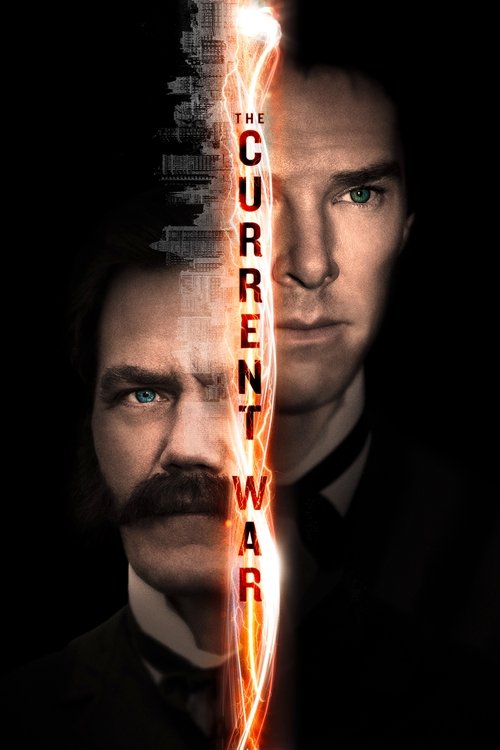
The Current War
Electricity titans Thomas Edison and George Westinghouse compete to create a sustainable system and market it to the American people.
The film box office disappointment against its respectable budget of $30.0M, earning $12.2M globally (-59% loss). While initial box office returns were modest, the film has gained appreciation for its compelling narrative within the drama genre.

Plot Structure
Story beats plotted across runtime


Narrative Arc
Emotional journey through the story's key moments
Story Circle
Blueprint 15-beat structure
Arcplot Score Breakdown
Weighted: Precision (70%) + Arc (15%) + Theme (15%)
The Current War (2018) exhibits precise narrative design, characteristic of Alfonso Gomez-Rejon's storytelling approach. This structural analysis examines how the film's 15-point plot structure maps to proven narrative frameworks across 1 hour and 48 minutes. With an Arcplot score of 7.6, the film showcases strong structural fundamentals.
Characters
Cast & narrative archetypes

Thomas Edison
George Westinghouse
Nikola Tesla
Samuel Insull
Mary Edison
Marguerite Westinghouse
Main Cast & Characters
Thomas Edison
Played by Benedict Cumberbatch
Brilliant inventor and businessman fighting to make DC current the standard for electrical power in America.
George Westinghouse
Played by Michael Shannon
Industrialist and Edison's chief rival, championing AC current as the superior electrical system.
Nikola Tesla
Played by Nicholas Hoult
Visionary inventor and engineer who partners with Westinghouse after leaving Edison's employment.
Samuel Insull
Played by Tom Holland
Edison's loyal secretary and business manager who helps orchestrate his electrical empire.
Mary Edison
Played by Tuppence Middleton
Thomas Edison's wife who provides emotional support while dealing with his obsessive work habits.
Marguerite Westinghouse
Played by Katherine Waterston
George Westinghouse's supportive and intelligent wife who advises him on business and ethical matters.
Structural Analysis
The Status Quo at 1 minutes (1% through the runtime) establishes Thomas Edison demonstrates his incandescent light bulb at Menlo Park in 1880, illuminating an entire neighborhood for the first time. He stands at the pinnacle of American invention, celebrated as the Wizard of Menlo Park.. Notably, this early placement immediately immerses viewers in the story world.
The inciting incident occurs at 13 minutes when George Westinghouse visits Edison seeking to license his patents, but Edison arrogantly dismisses him. Westinghouse decides to pursue alternating current technology independently, setting up the central conflict of the "War of Currents.".. At 12% through the film, this Disruption aligns precisely with traditional story structure. This beat shifts the emotional landscape, launching the protagonist into the central conflict.
The First Threshold at 26 minutes marks the transition into Act II, occurring at 25% of the runtime. This indicates the protagonist's commitment to Mary Edison dies, devastating Thomas. In his grief, Edison fully commits to the commercial war against Westinghouse, vowing to dominate the electrical industry with his DC system. He chooses competition over collaboration., moving from reaction to action.
At 53 minutes, the Midpoint arrives at 49% of the runtime—precisely centered, creating perfect narrative symmetry. Structural examination shows that this crucial beat Westinghouse wins the bid to illuminate the 1893 Chicago World's Fair, a devastating public defeat for Edison. Edison's fear campaign against AC has failed to prevent Westinghouse's commercial triumph. The stakes shift from market dominance to Edison's legacy itself., fundamentally raising what's at risk. The emotional intensity shifts, dividing the narrative into clear before-and-after phases.
The Collapse moment at 79 minutes (74% through) represents the emotional nadir. Here, The first electric chair execution of William Kemmler goes horrifically wrong, requiring multiple shocks and causing the prisoner to catch fire. Edison's name is tied to this gruesome death despite his stated principles. He has betrayed his own values—his technology has killed., illustrates the protagonist at their lowest point. This beat's placement in the final quarter sets up the climactic reversal.
The Second Threshold at 86 minutes initiates the final act resolution at 79% of the runtime. Edison shifts focus to his motion picture technology—the Kinetoscope. He realizes innovation itself, not defeating rivals, is his true purpose. Meanwhile, Westinghouse, facing bankruptcy, offers Tesla's royalty contract back to save the company, and Tesla tears it up in solidarity., demonstrating the transformation achieved throughout the journey.
Emotional Journey
The Current War's emotional architecture traces a deliberate progression across 15 carefully calibrated beats.
Narrative Framework
This structural analysis employs proven narrative structure principles that track dramatic progression. By mapping The Current War against these established plot points, we can identify how Alfonso Gomez-Rejon utilizes or subverts traditional narrative conventions. The plot point approach reveals not only adherence to structural principles but also creative choices that distinguish The Current War within the drama genre.
Comparative Analysis
Additional drama films include After Thomas, South Pacific and Dirty Dancing: Havana Nights.
Plot Points by Act
Act I
SetupStatus Quo
Thomas Edison demonstrates his incandescent light bulb at Menlo Park in 1880, illuminating an entire neighborhood for the first time. He stands at the pinnacle of American invention, celebrated as the Wizard of Menlo Park.
Theme
Edison's insistence that he will never work on anything that kills establishes the moral stakes of the war to come—innovation must serve humanity, not destroy it. His wife Mary reinforces this by reminding him of his responsibilities beyond invention.
Worldbuilding
The world of 1880s America is established—Edison's dominance with DC power, his family life with Mary, his relationship with secretary Samuel Insull, and the introduction of George Westinghouse as a Pittsburgh industrialist interested in Edison's patents. The race to electrify America is set.
Disruption
George Westinghouse visits Edison seeking to license his patents, but Edison arrogantly dismisses him. Westinghouse decides to pursue alternating current technology independently, setting up the central conflict of the "War of Currents."
Resistance
Edison grapples with expanding his DC power system across cities while Westinghouse acquires AC patents from Europe. Edison's wife Mary becomes ill. Nikola Tesla arrives seeking work with Edison but is dismissed after disagreements about AC vs DC. Edison wrestles with commercial pressures versus his idealistic vision.
Act II
ConfrontationFirst Threshold
Mary Edison dies, devastating Thomas. In his grief, Edison fully commits to the commercial war against Westinghouse, vowing to dominate the electrical industry with his DC system. He chooses competition over collaboration.
Mirror World
Nikola Tesla begins working for Westinghouse, bringing his AC motor technology. The contrast between Westinghouse's collaborative approach and Edison's controlling nature becomes clear—Westinghouse treats Tesla as a partner while Edison treats his employees as tools.
Premise
The War of Currents escalates. Edison demonstrates the dangers of AC by publicly electrocuting animals. Westinghouse wins contracts across the country with cheaper, more efficient AC power. Both men vie for the contract to light the Chicago World's Fair. Edison's ruthless tactics contrast with Westinghouse's principled business approach.
Midpoint
Westinghouse wins the bid to illuminate the 1893 Chicago World's Fair, a devastating public defeat for Edison. Edison's fear campaign against AC has failed to prevent Westinghouse's commercial triumph. The stakes shift from market dominance to Edison's legacy itself.
Opposition
Edison's tactics become increasingly desperate and morally compromised. He secretly supports Harold Brown's development of the electric chair using Westinghouse's AC system to associate AC with death. Financial pressures force Edison to accept J.P. Morgan's involvement. Westinghouse faces his own challenges as debts mount from the price war.
Collapse
The first electric chair execution of William Kemmler goes horrifically wrong, requiring multiple shocks and causing the prisoner to catch fire. Edison's name is tied to this gruesome death despite his stated principles. He has betrayed his own values—his technology has killed.
Crisis
Edison confronts the consequences of his moral compromise. Public opinion turns against the electric chair. Edison realizes he has lost not just the commercial war but his integrity. He must reckon with what kind of man—and what kind of legacy—he truly wants.
Act III
ResolutionSecond Threshold
Edison shifts focus to his motion picture technology—the Kinetoscope. He realizes innovation itself, not defeating rivals, is his true purpose. Meanwhile, Westinghouse, facing bankruptcy, offers Tesla's royalty contract back to save the company, and Tesla tears it up in solidarity.
Synthesis
The Chicago World's Fair opens, spectacularly illuminated by Westinghouse's AC power—a "City of Light." Edison attends with his new wife Mina and watches in awe. Tesla's AC system powers the fair's wonders. Edison sees Eadweard Muybridge's motion picture presentation and recognizes the future lies in moving images, not electrical monopoly.
Transformation
Edison and Westinghouse finally meet face to face at the fair. In a moment of mutual respect, Edison compliments the illumination. Both men have been transformed—Edison humbled and redirected toward cinema, Westinghouse triumphant but gracious. The "war" ends not with victory but with understanding.